Old people are easy to ignore or mock, but they still have value in the Church
It’s a group we almost never hear about, a group that is consistently sidelined and minimized, a group that is given zero credit for its role in sustaining the Church.
The Church is dying, we hear. We also hear the Church is being reborn.
The focus of both ends of the spectrum is, of course, young people — with good reason. Young people get most of the attention because they deserve it. They’re good to look at. They’re vital, interesting, and fun. They’re propagating! They’re organizing! They’re getting married, raising families, infusing the Church with the fresh blood upon which she in large part thrives.
There’s a group that interests me just as much (no doubt because ever more I belong to it). It’s a group we almost never hear about, a group that is consistently sidelined and minimized, a group that is given zero credit for its role in sustaining the Church. I refer, of course, to older people.
Not everyone shares my interest. A recent tweet gleefully reported an incident from Sunday Mass. A phone went off during the consecration. Annoying and thoughtless, to be sure. Nothing breaks the fourth wall of the holiest moment of the holy sacrifice of the Mass like a cellphone chime.
Still, I’m not sure I loved the response. The organist proceeded to mimic the ringtone during the Offertory, publicly shaming the perpetrator and thereby delighting the X mob. “Old people,” the commenters jeered. “A boomer, no doubt.” “Who needs them?” “Hope that jerk learned a lesson.”
For my own part, I look around at the older people at Mass and think: “This Jesus is the cornerstone, the chief stone supporting all the rest.” And believe it or not, I actually know how to silence my phone.
In a recent issue of Magnificat, editor Father Philip Nolan ran a story about an elderly gentleman who often attended daily Mass but kept to himself, never said much, never imposed himself: “a faithful but quiet presence.”
He died in his sleep and when the police were called, they had trouble locating the names of family or close friends. They did find a church bulletin, so they got in touch with a local priest, who came over and discovered several lengthy lists of handwritten names. Who were they? What did the lists signify? The priest finally figured out the names were from the weekly parish bulletins: they were people who’d died and for whom Masses had been celebrated.
This man, to whom no one paid any attention, who nobody thought was important or noteworthy, had been quietly praying for their souls. In perhaps the only way that lay open to him, he’d been laying down his life for his friends.
From the outside, it may look like nothing much is going on with old people but, like all decomposing material, elderly people are “active.” For one thing, we’re holding the constant tension of pain. You get old, your body hurts. You’re tired. Everything moves a little too fast and is a little too loud. Sitting before the tabernacle, I sometimes wonder: Where will it all end? Will I just keel over, or collapse, or be carted off to a “home”?
Like the Suffering Servant in Isaiah 53, we have no comeliness, no form, no beauty that the world should desire us. So just for the record, we know we’re seen as bothersome, unimportant, invisible, superfluous. No need to rub it in.
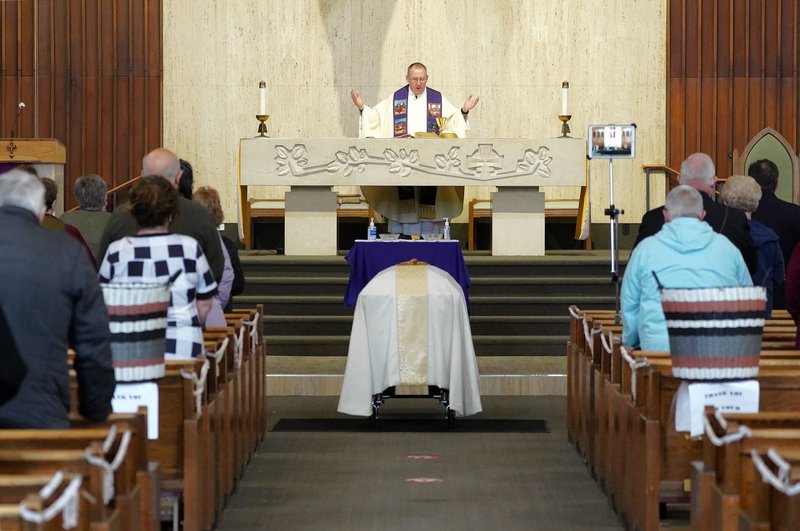
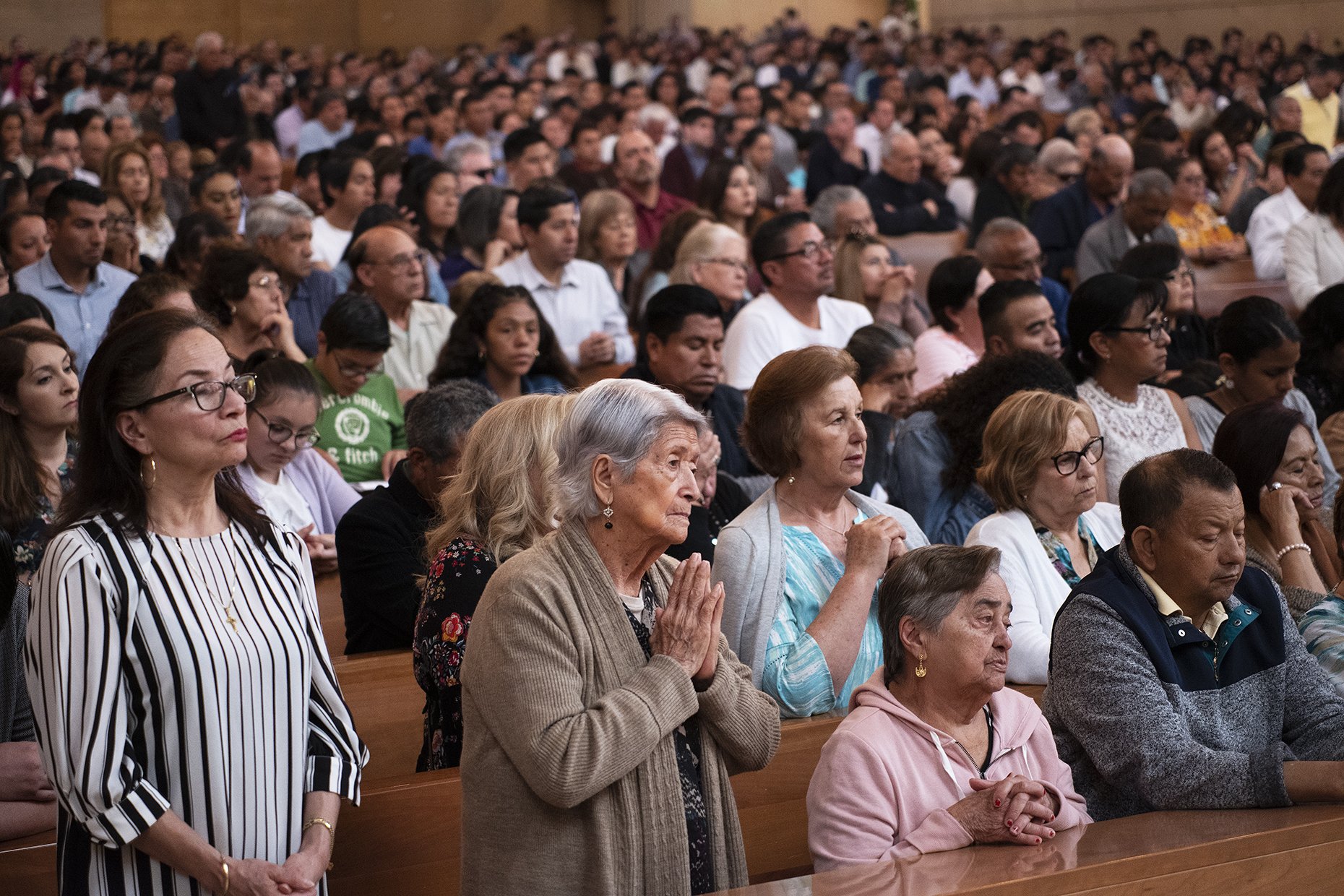
Still, there we are. I’m picturing the people I see at daily Mass. The guy with a patched-together pickup and lifts in his shoes who totes in a little pillow to prop behind his crippled back. The couple, both of whom have trouble walking, who help each other from their car, laboriously making their way to a pew and, joints creaking, kneel. The single older women who come quietly each day. Often they arrive early to say a private rosary or settle in when Mass is finished for a half-hour or more before the Blessed Sacrament.
You look at such people when you’re young and you think, if you think anything at all, “They have nothing better to do.” You’re right. In one way, we have plenty to do, but in another we have nothing better to do because we’ve discovered the pearl of great price. We’ve reburied it in a field, sold everything we have, and made it the center of our lives.
If you look closely, you’ll find us everywhere. We are in nondescript ’70s cinderblock chapels and moldering rural outposts and noisy, crime-ridden urban neighborhoods that have seen way better days.
We are sitting in corners, alert, watching, like Anna in the temple. Waiting for Jesus’ miraculous redemption of the world. Very aware we may not have much to give but desperately, passionately, longing to offer up every last bit of ourselves for humankind, for Christ.
We celebrate, need, and deeply cherish our young people. But let’s not forget that, like Mary, we “boomers” — bruised reeds and smoldering wicks he will not quench — have chosen the better part.
So ridicule all you want. Pass us by. Have a joke at our expense.
But as long as we’re still in the pews — don’t worry about the Church.

Heather King (heather-king.com) writes memoir, leads workshops, and posts on substack at "Desire Lines: Books, Culture, Art."