Didn't read the book, but the 'War and Peace' miniseries finds forgiveness
This miniseries version of "War and Peace" has captured my imagination so thoroughly that I have already ordered a used paperback.
Leo Tolstoy’s “War and Peace” is like “Moby Dick,” “Les Misérables,” and “Don Quixote” — an exceptionally large book everyone knows the title of, but a significantly smaller number of people have actually read. These books can be intimidating by their sheer heft and physical presence. They are books that can expand your mind and tone your biceps at the same time.
I have tackled “Moby Dick,” “Les Misérables,” and “Don Quixote.” That may not make me a professor of literature, but those books have much to say about the many facets of the human condition.
I have heretofore avoided “War and Peace” for several reasons. Tolstoy’s tome is a huge and intimidating-looking book full of difficult Russian-named characters, and it has, over time, become a kind of pop-culture punchline for being long-winded or too verbose. I did not want to sound like some kind of snob or poser telling people at a social setting that I was reading Tolstoy when those who know me would think I was more apt to be reading Mad Magazine.
So I thought I would probably live out the rest of my days being one of those people who knew the book but never read it. That all changed with the BBC miniseries, “War and Peace,” that I watched on Amazon Prime.
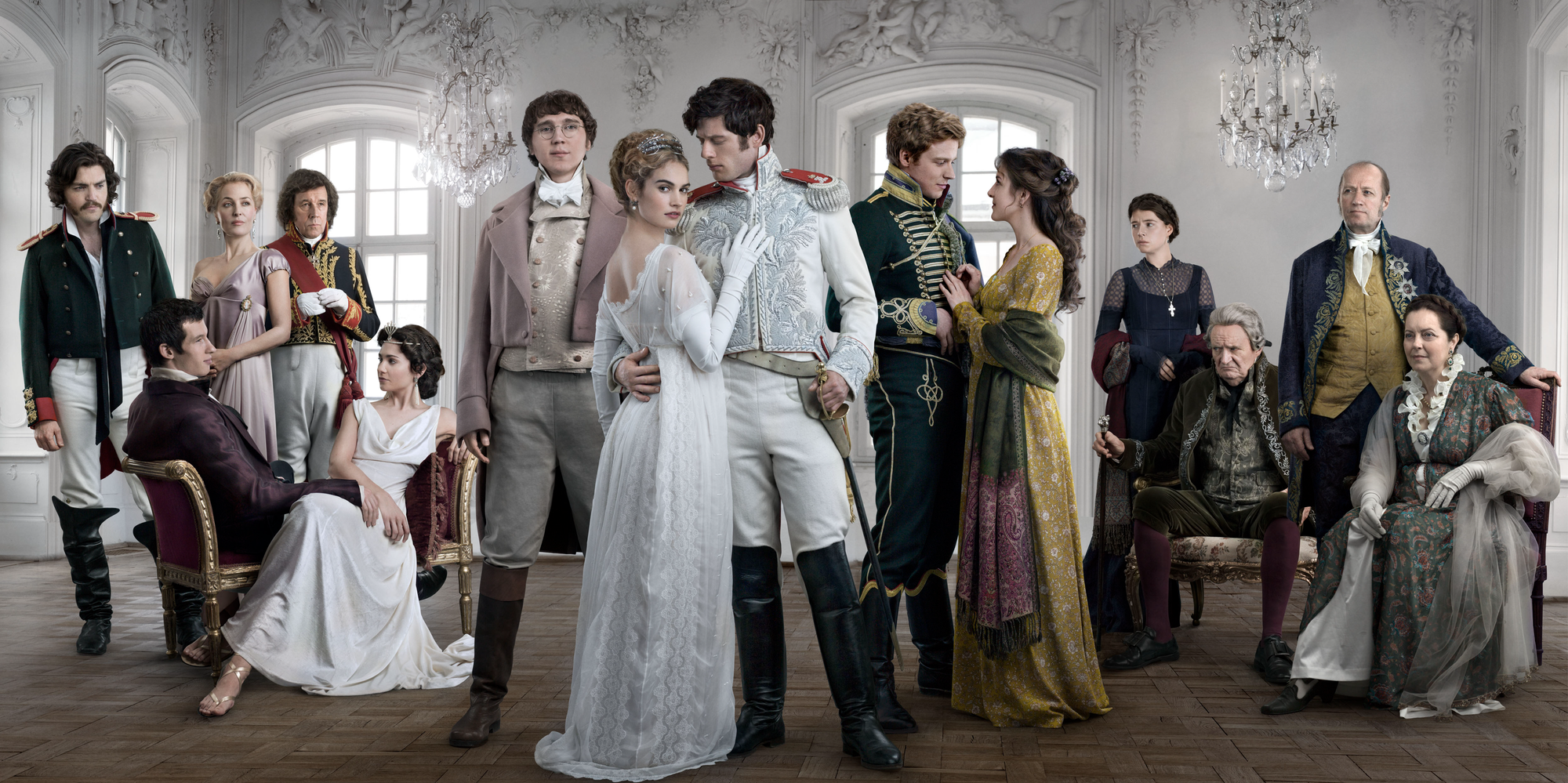
Not knowing the plotline or characters from the original source, I came to the multi-part series as a blank slate. Since it was full of actors I knew from various films and television shows I had seen, I was able to keep the characters straight not by remembering their Russian names and aristocratic titles, but by their previous work. There was the Irish actress who won the Oscar last year, the American actor who was in “There Will Be Blood,” the young woman who was in the live-action version of “Cinderella” a few years back, the English actor who starred in the “Grantchester” series on PBS, and several other excellent character actors from either side of the Atlantic Ocean to help me, in my own pedestrian way, keep things straight.
This miniseries version of “War and Peace” is simply great. It has captured my imagination so thoroughly that I have already ordered a used paperback from Amazon. The miniseries is not salacious, but it is an adult story with a lot of adult themes, so though it may not be recommended for children, it certainly is for adults, especially those who want to be spiritually uplifted.
When I say spiritually, I do not mean some vague “brotherhood of man” message or nuanced New Age drivel. Still waiting for the paperback to arrive, I had to look up an essay from one of those literary professor types and learned that the main theme in the book remains intact in this miniseries. And that theme is the life-changing power of the two greatest Christian principles.
The story may be taking place amid the grandeur of Russian aristocratic opulence and the dark cloud of a pending invasion by Napoleon, but it is the deeply personal and private wars being waged by the various characters that really matter. It is only when these characters — some of them heroic, some of them foolish, some of them villainous — realize that the path to true peace is paved by the ability to forgive those who have hurt them and to seek forgiveness from those they have harmed, that the “peace” part of the title blooms like a meadow full of violets found on the Russian Steppes.
It is the power of forgiveness that changes lives, not the hundreds of thousands of soldiers in Napoleon’s Grand Army or all the wealth at the disposal of the Russian aristocracy. For a war to end, you need soldiers, generals, and leaders to coalesce. For peace, all one needs is a forgiving heart.
No student in a Catholic high school should be able to graduate without exposure to Tolstoy’s case for the liberating power of forgiveness. Jesus constantly reminds us to “be not afraid.” So, fear not: you will get used to remembering names like Bolkonsky, Rostova, and Bezukhov, and you will not forget the message from the Sea of Galilee, as reimagined in 19th-century Russia via an act of inspired genius.

Robert Brennan writes from Los Angeles, where he has worked in the entertainment industry, Catholic journalism, and the nonprofit sector.