Christianity looms over ‘Wild Horse Nine’s’ existential problem
As its characters wrestle with the meaning of life and death, Christian symbols hang over awards season contender ‘Wild Horse Nine.’
“Wild Horse Nine,” a dark, comedic, profane movie from Irish writer and director Martin McDonagh (“In Bruges,” “The Banshees of Inisherin”), is about a few things. It’s about the CIA, specifically the CIA in Chile in the 1970s. It’s about American global political shenanigans. As is usually the case with a McDonagh film, it’s about male friendship.
But then there’s that crucifix.
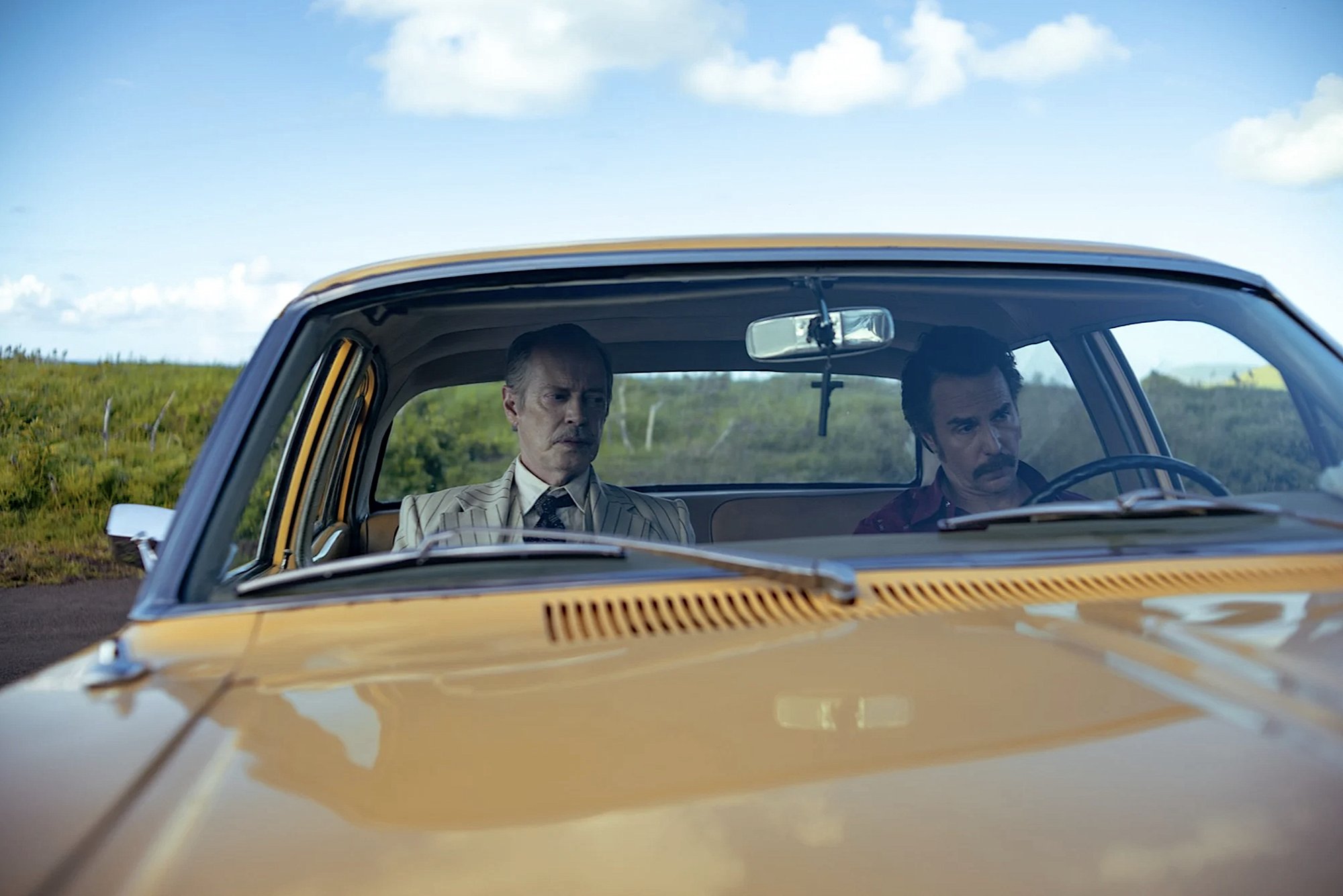
In so many scenes, at the end of a rosary hanging from a rearview mirror, on a dresser or desk, there’s a crucifix. It’s not accidental because, of course, nothing in a movie is. So while we laugh at the jokes, enjoy the beautiful landscape and flinch at the violence, we can’t ignore that crucifix.
It’s 1973 in Chile. Socialist Salvador Allende is president of the country, but we — and the CIA, in the person of Chris Carlisle (John Malkovich) and Lee Carmichael (Sam Rockwell) know, not for long.
“Wild Horse Nine” takes place a few weeks before the military coup that will put General Augusto Pinochet in power — on, of all dates, Sept. 11. Chris, a veteran Agency hand who is terminally ill, declares his desire to take a break on Easter Island to see, as he puts it, “the big heads.” Accompanied by his partner and, in effect, handler, Lee, he makes the trip. The pair bicker, Chris reminisces, speaks too bluntly in public places, encounters wild horses, and contemplates his life and eternal matters under the gaze of, yes, the big heads.
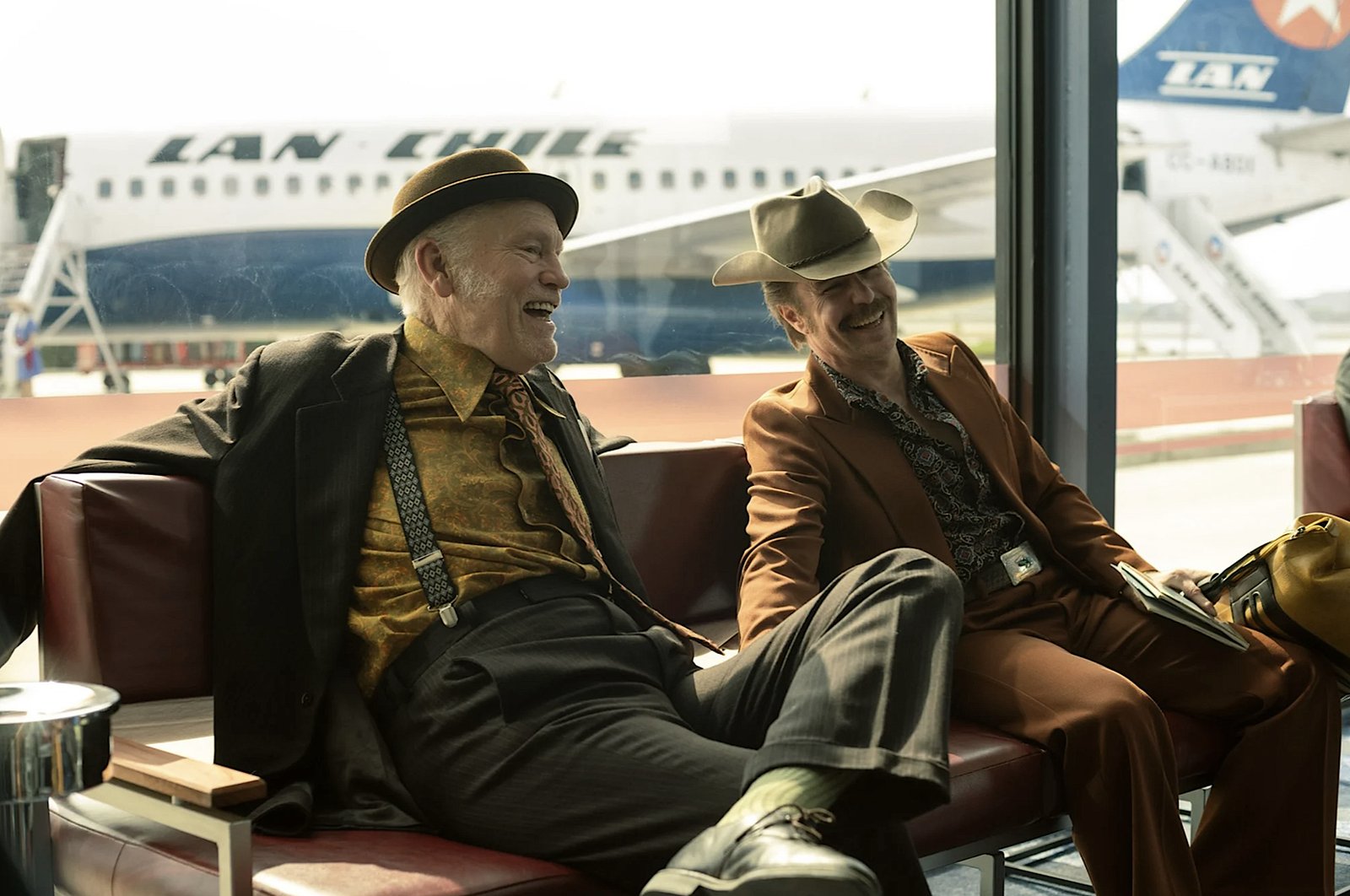
Malkovich is the star here, in every way. His performance is specific, both grounded and expansive. He’s fascinating to watch, and the speeches McDonagh gives him are wild and hilarious.
After Malkovich’s performance, it’s the politics and history that will get the attention, all of which may or may not make sense, and which renders the Malkovich character sort of a Forrest Gump of the Agency.
But that’s not really the point — the politics, not even the accuracy of the history, which is probably disputable.
No, the inescapable point is, what do you make of your life when it’s about to end?
Is there redemption? When you’ve done evil for the “greater good,” does that evil still call for remorse, contrition, confession? Probably, but how do you do it? What do you do? What do you say?
And who do you say it to?
You’d think Chris would know. He’s a Catholic and carries the signs around with him wherever he goes, hanging a rosary from the rearview mirror of the rental car, carrying a Bible, setting up a crucifix in a hotel room. His faith, he says, prevents him from harming himself, but apparently not from harming others — “for the greater good,” as he’s told himself and others for his entire career.
Chris might speak of that “greater good” to explain his kill count, but intriguingly, McDonagh doesn’t suggest that he’s connecting that “greater good” to his faith. There’s no sense that Chris is a hypocrite, using faith performatively to justify his actions.
So what is the crucifix, which continually appears, often in the foreground of a shot, all about? What does it mean to Chris?
In a way, “Wild Horse Nine” gives us a kind of Graham-Greene-light protagonist. Greene, the self-described “atheist Catholic” British novelist, was the author of some of the most spiritually incisive fiction of the 20th century, including “The Power and the Glory” and “The End of the Affair.”
The typical Greene protagonist is a world-weary man who knows full well what is real, true, and good, but for whatever reason, is resistant to actually giving himself to that truth, to making the sacrifices that would come with living it (in other words, he’s just Graham Greene).
But quite often, ultimately, he does.
Is Chris fighting the same battle? Has he been his entire life? Are these questions just occurring to him now as he’s facing death himself?
Although we don’t have the kind of access to Chris’ interior life that Greene gives us in his conflicted characters, we do have a sense that in the fertile field of the Agency man’s pride in his accomplishments and cynicism about the workings of the world, questions about it all, and even perhaps remorse, might be stubbornly sprouting.
Alone — essentially, that is, in his essence — alone out there on Easter Island (Hank Williams’ “I’m So Lonesome I Could Cry” is his favorite song), his life is put into context, raising questions of the meaning and importance of what were the possibilities that never were.
What was — actions that were world-changing and politically significant, might seem smaller, more forgettable, even foolish as they are considered in the silent presence of the ancient moai. Time passes. Time forgets. Lee himself — aging, ill — forgets, remembers, then forgets again.
What might have been? What could have been with different choices made? It’s the gentle, nudging presence of wild, watchful horses that raises that question, and ultimately answers it.
Here it is: the end, coming at you fast as you cough up blood and can only function with a daily dose of morphine. It’s time for repentance, for setting things right. But how?
The answer, you’d think, would be clear, considering that crucifix. Perhaps it is. Perhaps he knows. But as “Wild Horse Nine” concludes, we witness only the loneliness and defeat that arrives when the knowing about has never become knowing him.
All of which is maybe not so different than the way many of us live our lives, isn’t it? We carry some vestige of religion around with us, a vague belief, an understanding, something more than a habit, much less than actual faith.
We find ourselves, then, at the end, smaller than we thought we were, wondering what actually mattered, what will last, and most poignantly, faced with the truth of what we’ve done and what we’ve failed to do — alone.
Amy Welborn is a freelance writer living in Birmingham, Alabama, and the author of over twenty books. Her blog can be found at http://amywelborn.wordpress.com