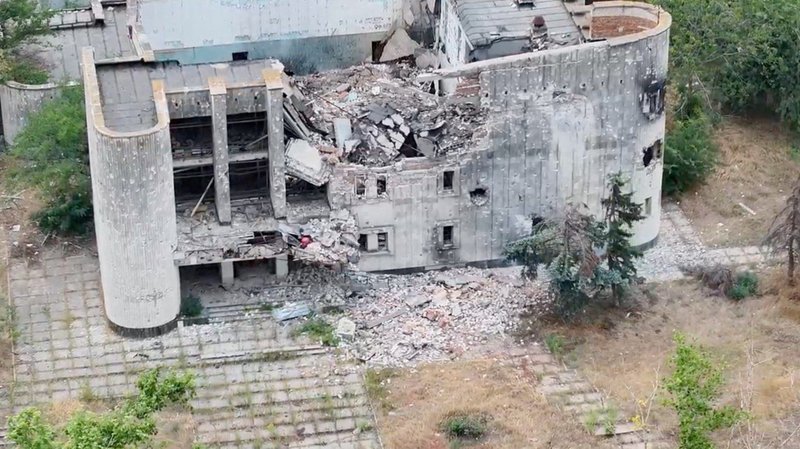
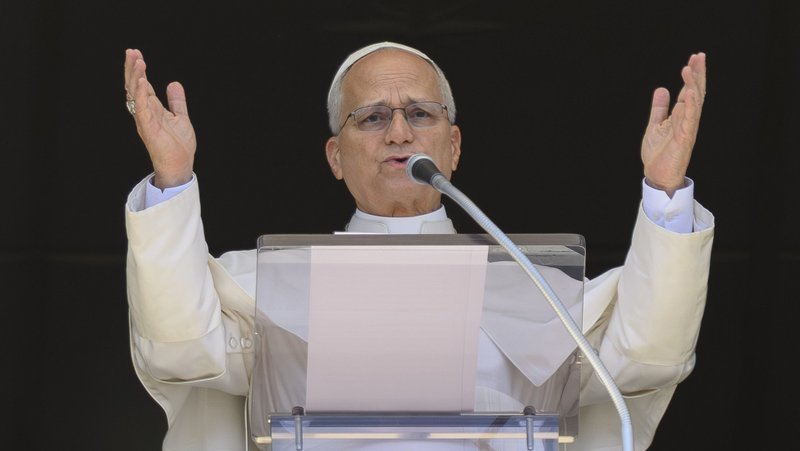
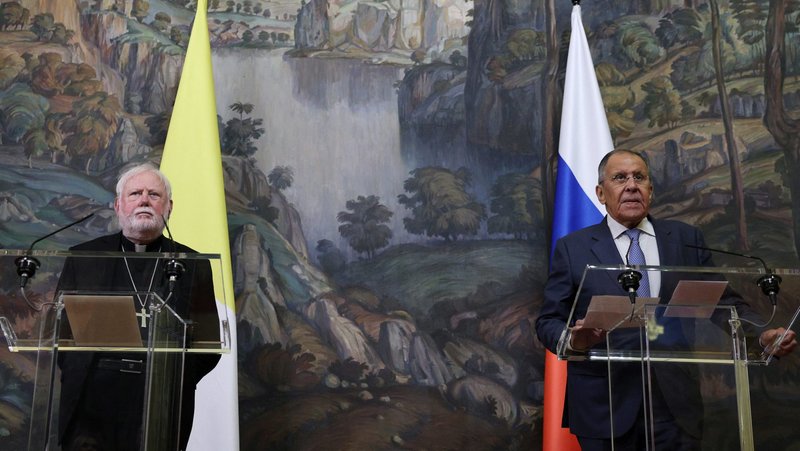
Pope Leo, Zelenskyy discuss humanitarian crisis in occupied Oleshky
In an Oct. 19 phone call, the pope voiced hope that Ukraine and Russia will cooperate on aid deliveries and civilian evacuations.
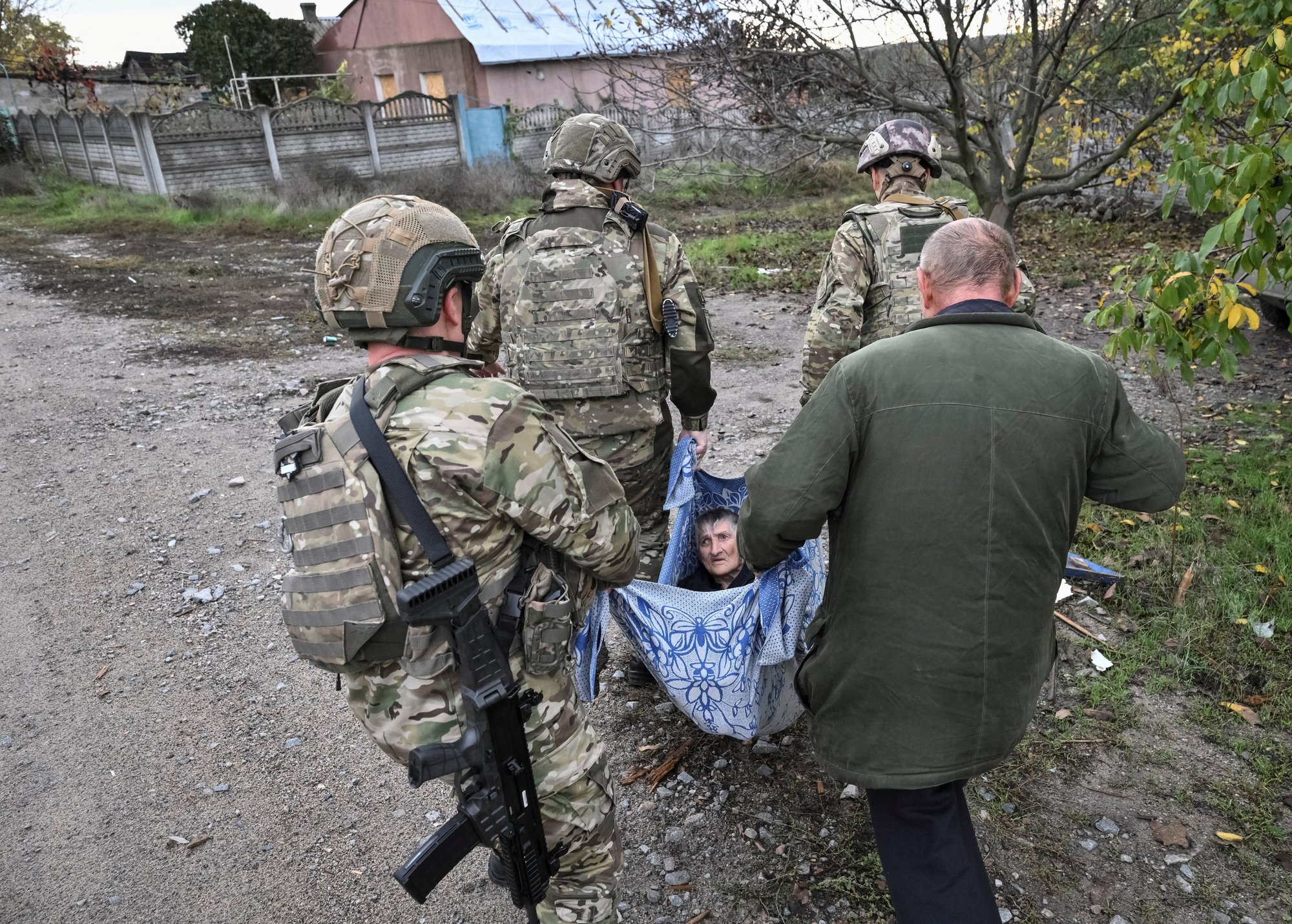
Pope Leo XIV spoke by phone with Ukrainian President Volodymyr Zelenskyy, expressing hope that Ukraine and Russia will cooperate on humanitarian aid and evacuations for civilians in the southern Ukrainian city of Oleshky, the Vatican said.
In an Oct. 19 statement, the Vatican press office said the conversation centered on "the grave situation" in the city, which has been under Russian military occupation since 2022.
Pope Leo's phone call with Zelenskyy came less than a week after an Oct. 13 call with Russian President Vladimir Putin, while the pontiff was recovering from lung surgery at Rome's Gemelli Hospital. In that call, the pope requested a humanitarian ceasefire, the Vatican said.
"His Holiness expressed the hope that cooperation between both parties will allow for the delivery of food and medical aid, and for the voluntary and safe evacuation of the civilian population," the statement read.
The pope also reaffirmed the Holy See's commitment "to promoting dialogue and peace."
In a separate statement published Oct. 19 by the Ukrainian president's office, Zelenskyy said he wished the pope "full and speedy recovery following surgery."
"We are grateful that even during this difficult time for him personally, His Holiness remembers Ukraine and prays for our people," Zelenskyy said.
According to his office, Zelenskyy gave the pope a detailed briefing on Russian strikes against Ukrainian cities, and the two "discussed the humanitarian catastrophe" in Oleshky.
Zelenskyy, the statement read, "noted that Ukraine is working to help our people there and is preparing the necessary decisions. His Holiness informed him about contacts with the Russian side on this matter."
Tensions with Washington
Zelenskyy also briefed Pope Leo on reported disruptions to Ukraine's defense communications, which have strained relations with Washington. According to NPR, Zelenskyy said SpaceX imposed restrictions on the country's access to the U.S. military's Starshield satellite internet network in response "to a message from the American government."
Starshield is a military version of Starlink, the satellite internet service run by SpaceX, the aerospace company founded by Elon Musk.
Musk, however, denied that SpaceX played any role in the disruptions, saying that "Starshield systems are owned and controlled by the U.S. government" and that "any limits on speed or usage are decided by the U.S. military and ultimately" by U.S. President Donald Trump.
Trump and U.S. Secretary of State Marco Rubio also denied Zelenskyy's claim that the US government ordered the disruptions, NPR reported.
Nevertheless, tensions between Ukraine and the United States have risen after Trump moved to waive sanctions against Russia in exchange for purchasing diesel in an attempt to lower rising prices due to war in Iran.
Zelenskyy's office said the Ukrainian president's conversation with Pope Leo "covered current security challenges and threats, including the periodic lack of warnings from partners about Russian ballistic missile attacks, which has happened three times recently."
"The president thanked His Holiness for his support and all his efforts to achieve a dignified peace," the statement read.
Decrying crimes against humanity
In a message marking the war's 244th week, Major Archbishop Sviatoslav Shevchuk of Kyiv-Halych, head of the Ukrainian Greek Catholic Church, condemned Russia's attacks against Ukraine's energy infrastructure.
According to the Reuters news agency, Trump announced an energy ceasefire Oct. 11; however, neither Russia nor Ukraine confirmed the agreement.
Despite the so-called truce, Russia has continued to conduct attacks on Ukraine's energy grid, which left 600,000 people without electricity, Major Archbishop Shevchuk wrote.
"Crimes against humanity of this kind were committed precisely when the U.S. president announced a so-called energy ceasefire between Russia and Ukraine," Major Archbishop Shevchuk wrote, calling the timing of the attacks especially painful.
"It is ... very important for us, as Christians, to understand that even peace negotiations and efforts to end a war must be governed by moral principles," Major Archbishop Shevchuk added, saying that "Agreements reached without regard for such principles, in which energy resources are valued more highly than human life, are doomed to fail."
On Oct. 19, Iranian-designed Russian Shahed drones killed six people and injured 14 in the Kharkiv region, an attack Zelenskyy called a "pure atrocity." A one-year-old girl named Angelina was killed in the strike, with her mother Inna dying hours later in the hospital, Zelenskyy wrote in his post on X.
"These are horrific photos, but behind them are shattered lives and the truth about this war," he said, sharing photographs from the playground where the attack occurred, killing among others an 11-year-old girl.
The head of the Ukrainian Greek Catholic Church said negotiations shouldn't ignore the human cost and that any agreements must be assessed by "the extent to which they alleviate the suffering" of the people and not by "the political or economic benefits they yield or the high-profile political statements they generate."
"And even as we gratefully acknowledge mediation efforts aimed at ending the war, it is essential to distinguish between restraining an unjust aggressor and coercing the victim," Major Archbishop Shevchuk wrote.
He also reminded the international community that while Ukraine depends on aid, that dependence "gives no one the moral right to dictate its future without the participation of the Ukrainian people themselves."
"We must not blur the distinction between the aggressor state and the people who have the right to defend themselves," Major Archbishop Shevchuk wrote. "In international efforts to end any war -- including Russia’s war against Ukraine -- it is essential not to set peace against justice."