Holy Thursday: The gift of grace
Archbishop José H. Gomez celebrated the Mass of the Lord’s Supper Thursday, April 18 at the Cathedral of Our Lady of the Angels. The bilingual Mass commemorated Jesus Christ’s Last Supper with his apostles the night before he was crucified. At the Last Supper, Jesus instituted the Eucharist […]
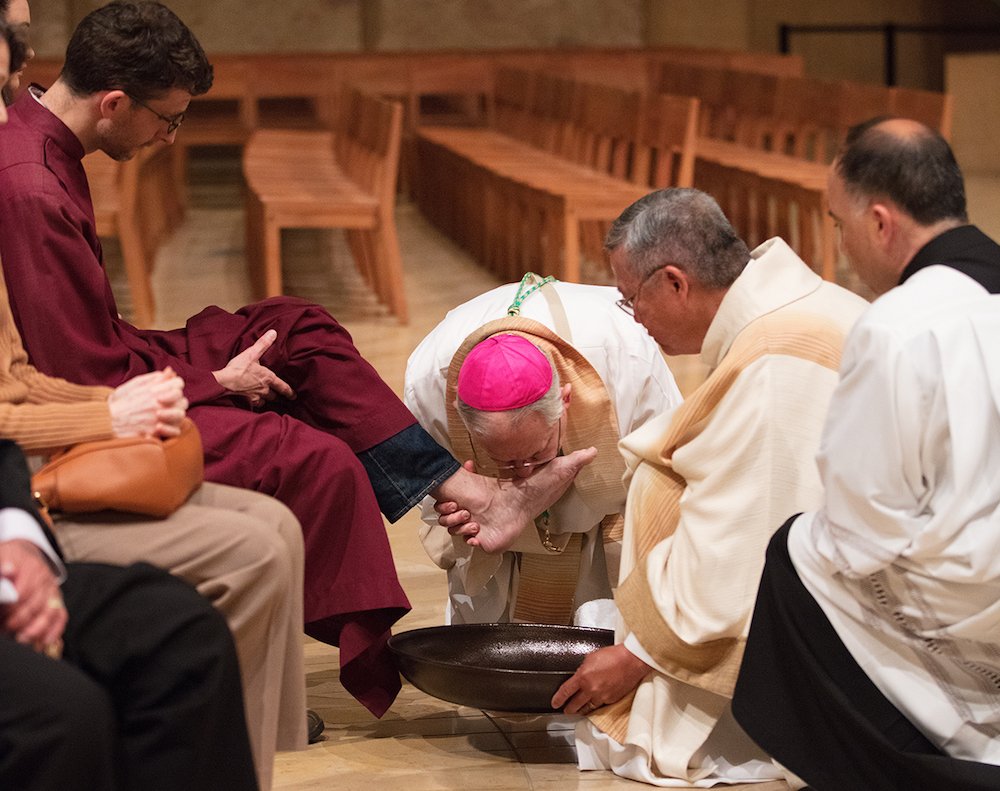
Archbishop José H. Gomez celebrated the Mass of the Lord’s Supper Thursday, April 18 at the Cathedral of Our Lady of the Angels.
The bilingual Mass commemorated Jesus Christ’s Last Supper with his apostles the night before he was crucified. At the Last Supper, Jesus instituted the Eucharist (the sacrament of Christ’s Body and Blood), as well as the Priesthood.
During the Mass, Archbishop Gomez washed the feet of six female and six male faithful including Cathedral volunteers and parishioners, youth and a Franciscan Sister and Franciscan Brother. The washing of feet resembles Christ’s example of washing his apostles’ feet.
In the Catholic Church, this Mass marks the end of the Lenten Season and the beginning of the Easter Triduum (the three days prior to Easter Sunday: Holy Thursday, Good Friday and Holy Saturday). Its traditional English name, “Maundy Thursday,” comes from a Latin phrase linked to the ceremony of foot washing (Mandatum novum, “a new commandment”; see John 13:34). The new commandment states that we are to love one another with an abundance of love, especially at this most sacred time of the liturgical year when the Lord's passion, death, and resurrection are remembered and celebrated in the powerful rites of the Triduum.