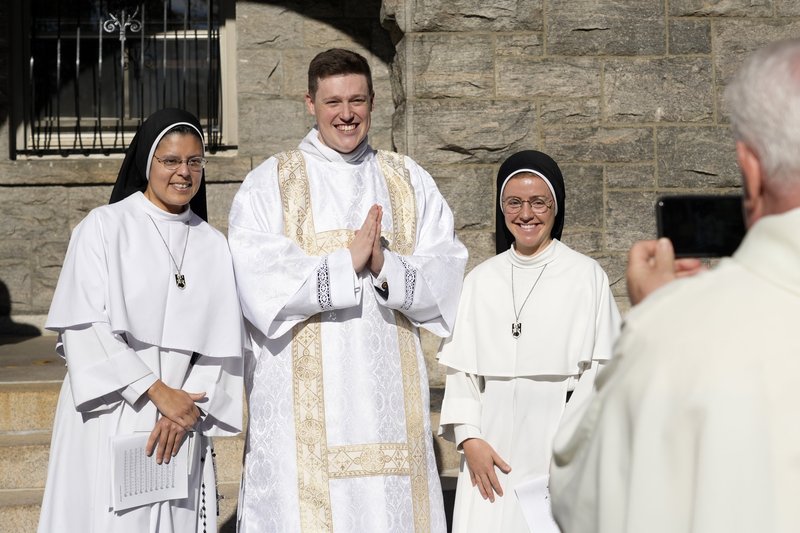
For Vocation Awareness Week, Northridge Catholic school calls in some heavy hitters
The scene at Our Lady of Lourdes School in Northridge didn’t look like your average catechism class — and that was precisely the point.
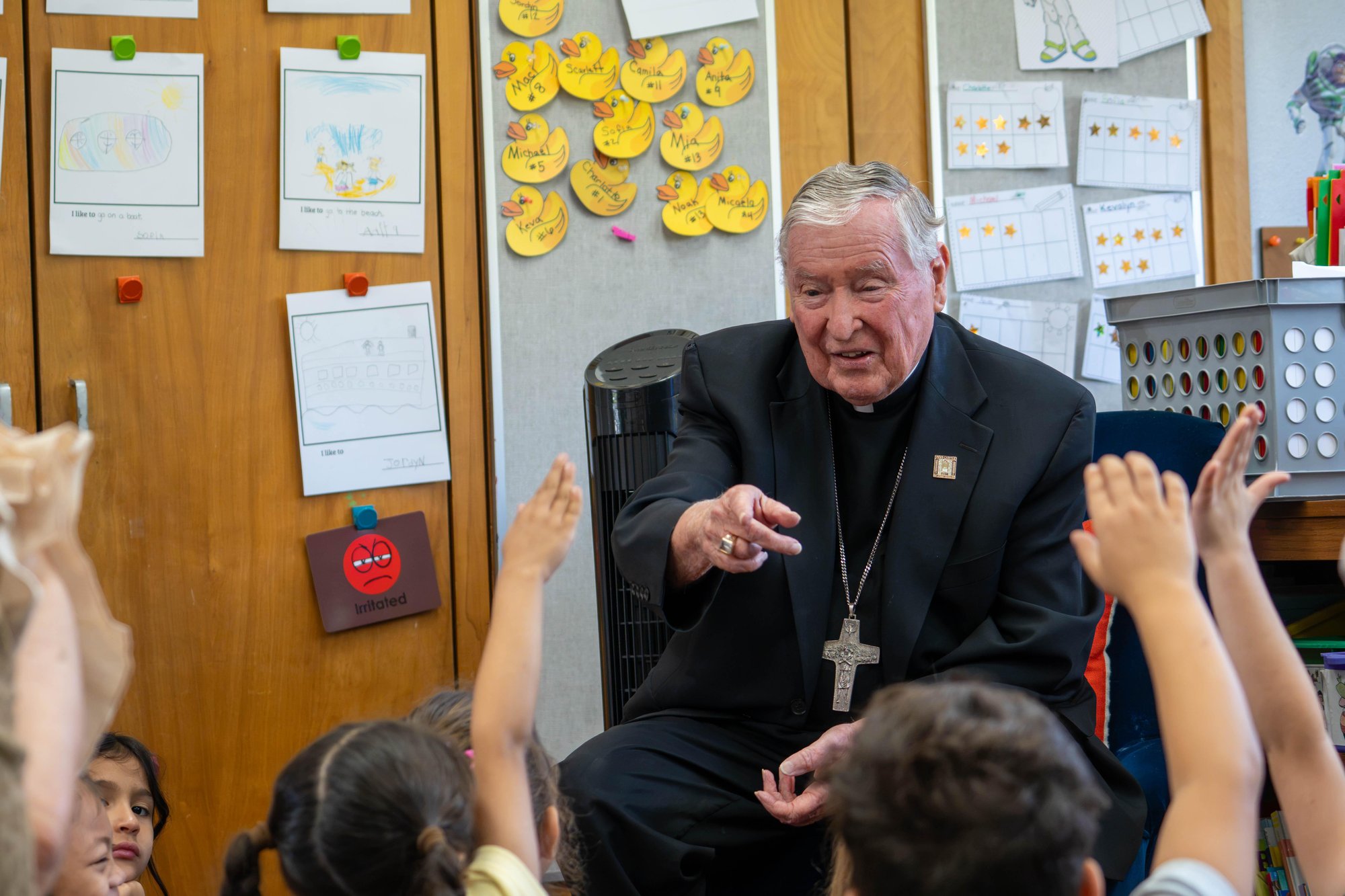
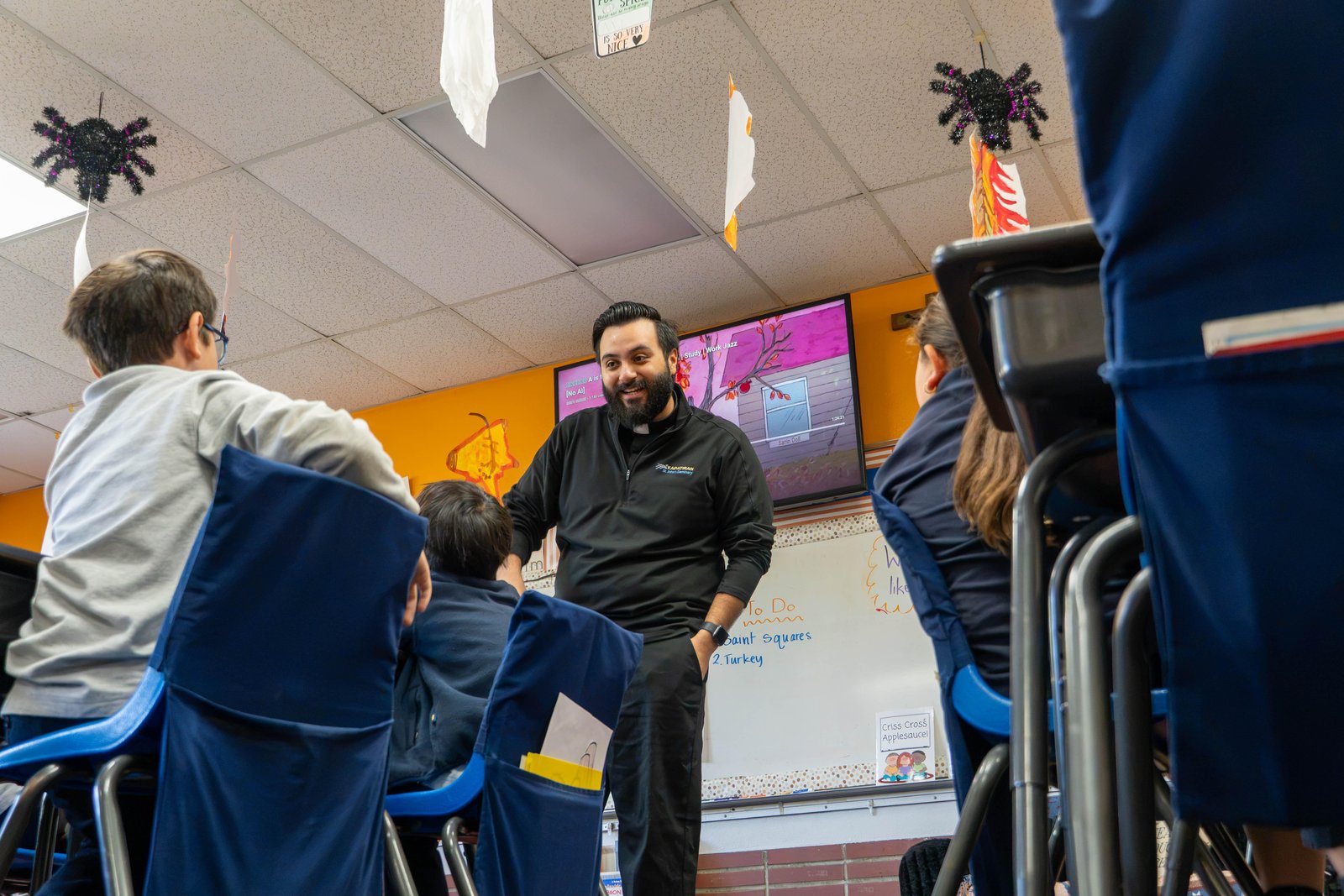
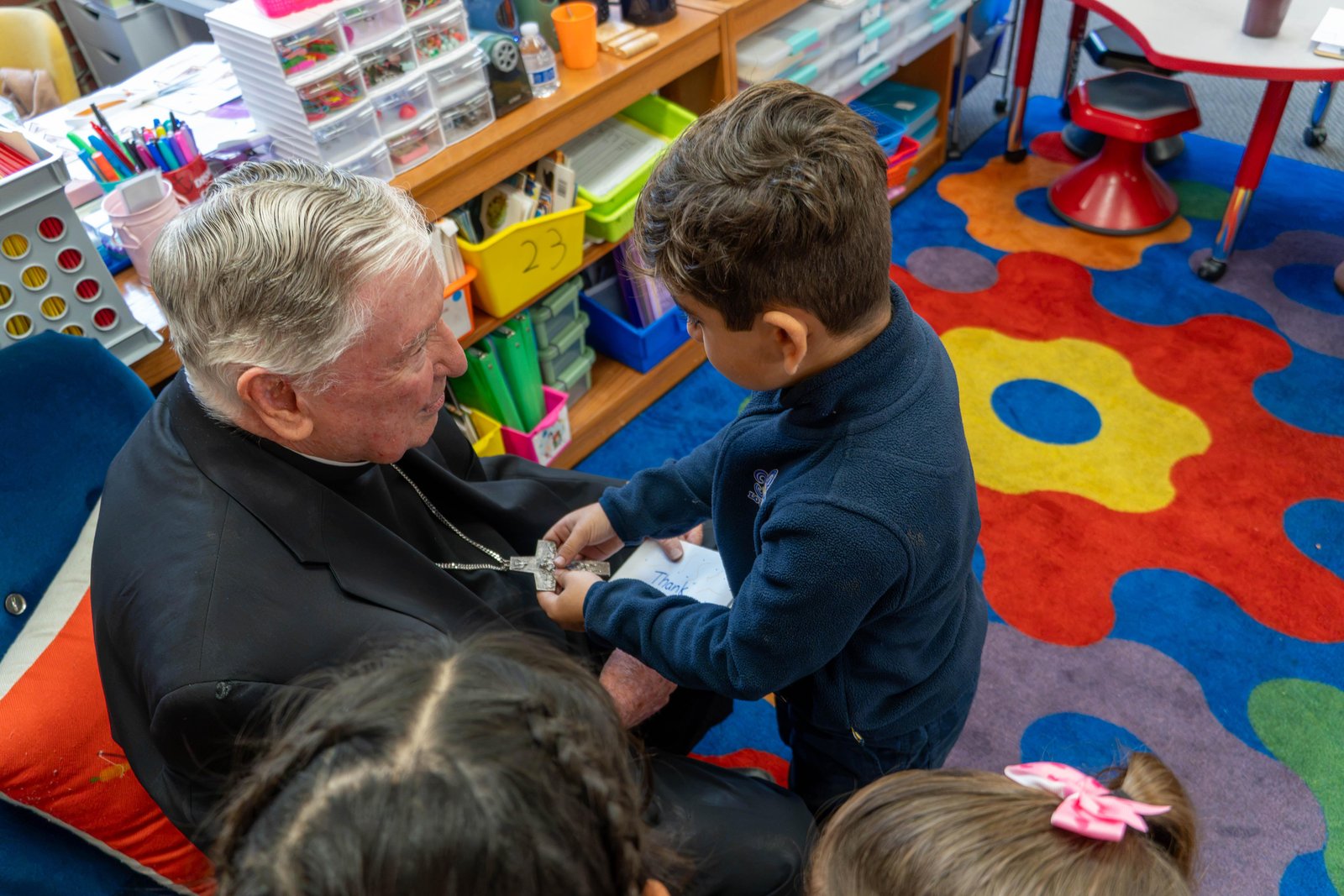
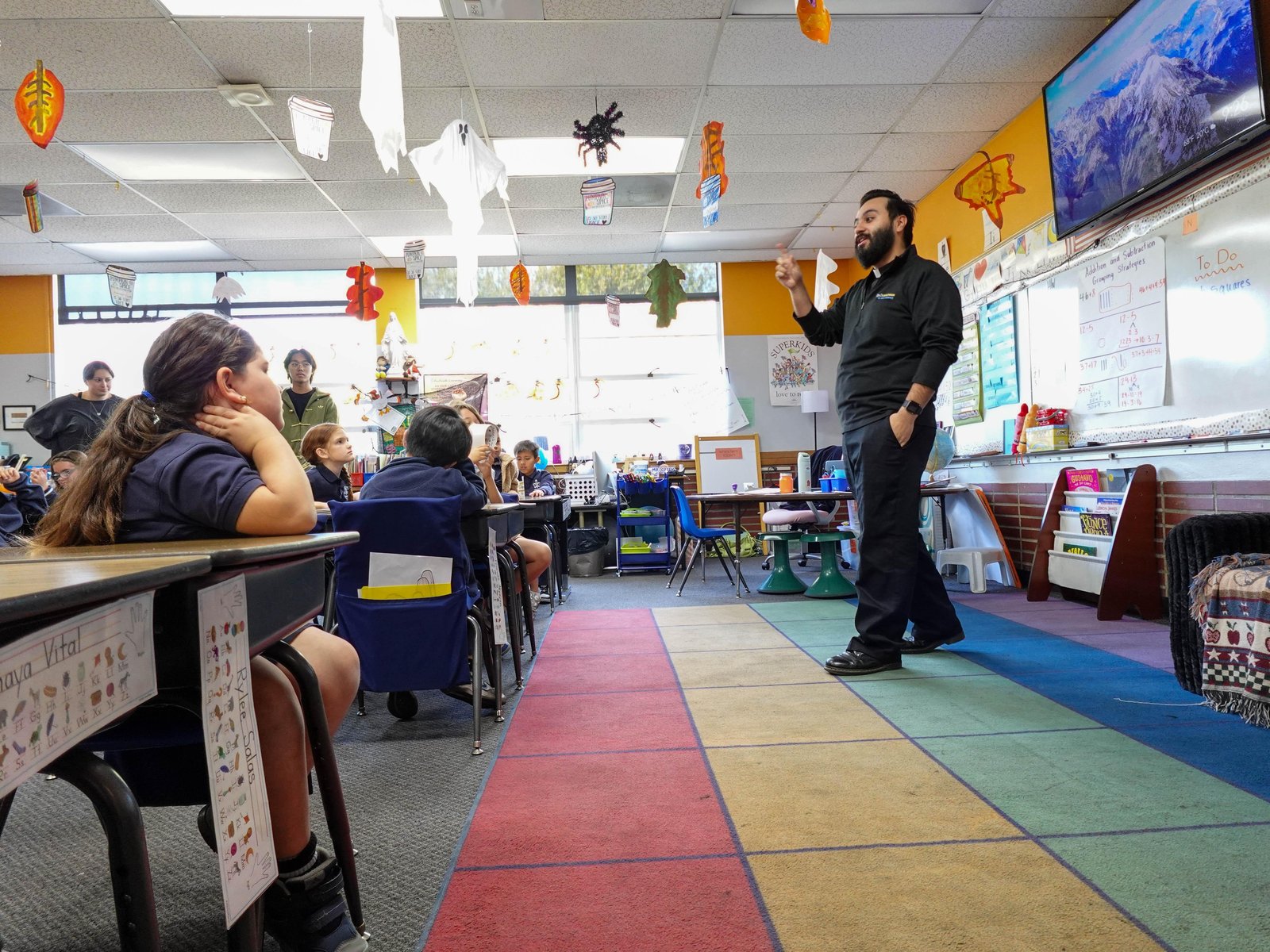
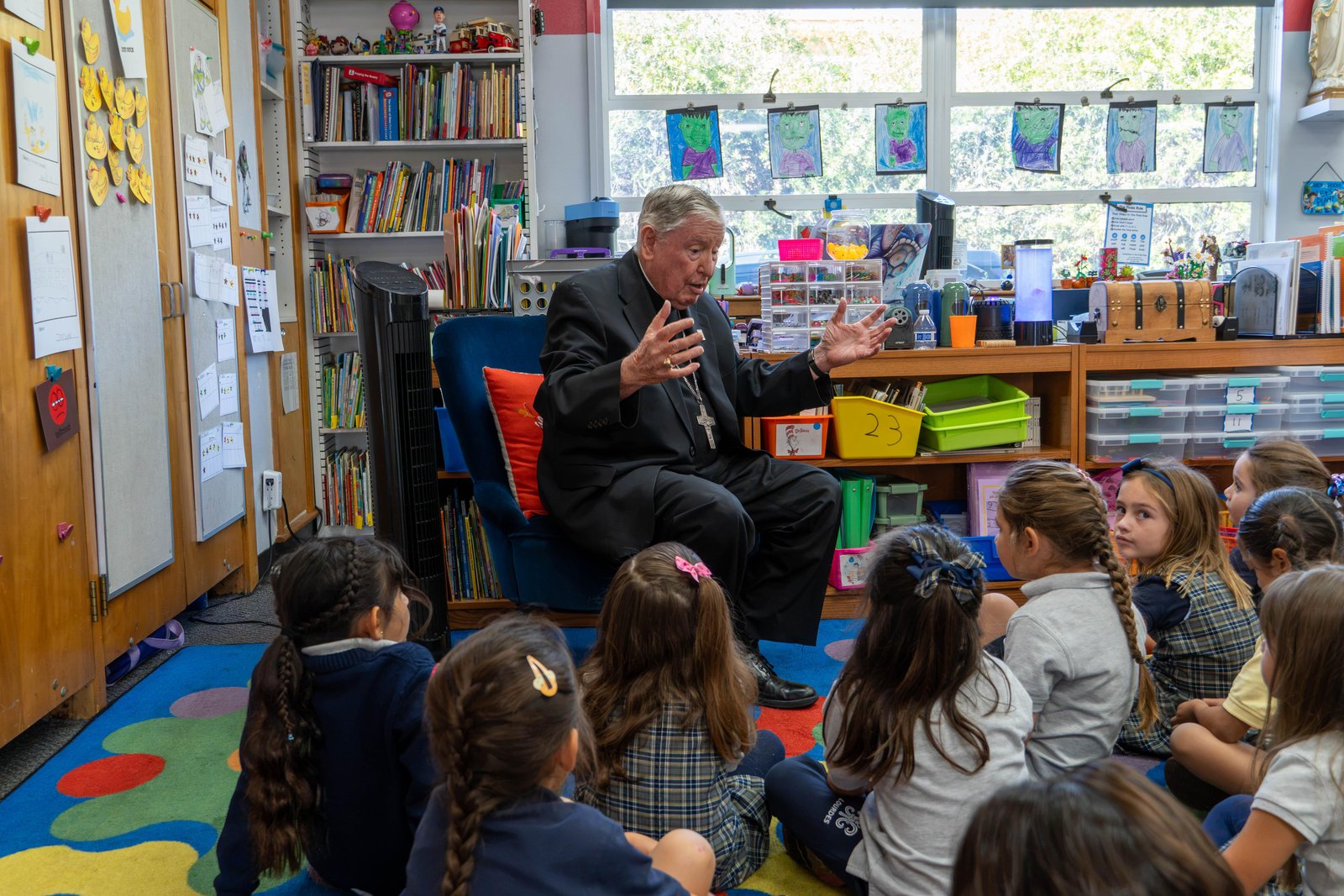
Sitting cross-legged on the rug, a classroom full of kindergarteners listened to a bishop tailor his message of marriage and love down to “baby talk.” Down the hall, fourth-graders peppered a newly ordained priest with questions about his favorite boba spot.
The scene at Our Lady of Lourdes School in Northridge didn’t look like your average catechism class — and that was precisely the point.
To tackle a pressing, nationwide shortage of religious vocations, the school took a unique approach for National Vocation Awareness Week from Nov. 2 to Nov. 5, inviting a lineup of priests, deacons, and women religious — 14 in total — to help demystify consecrated life and show students from pre-kindergarten to eighth grade that God’s call is both human and attainable.
Principal Dr. Kris Brough gave full credit to Zoe Copeland, a first-time fourth-grade teacher who brought the program from her previous school.
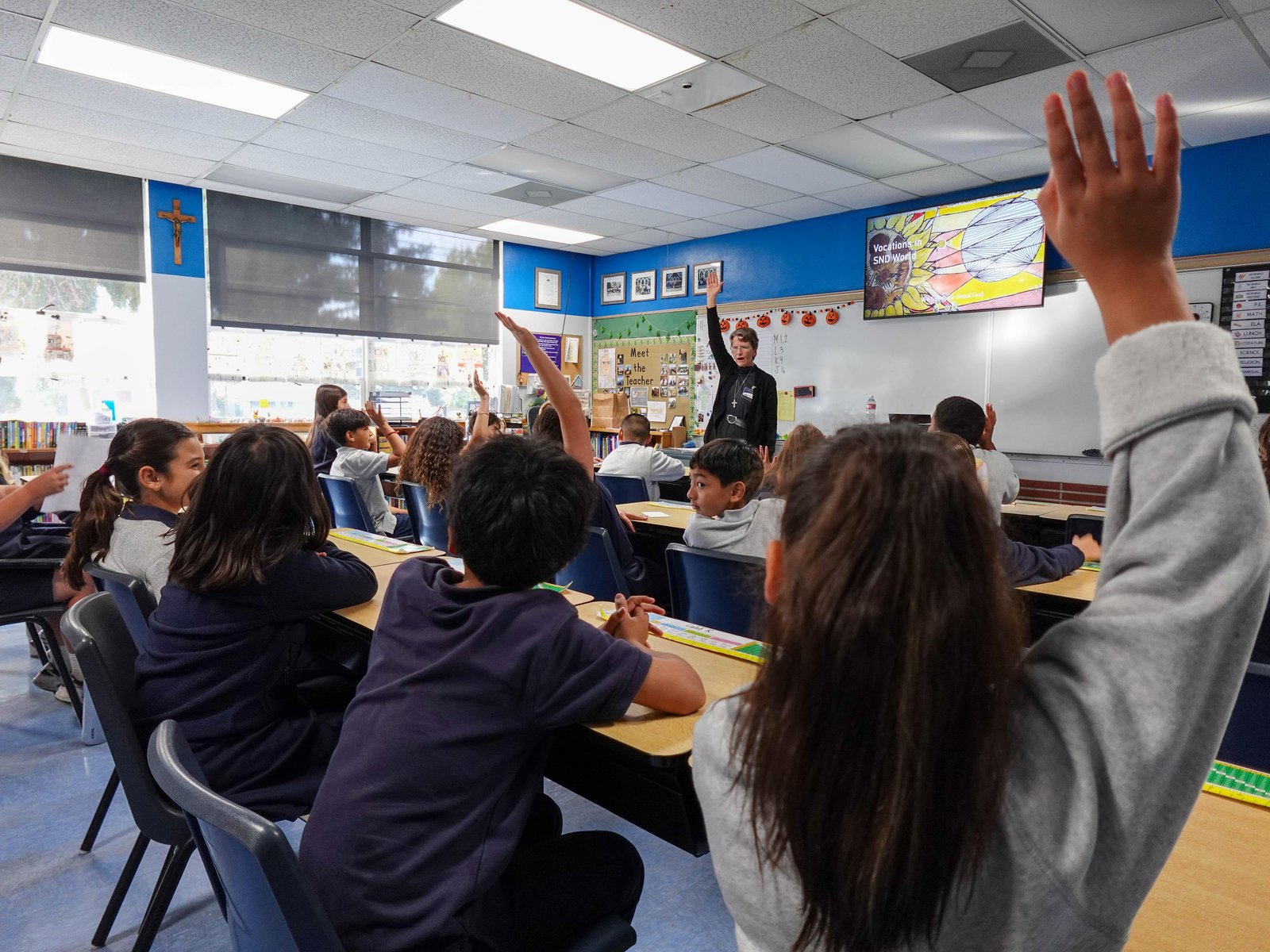
Copeland carefully structured the week so that each class interacted with both a male and female religious. The speakers included retired Bishop Gerald Wilkerson, who served as an auxiliary bishop in the Archdiocese of Los Angeles from 1998 to 2015, recently ordained priest Father David Zamora, and Sister Shawn Marie of the Sisters of Notre Dame.
Copeland prepared her fourth-graders by introducing them to various religious orders, pointing out how faith intersects with everyday professions.
“It allowed them to show that if they want to be a teacher, there are many religious who are teachers. If they want to go out and be a nurse or a doctor, there are many religious orders that are nurses and doctors too,” Copeland said. “It all depends on what order the Lord might be calling them. And so the kids realized that.”
Brough hoped that seeing the speakers’ humanity would help the students form more personal connections.
“I think depending on how we’ve been raised or our age or whatnot, we sometimes put religious on a pedestal,” Brough said. “For a youngster who only sees them on a Sunday or only sees them as priest representatives, there can be a gulf there in terms of their relatability.”
1 / 10
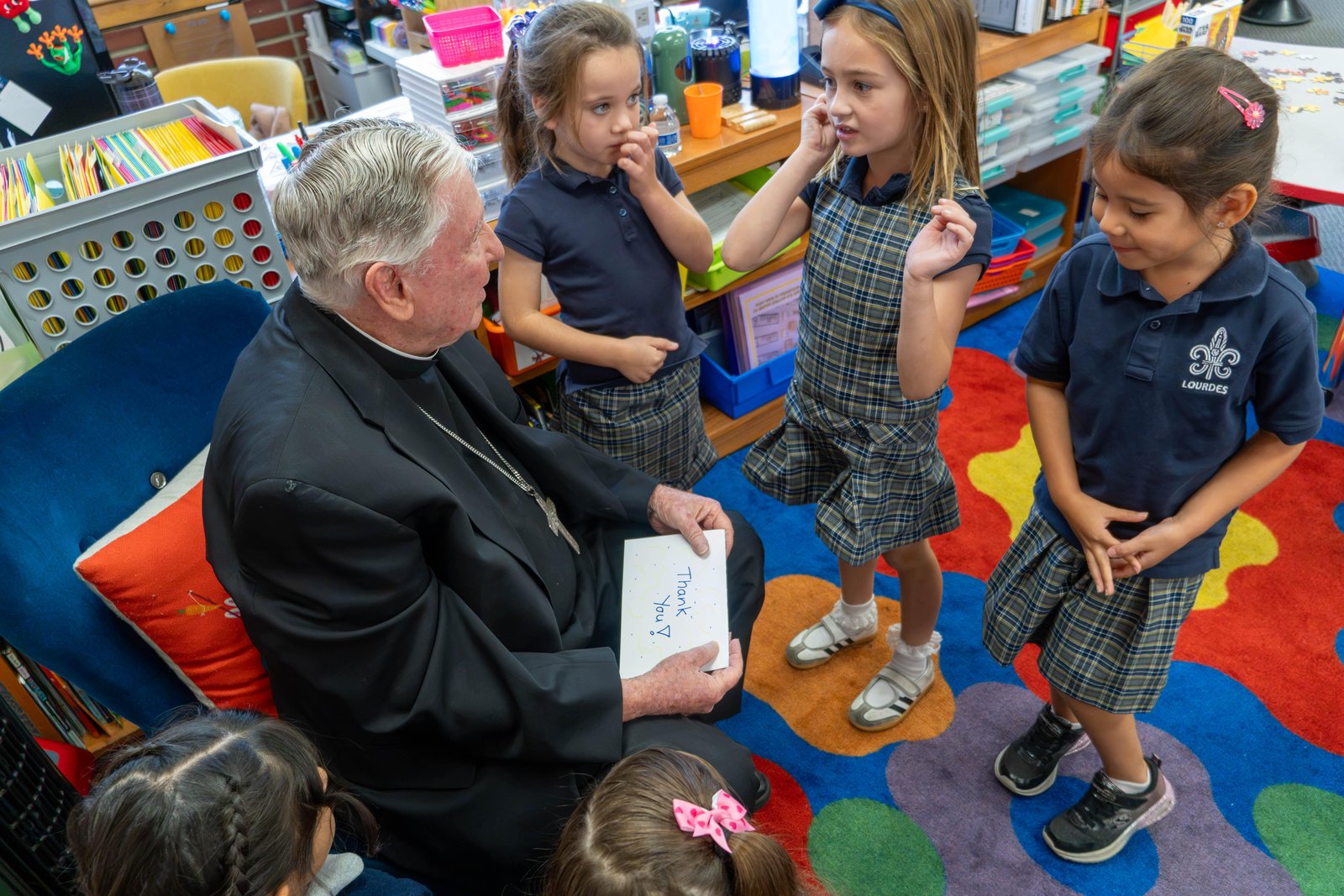
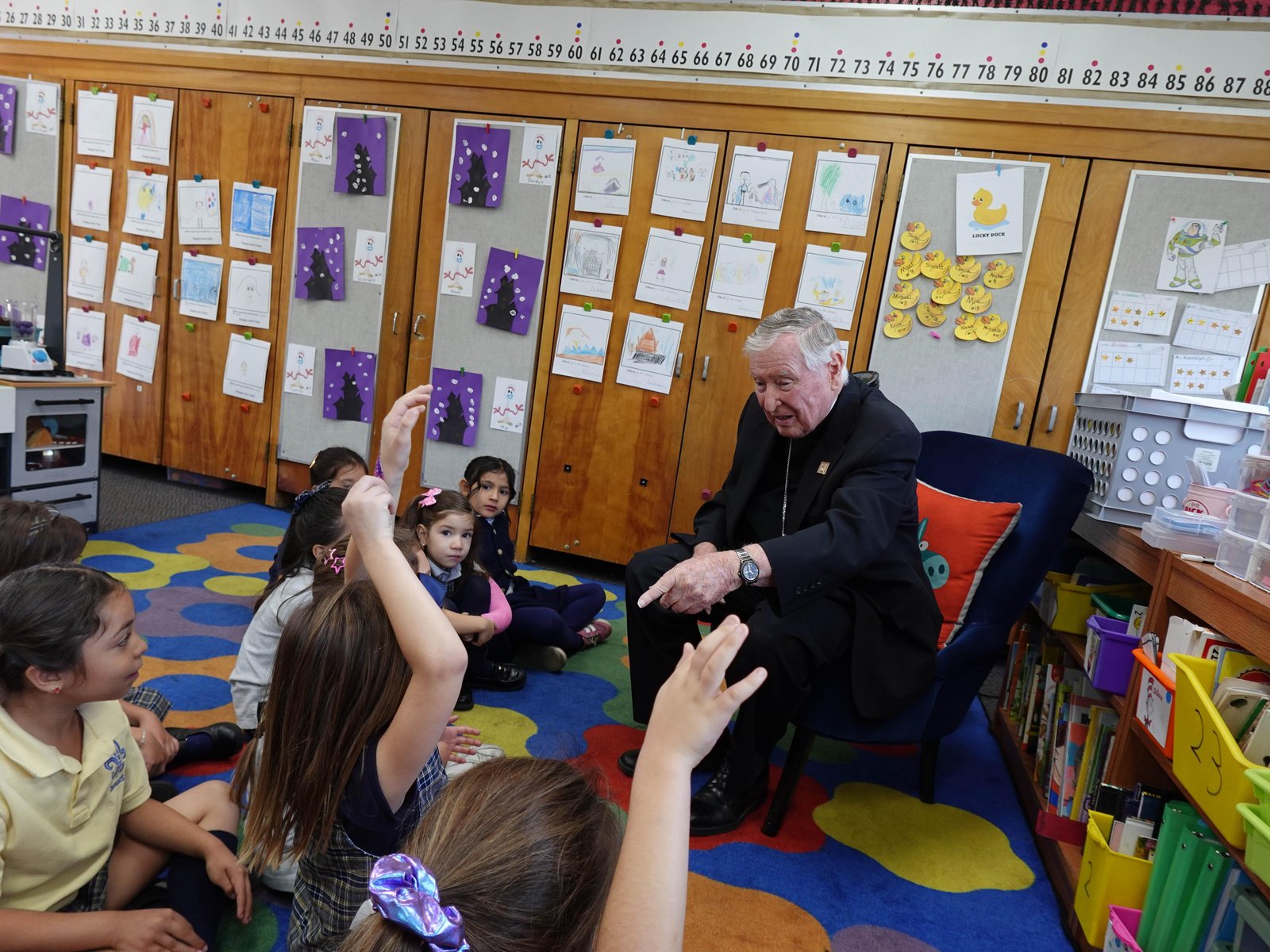
That sense of approachable awe was on full display when Wilkerson met with kindergarteners.
“They’re cute,” Wilkerson said. “You never know what they’re going to say. It makes it easy to talk to them because they're not confused. They’re not filled with all kinds of stuff from outside. They’re just kids.”
Rather than focusing on heavy theological concepts, Wilkerson said he hoped the children walked away with a warm, positive impression of the Church and bishops like himself.
“For them to say, ‘Father was a good person. And he came into our class today. And we had a good time, and we laughed.’ That’s so important for adults, kids, and everybody today,” Wilkerson said. “What I finally said to them was to just ask God: Where do you want me?
“That's a good prayer. ‘Lord. I don’t know where I belong, but I know you'll help me find the right place. Help me to be happy.’ ”
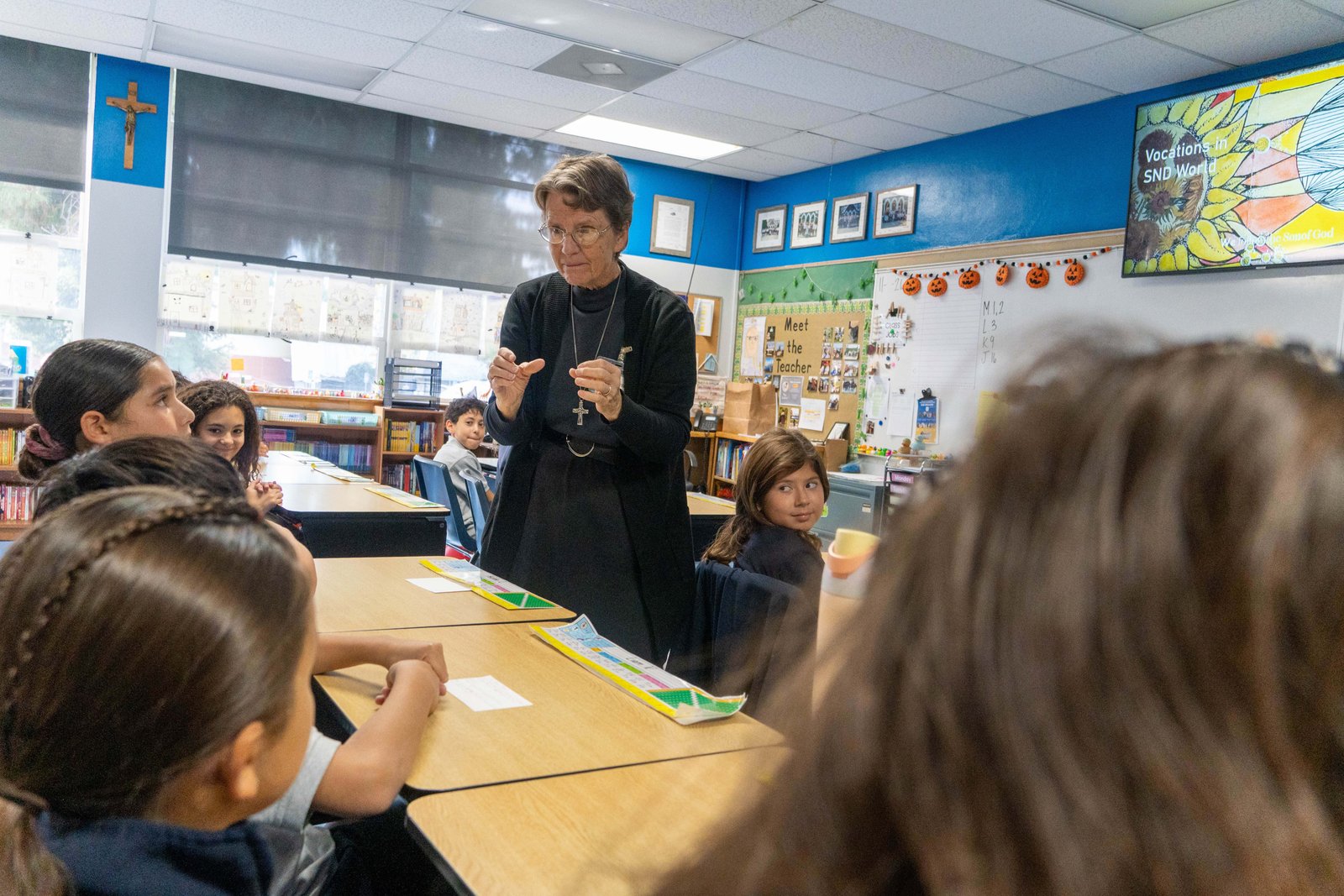
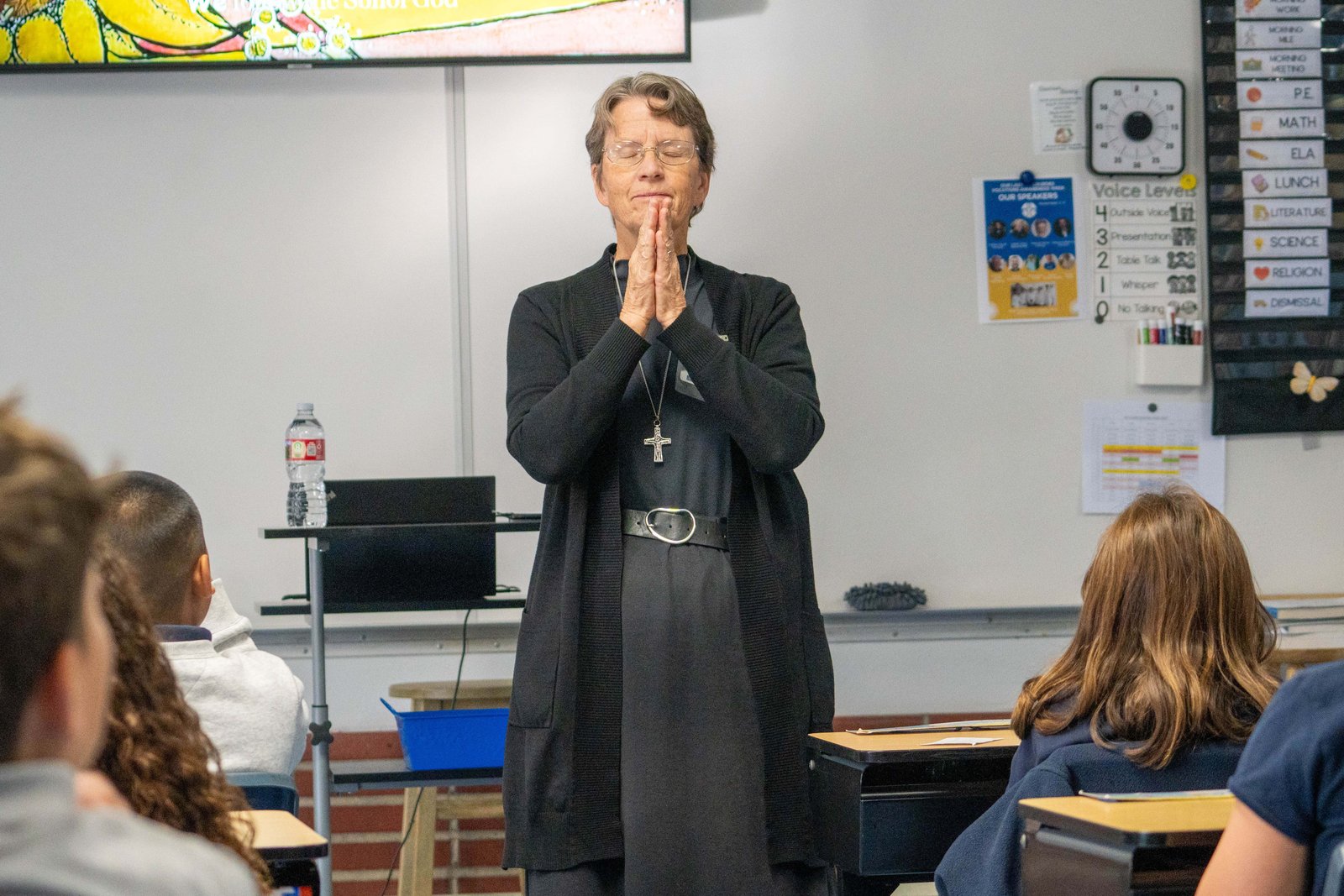
Sister Shawn Marie takes a similar approach, preferring to introduce young children — in her case, a class of first-graders — to the faith incrementally.
“You don’t start by taking them to an hour-and-a-half Mass. You start by taking them a five-minute visit, a visit to the Blessed Sacrament. We're going in to see Jesus, and he wants to talk to your heart, but he’s a gentleman. So you’re giving them little by little; you're increasing their knowledge.”
The Sister of Notre Dame traced her vocational journey back to her own first-grade teacher, Sister Catherine Marie, followed by a more profound call experienced at age 18. Children, she believes, absorb spiritual truths when presented with joy and simplicity.
“I don’t explain my day,” Marie said. “What I explain is what’s important to them. They are disciples of Jesus. They have to follow Jesus. That’s their job. And they will have a vocation, a special vocation. They get the idea that God is real. It’s important for them to know that they will be called by Jesus.”
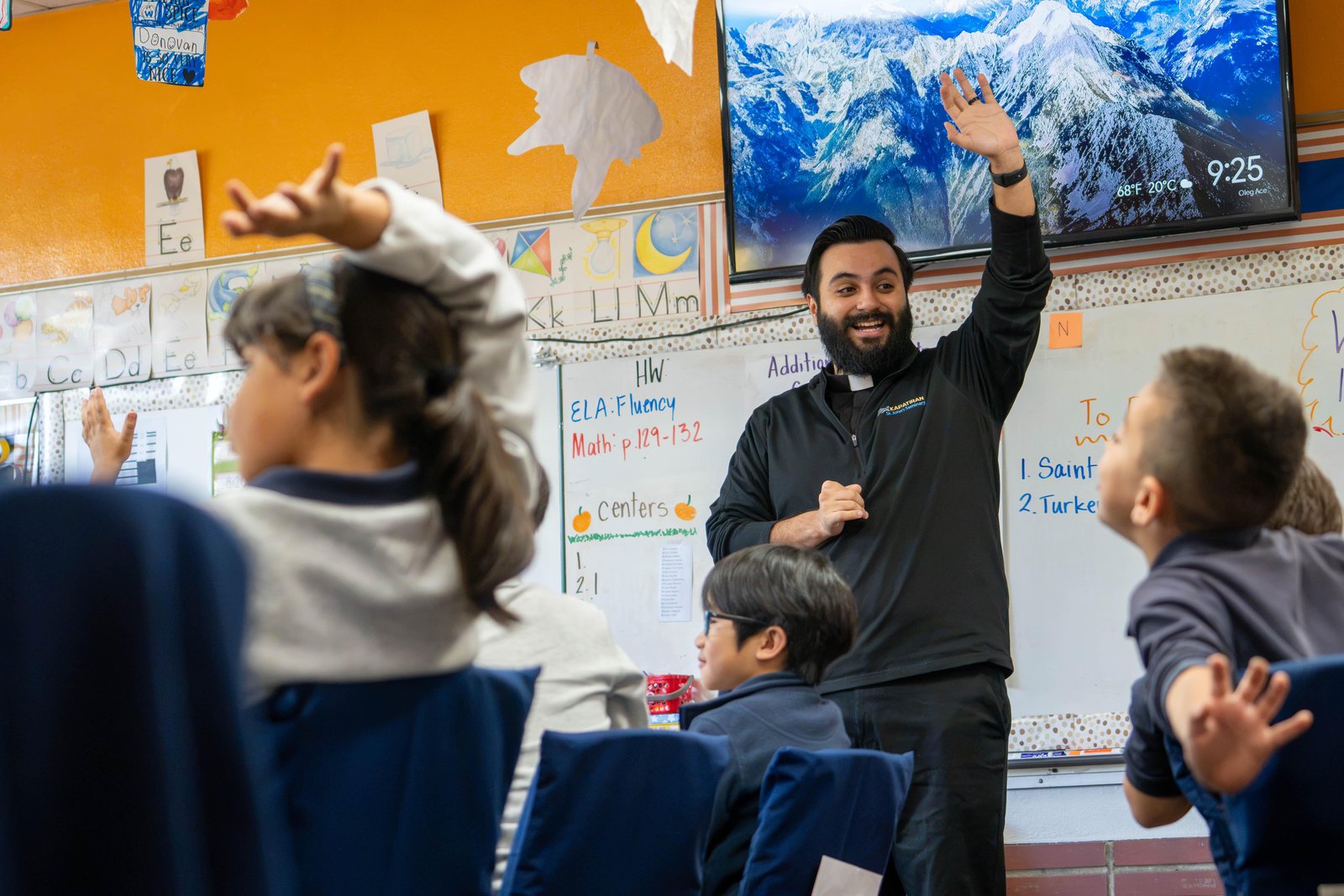
Zamora, the newly assigned associate pastor at Our Lady of Lourdes, brought a fresh — and particularly young — voice to the initiative. Raised in Southern California, he attended public schools before entering the seminary at 17. He was ordained a priest at 27.
“I feel like I just gave them a little head start,” said Zamora after his presentation. “I know that God’s not calling all of them to be priests and all of them to be nuns. But I think that if the few that are called in there are going to be able to hear that well. And I hope that the rest of them are able to say, ‘You know what, I gave it a shot.’ ”
Zamora said he enjoyed removing the mystery about priesthood by answering practical questions about his daily life, from home visits out of his vestments to visiting the boba place across the street from the school.
“We try to justify or explain things, make it logical,” Zamora said. “And a lot of times God calls us out of, like, really random, seemingly illogical situations in order for us to, like, respond yes to him.”
As the week came to an end, Copeland acknowledged that the impact of the presentations won’t be seen right away. But she’s confident they will bear fruit in due time.
“The more knowledge students have about vocations, the more they’re able to share with other people,” she said.
“I hope that the students were able to receive the message that the Lord could be calling them in any way. And that Jesus is really there to support them if they are getting that call, and to just trust in him, and to lean on him.”
Julia Torres is a Los Angeles-based freelancer. She also works in education and is an aspiring professor in data science.