The divine power of music, from King David to Gregorian chant
Four somber notes from a 13th-century chant still turn up in "The Lion King" and "Home Alone," and they point to something greater than music.
What I know about music theory closely resembles what I know about fine art. I know what I like, and my tastes in both are all over the map. I am untrained, unschooled, but an avid fan of both. There is music at weddings and funerals; there are songs that make us sad and happy. There is music that conjures thoughts of that first date, other songs may remind us of the last date.
Thanks to Facebook, I received a brief tutorial on music I was not expecting, and it was about just four notes. I do not read music. I can sing, especially if no one is around. The only instrument I can play is the harmonica and even with that, I am good for only two or three songs.
But I do love music. I have it on in the background as I write. I listen to it in my car, and one of these days, when the 8-year-old homewrecker I live with gets a little older, I plan on getting my audiophile stereo equipment out of mothballs and start playing my more than 300 album collection of music.
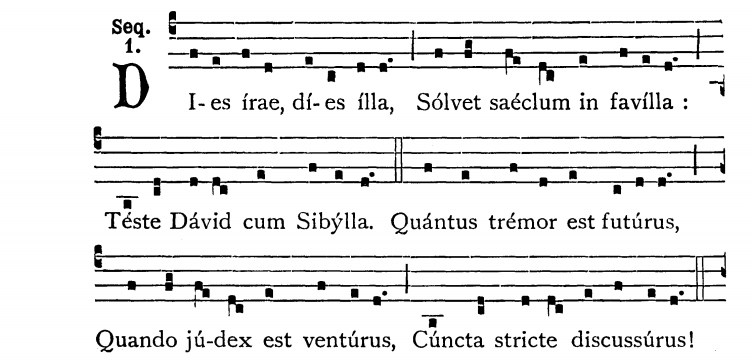
According to this online musical docent, the four notes in question originated in a 13th-century Gregorian chant titled “Dies Irae.” It means “Day of Wrath,” and it was a chant sung at funerals for hundreds of years, accompanying countless Catholics on their journey in a Christian burial rite.
The notes are appropriately somber for such an occasion, but there is something more. They not only dovetail seamlessly to the text of the chant and its emphasis on death and a soul’s encounter with the one Supreme Judge, but they will also make the hairs on the back of your neck come to attention. When you hear them (check out the video), you will feel those four notes as much as hear them, and probably go to your parish website to check on its confession schedule.
The video shows how these four notes have been living on since the 13th century and how they appear regularly in classical music in works from composers such as Berlioz, Liszt, and Rachmaninov, and live still in popular culture music with the scores of films like “The Lion King,” “Home Alone,” and “The Shining.” And in all of these iterations, the message of the four notes remains the same: creating a sense of dread, or even fear, in the receptor of the sound.
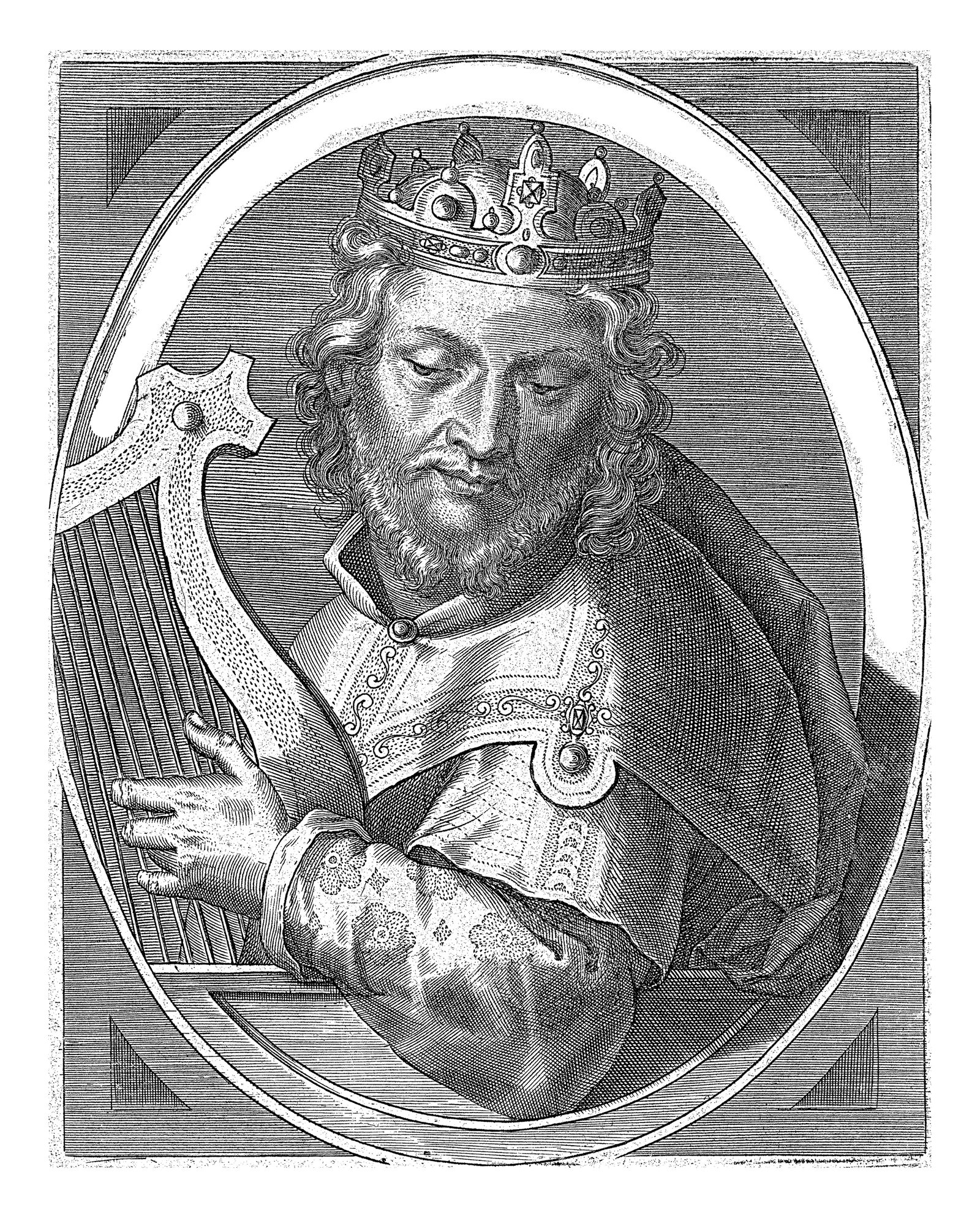
With so many references to music in both Old and New Testaments there is little doubt we have been “wired for sound.” Music played an integral part in the faith journey of King David, and biblical verses encouraging resounding hymns of praise are ubiquitous. Good music at Mass can be part of the mystery of the Eucharist, though even the non-biblical world sought to understand the metaphysical nature of music.
A few centuries after David, Pythagoras, when he was not spending most of his free time figuring multiple ways to make the lives of future high school students torture with his mathematics, used his spare moments to contemplate the mathematics of music. His quote, “There is geometry in the humming of the strings, there is music in the spacing of the spheres,” sums up his belief math was a means to philosophical truths, something thousands of Catholic scientists and theologians have been working on ever since.
From the King of Israel to ancient pagan thinkers to medieval Catholic monks, this pursuit of the divine through music lives on.
I may not understand music composition, and I certainly do not fully understand miracles, but someone with a strong musical background tracked the stars on the tilma of Our Lady of Guadalupe, and it produced music. Maybe the transcriber was coming from a point of bias, but the music that was produced, check it out. Incredible: The Beautiful Musical Melody Hidden in the Tilma of Our Lady of Guadalupe is mystically soothing to the soul.
To think that all the music in the world relies on just seven basic notes is like touching the eternal itself in much the same way as the study of the universe does through astronomy or the structure of our natural world does through biology and physics. It is little wonder that God would provide us with all we need to make music to touch our souls by providing us with such simple tools at our disposal.
But if he could make man out of dust, why not touch man’s soul with only four of those seven notes?

Robert Brennan writes from Los Angeles, where he has worked in the entertainment industry, Catholic journalism, and the nonprofit sector.