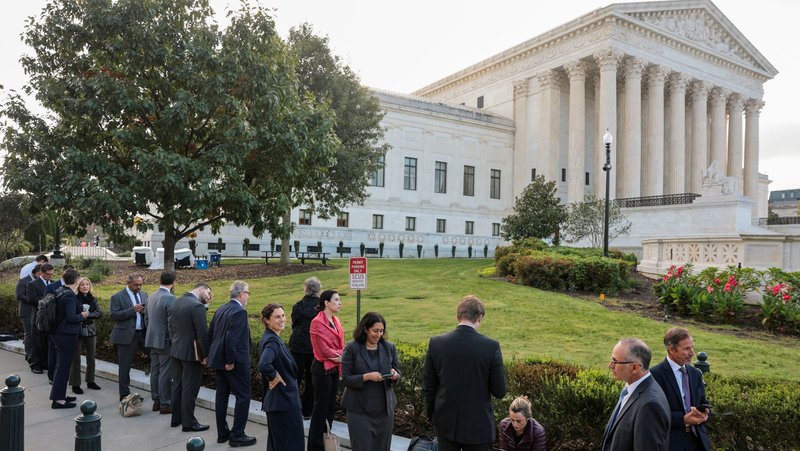
Supreme Court won't intervene in surrogate-parent custody dispute
Justice Elena Kagan declined to intervene in a brief order that did not detail the court's legal reasoning, which is typical in emergency appeals.

The Supreme Court declined Sept. 22 to intervene in a custody dispute between California parents and a surrogate who declined their request to have an abortion after the unborn child was diagnosed with a serious heart defect.
Justice Elena Kagan declined to intervene in a brief order that did not detail the court's legal reasoning, which is typical in emergency appeals. The decision came from Kagan because she handles appeals from the 9th U.S. Circuit Court of Appeals, a region which includes California.
The high-profile case ensued when McKenna West, the woman hired by Nausheen Gilkar and Omar Ahmed to carry their baby as a surrogate, declined their request to undergo an abortion after the diagnosis. West went to Texas, which restricts most abortions, where she delivered the child, a boy, in August. He has since undergone surgery at a hospital in Dallas, where his biological parents also went to be with him.
The couple sued West for breach of their surrogacy agreement, which included a provision stipulating she would undergo an abortion in the event of a diagnosis of fetal abnormality. But West sought a conservatorship over the child, arguing that since the parents had sought to terminate her pregnancy, they would not provide care for the child. The biological parents have denied that claim in court filings, stating their intention to provide medical care.
A California trial court previously ruled that Gilkar and Ahmed were the legal parents of the child, now 5 weeks old, but West's lawyers argued the case should have been resolved in Alaska, where she lives.
The Catholic Church teaches that all human life is sacred from conception to natural death, and as such, opposes direct abortion.
Other Church documents, including "Donum Vitae" and "Dignitas Infinita," also denounce surrogacy as something that violates the dignity and rights of both women and children.

Kate Scanlon is the National Reporter (D.C.) for OSV News.