In secular Uruguay, Pope Leo will visit a Virgin bound to the nation's birth
Our Lady of the Thirty-Three is tied to the country’s independence rather than to any apparition or miracle.
In Uruguay, Holy Week is officially Tourism Week. Christmas is the Day of the Family, and the Dec. 8 feast of the Immaculate Conception became the Day of the Beaches.
But when Pope Leo XIV visits Latin America, his journey will bring him before a small Marian image that Uruguay's determined secularization could never entirely separate from the country's national identity.
The Vatican announced Aug. 5 that Pope Leo would visit Uruguay, Argentina and Peru Nov. 6-17, traveling to 10 cities across the three countries. OSV News has learned that Argentina was initially expected to host the pope over the first weekend of his Latin American homecoming.
But the Nov. 8 feast of Our Lady of the Thirty-Three, patroness of Uruguay, falls on a Sunday this year -- the day thousands of Catholics traditionally make their national pilgrimage to her shrine in Florida -- and that sealed the location of the coveted Sunday papal Mass.
Honoring the Virgin of the Thirty-Three
The Florida Mass will be one of three visits to sanctuaries on the trip. The full schedule of the papal trip was released Sept. 21; a month later, the pope's doctors confirmed Pope Leo needs "no further treatment” following his Oct. 13 surgery for lung cancer and that the trip would proceed as planned.
In Argentina, Pope Leo is expected to celebrate Mass at the Basilica of Our Lady of Luján, the country's national Marian shrine. In Peru, he intends to visit Zaña, where relics of St. Toribio de Mogrovejo, the missionary archbishop of Lima and patron of the Latin American episcopate, are preserved.
In Florida, the pope will honor the patroness of Latin America's most secular country before an image associated with its struggle for independence from Brazil.
"This devotion did not originate in any miraculous event or an apparition, as many Marian devotions do," Father Gabriel González Melano, a priest of the Diocese of Florida, told OSV News.
"The significance of the Virgin of the Thirty-Three is historical and patriotic."
A canon lawyer and member of a Uruguayan academy of history, Father González explained that the image took its name from the Thirty-Three Orientals, the revolutionaries whose 1825 campaign sought to free the territory then known as the Eastern Province from the Brazilian Empire.
The Assembly of Florida, which declared independence Aug. 25, 1825, met beside the town's church, and its members venerated the Marian image preserved there.
"It was the people who began to identify her with that campaign," Father González said. "From 1825 onward, they gradually began to call her the Virgin of the Thirty-Three, with many also dubbing her the liberator of Uruguay."
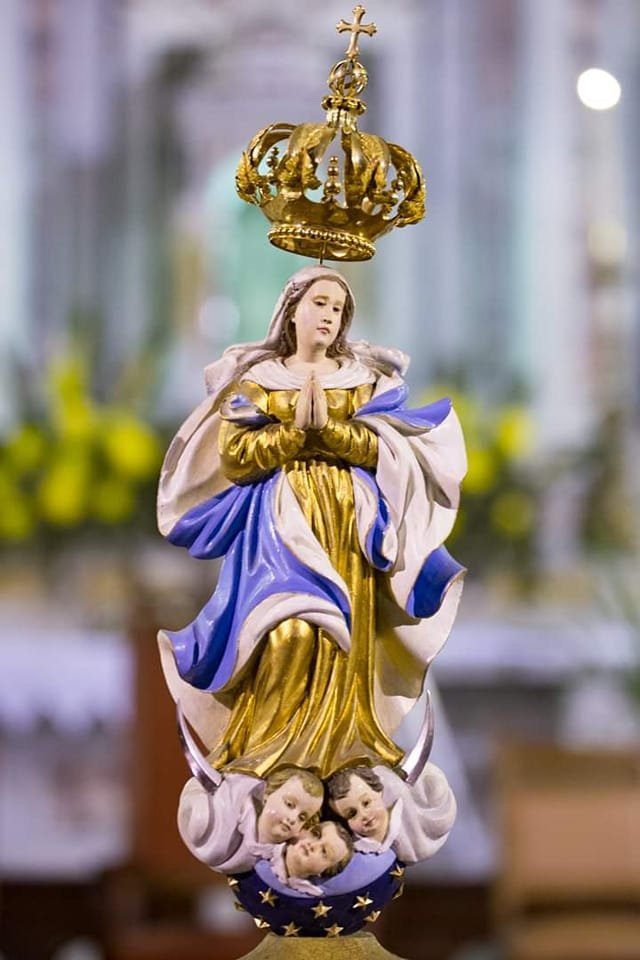
The image itself is much older than the title. Carved from Paraguayan cedar, it is a small representation of the Immaculate Conception believed to have originated in the nearby Jesuit missions. According to the Uruguayan bishops, an Indigenous man donated land and the image for a chapel in the late 18th century, asking that it be venerated as Our Lady of Luján -- the title of Argentina's patroness -- although it is not a replica of the Argentine image. The chapel was established in 1782 and became a parish in 1805.
Our Lady: a national icon in a secularized country
Over time, the statue accumulated signs of its place in Uruguay's national story.
Manuel Oribe, second-in-command of the Thirty-Three and later Uruguay's second constitutional president, donated a gold crown in 1857 in thanksgiving after he and his family survived a shipwreck.
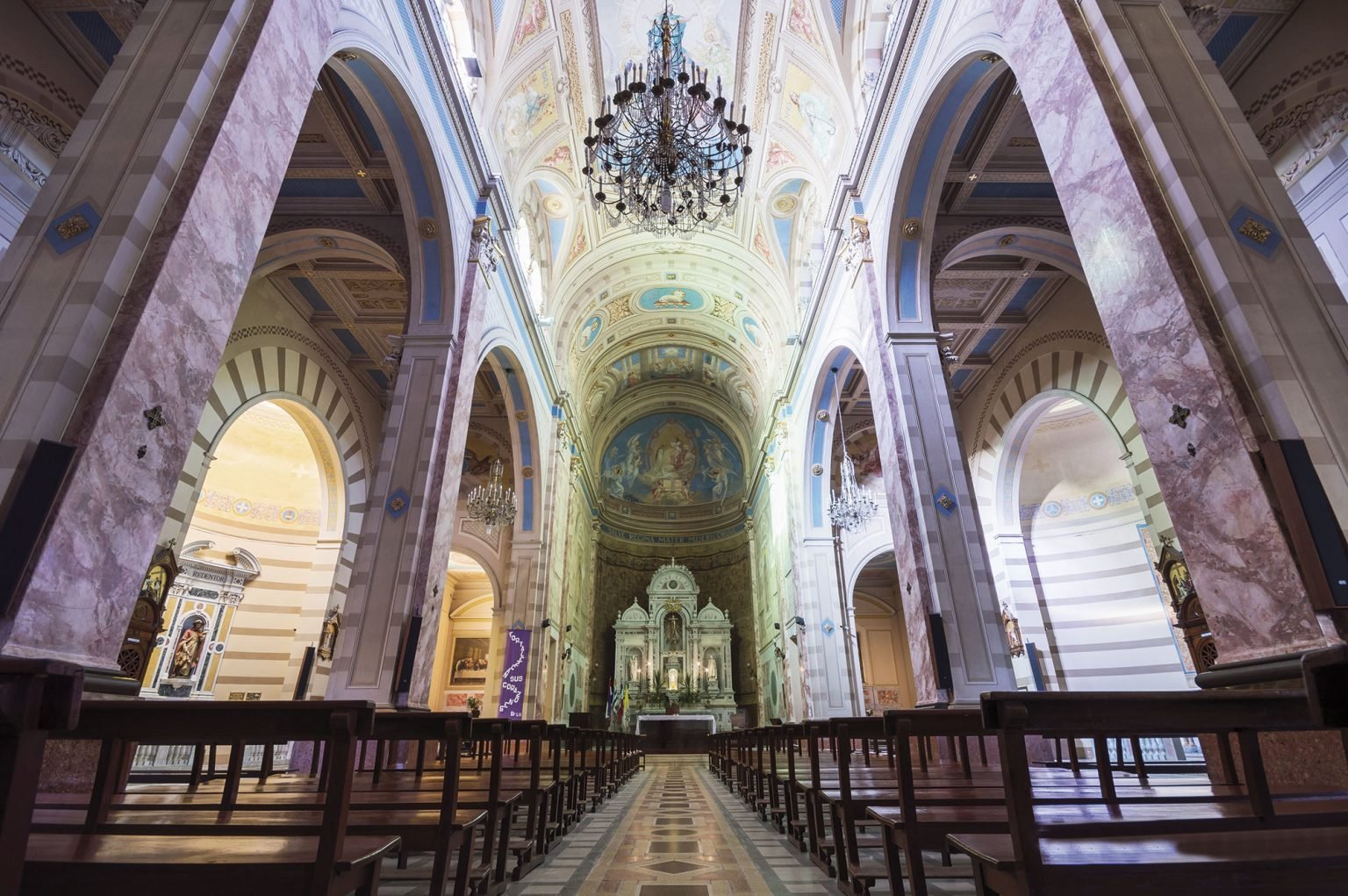
St. John XXIII authorized the image's canonical coronation in 1961 and declared Our Lady of the Thirty-Three patroness of Uruguay in 1962. In 1975, Uruguay's government designated the cathedral and the image national historic monuments, and in 1994 the cathedral became the National Shrine of Our Lady of the Thirty-Three.
"The principal reason for Leo visiting the shrine is, of course, that the pope is coming to Uruguay, so he had to visit the country's patroness," Father González said. The convergence of her feast and the national pilgrimage, he added, makes the occasion particularly significant.
St. John Paul II called the shrine "a joyful and obligatory stage" of his journey when he celebrated Mass there May 8, 1988, ordaining 13 priests and consecrating Uruguay to the Virgin of the Thirty-Three. The image had also presided over his outdoor Mass in Montevideo during his first visit to Uruguay in 1987, which drew an estimated 300,000 people.
Uruguay's secularization began in the 19th century and culminated with the separation of Church and state, approved in 1917 and effective in 1919, when legislation also replaced the religious names of several public holidays. The Constitution guarantees freedom of worship and states that the government supports no religion.
But Father González argues that Uruguay went beyond establishing a neutral state, developing a culture in which religious expression itself was often treated as something to be kept out of public life.
"It is right for the state to be secular," he said. "But that secularism was so strong on the part of the state that it was transferred to society -- and that is where Uruguay's problem lies."
Uruguay has no Catholic chaplains in its public hospitals, armed forces, police or prisons, he noted, and religious education is excluded from public schools. The result, in his view, is not persecution -- Uruguayans are free to worship and organize public celebrations -- but an institutional treatment of religion as though it were irrelevant.
"If you speak with a Uruguayan who opposes religion, he will tell you that no country has greater religious freedom than Uruguay, because here you can do whatever you want," Father González said. "But religion, like any other social or cultural phenomenon, needs to be recognized and regulated."
Highest 'no religion' affiliation in Latin America
Latinobarómetro's 2024 survey found that 52% of Uruguayans claimed no religious affiliation, the highest among the 18 Latin American countries surveyed. Only 33% identified as Catholic.
Yet more than 10,000 people attended the 2019 national pilgrimage to Florida, when the bishops renewed St. John Paul's consecration of the country, and the 2023 beatification of Bishop Jacinto Vera, Uruguay's first blessed, drew more than 20,000 despite rain.
"One must distinguish between the restraints that the government places on religious phenomena and the religiosity of the people," Father González said. "I am not saying Uruguay is an extremely religious country. But since 1987, we have known that faith was not extinguished. It was covered over, but it existed."
He expects a large turnout for Pope Leo, whose significance extends beyond practicing Catholics.
"The presence of the pope -- with everything he represents as a religious and moral figure, and even as a political figure in such a troubled world -- will generate enormous expectations," he said. "People will not be indifferent. Quite the opposite."
The visit also comes as Uruguay confronts a suicide rate the Health Ministry put at 21.35 deaths per 100,000 people in 2024. Although slightly below the 2022 peak, the ministry said the trend has continued upward since 2000; among people ages 20-24, the rate reached a historic high of 33.2 per 100,000.
Uruguay's government has designated suicide prevention a public health priority, and Father González did not suggest religion was a substitute for professional care or public policy. But he argued that Pope Leo could speak to one dimension of the crisis by addressing transcendence, hope and the purpose of human life.
"We live in a country where this lack of a more positive religiosity often creates a profound sense of meaninglessness -- a lack of transcendence and purpose in life," he said.
"A message about the transcendent meaning of life could be received by those who are religious because they have faith, but also by those who do not have faith."
Such a message, he said, would also correspond to the mission of the successor of St. Peter: to unite Catholics in faith and strengthen them in hope.
For Uruguay's Catholics, the Nov. 8 Mass will be a visit by the pope to their patroness.
For the wider country, it may become something more unusual: a public encounter with a part of Uruguay's identity that its secular institutions have often struggled to name.

Inés San Martín is the editor of MISSION Magazine, a publication of The Pontifical Mission Societies USA. She’s the co-host of the Spanish-speaking podcast “Descifrando a León."