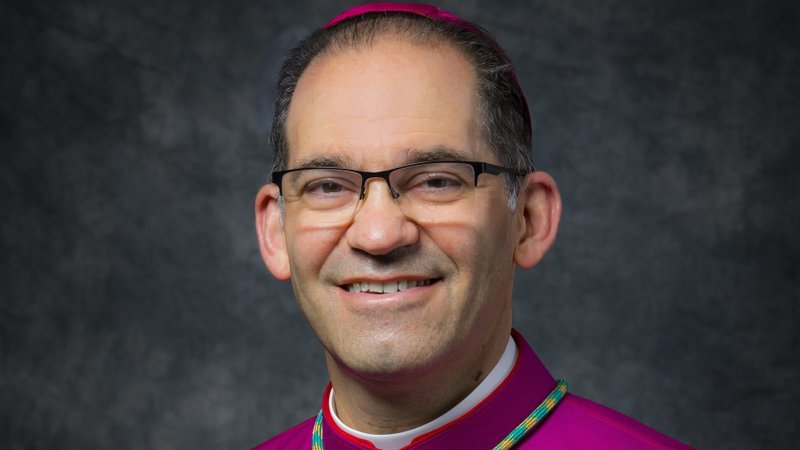
Pope Francis appoints Father Jacques Fabre as new bishop of Charleston
Pope Francis has appointed Father Jacques Fabre as the new Catholic bishop of Charleston, South Carolina. The Vatican announced the 66-year-old priest’s appointment on Feb. 22. Fabre was born in Port-au-Prince, Haiti. In the early 1990s, he was a chaplain at a Haitian refugee camp at the U.S. Naval Base […]
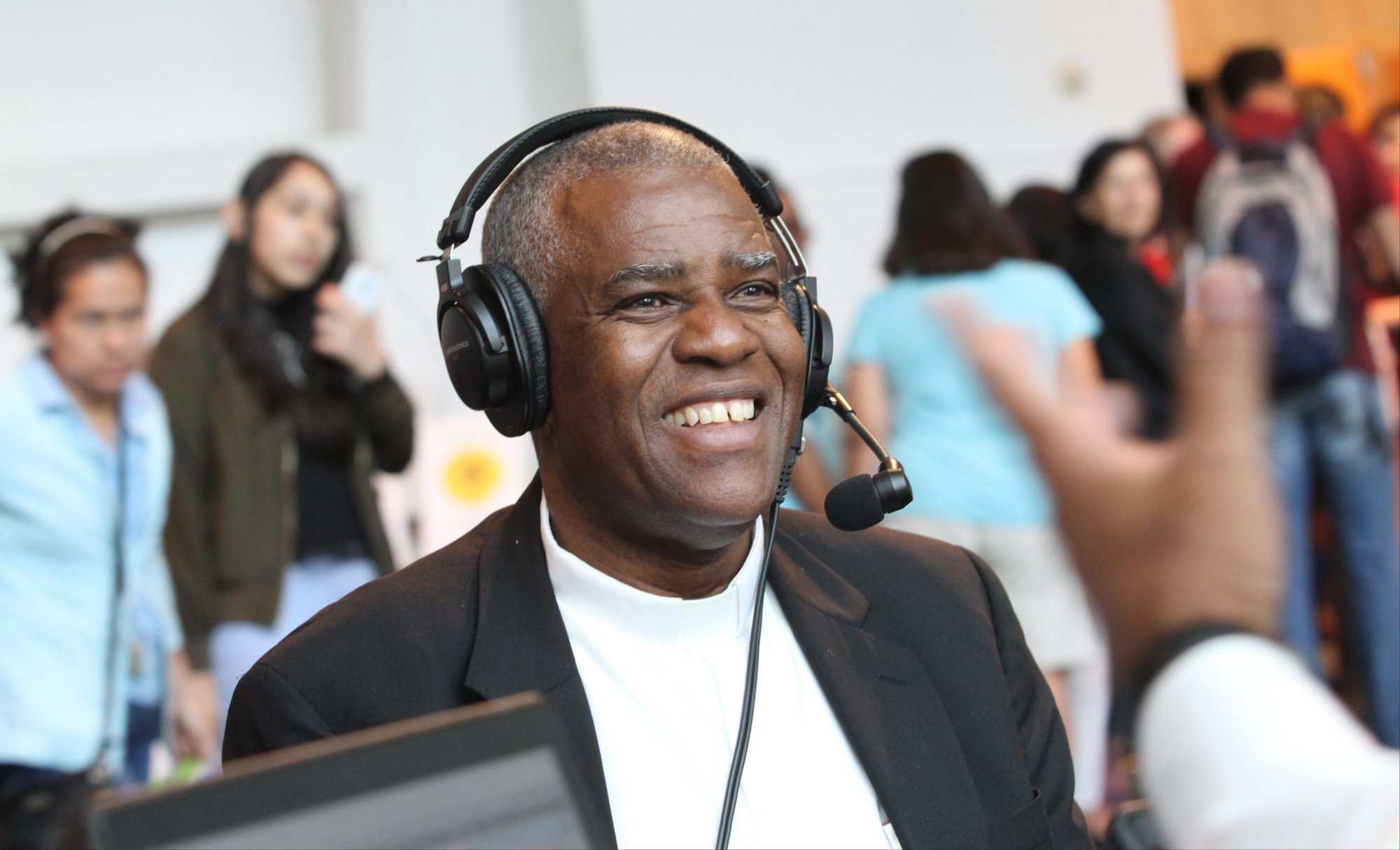
Pope Francis has appointed Father Jacques Fabre as the new Catholic bishop of Charleston, South Carolina.
The Vatican announced the 66-year-old priest’s appointment on Feb. 22.
Fabre was born in Port-au-Prince, Haiti. In the early 1990s, he was a chaplain at a Haitian refugee camp at the U.S. Naval Base at Guantanamo Bay, Cuba. He has served as an administrator at the San Felipe de Jesús Mission in Georgia for the past 12 years.
He will succeed Bishop Robert Guglielmone, 76, who was cleared by the Vatican in December 2020 after an investigation into an allegation that he had sexually abused an eight-year-old boy beginning in 1978 when he was a priest in the Diocese of Rockville Centre, New York.
The Vatican concluded that the allegation lacked the “semblance of truth” and was unfounded.
Fabre moved from Haiti to New York City when he was in high school. After graduating from St. John’s University in New York, he joined the Missionaries of St. Charles, also known as the Scalabrinians.
Fabre studied in Rome at the Pontifical Urban University, where he earned a Master’s in Divinity and a Licentiate in Human Mobility (migration).
He was ordained to the priesthood in Brooklyn, New York, in 1986 at the age of 30. He served as chaplain to Haitian refugees in Guantanamo Bay from 1990 to 1991 and pastor of a parish in the Dominican Republic from 1991 to 2004.
After arriving in Georgia in 2006, Fabre served as the parochial vicar at St. Joseph’s parish in Athens and Holy Trinity parish in Peachtree City.
While acting as the administrator at San Felipe de Jesús Mission in Forest Park, Fabre also served as the director of the Hispanic Charismatic Renewal and a member of the Archdiocese of Atlanta’s finance council. He is fluent in English, French, Italian, Spanish, and Creole.
Guglielmone served as the bishop of Charleston for 13 years. Before Benedict XVI appointed him bishop in 2009, he was rector of the cathedral of the Diocese of Rockville Centre.
As bishop of Charleston, Guglielmone issued restrictions in November 2021 on the use of the Traditional Latin Mass which said that priests can no longer administer confirmation or the anointing of the sick in Latin using the pre-Vatican II Roman Missal and cannot offer midnight Mass at Christmas or during the Triduum in Latin.
The Catholic Diocese of Charleston was established in 1820 and covers the entire state of South Carolina. More than five million people live within the diocese, an estimated 10% of whom are Catholic.
The Charleston diocese will host a livestreamed press conference with the newly appointed bishop at 10 a.m. EST on Feb. 22.
Courtney Mares is a Rome Correspondent for Catholic News Agency.