Pope Leo says economic imbalances are a growing threat to world peace
At his Nov. 4 general audience, the pope said development that is “neither equitable nor respectful of creation” endangers peace.
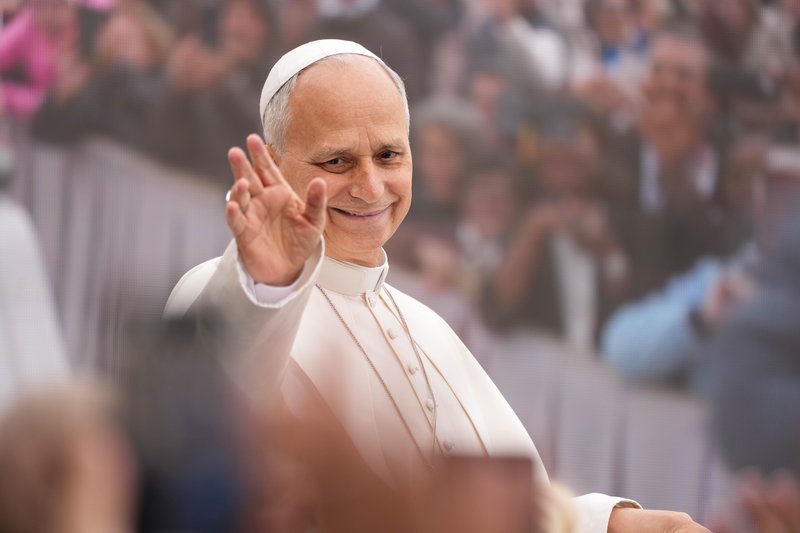
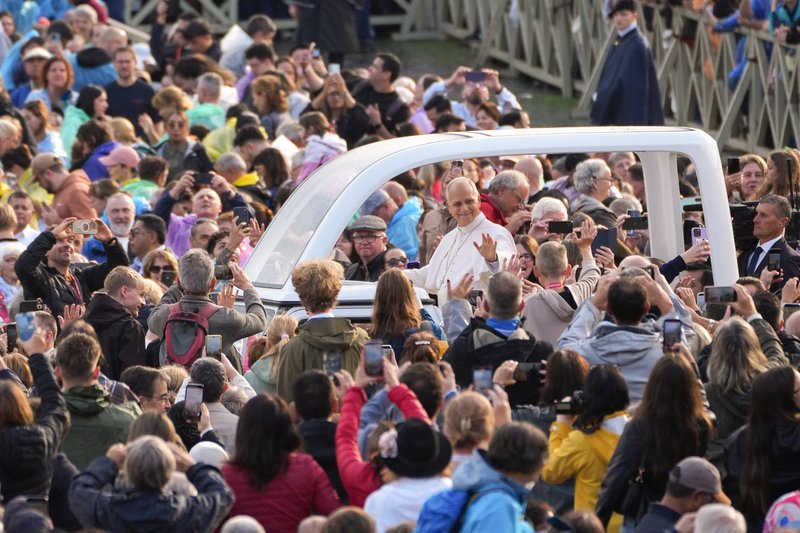
The threat to world peace stems from economic imbalances linked to development that is "neither equitable nor respectful of creation," Pope Leo XIV said at his weekly general audience.
"This is a far-sighted vision, which was unfortunately borne out towards the end of the last century and which we see even more clearly today," he said Nov. 4 in St. Peter's Square.
Pope Leo said at the heart of the economy is work, which allows people to develop as individuals, provide for their families, express their talents, participate in society and build a better world.
But the Catholic vision of economic development must always be at the service of humankind and under human control, he said, citing the Second Vatican Council's pastoral constitution, "Gaudium et Spes." The pope also emphasized the council's call to eliminate discrimination against vulnerable social groups and migrants.
"Work must never be distorted to the detriment of people, the common good or creation," the pope said.
The real challenge, he said, is offering everyone opportunities to make the most of their abilities. Unemployment, exploitation and working conditions that endanger health or life itself are "unacceptable," he said.
Pope Leo reiterated that workers have both the right and the duty to participate in decisions affecting their work, including through trade unions, and to resolve conflicts through dialogue and nonviolent action.
The pope's reflection was a continuation of his series of talks on the Second Vatican Council, and specifically on "Gaudium et Spes," which teaches that those making decisions about financial investments and economic planning have an obligation to provide for the needs of individuals and communities while balancing present-day consumption with the needs of future generations.
The document also touches upon the role of political authorities, he said, stressing that the political community "exists for the sake of the common good."
"The exercise of political authority must always be directed towards the common good, which must be structured and operate according to local and historical circumstances, but always with the good of the entire human family at heart," he said.
His remarks came a day after voters in his home country of the United States went to the polls for the highly anticipated midterm elections.
"It then considers the political community, which -- whatever its historical form -- also exists for the sake of the common good, which must be the aim of the exercise of civil authority," he said in his address to English-speaking pilgrims.
The pope emphasized that engagement in economic and political life in accordance with the Church's social teaching is a way of building peace.
"Politics that tends to the wounds of peoples and of those who suffer injustice offers grounds for hope for the future of humanity," he said, encouraging young people to follow the example of those who have faithfully served in these fields.
At the conclusion of the audience, Pope Leo noted that two beatification ceremonies would take place Nov. 7.
In Antigua Guatemala, Franciscan Father Augusto Rafael Ramírez Monasterio, who was killed in hatred of the faith in 1983, will be beatified. In Santander, Spain, Father Francisco González de Córdova and 79 companions, including priests, seminarians and laypeople who died during religious persecution in Spain in the last century, will also be beatified.
"These new blesseds make visible another part of the 'great multitude' of the Lord's friends," the pope said.
Pope Leo also asked for prayers ahead of his Nov. 6 departure for Uruguay, Argentina and Peru, describing them as countries "so dear to me."
"I ask you to accompany me with your prayers, so that the Lord may bless this mission," he said.