How do Catholic college students view faith, AI and politics? A professor weighs in
Michael Baxter of the University of Notre Dame tells OSV News’ Charles Camosy what he sees in today’s students.
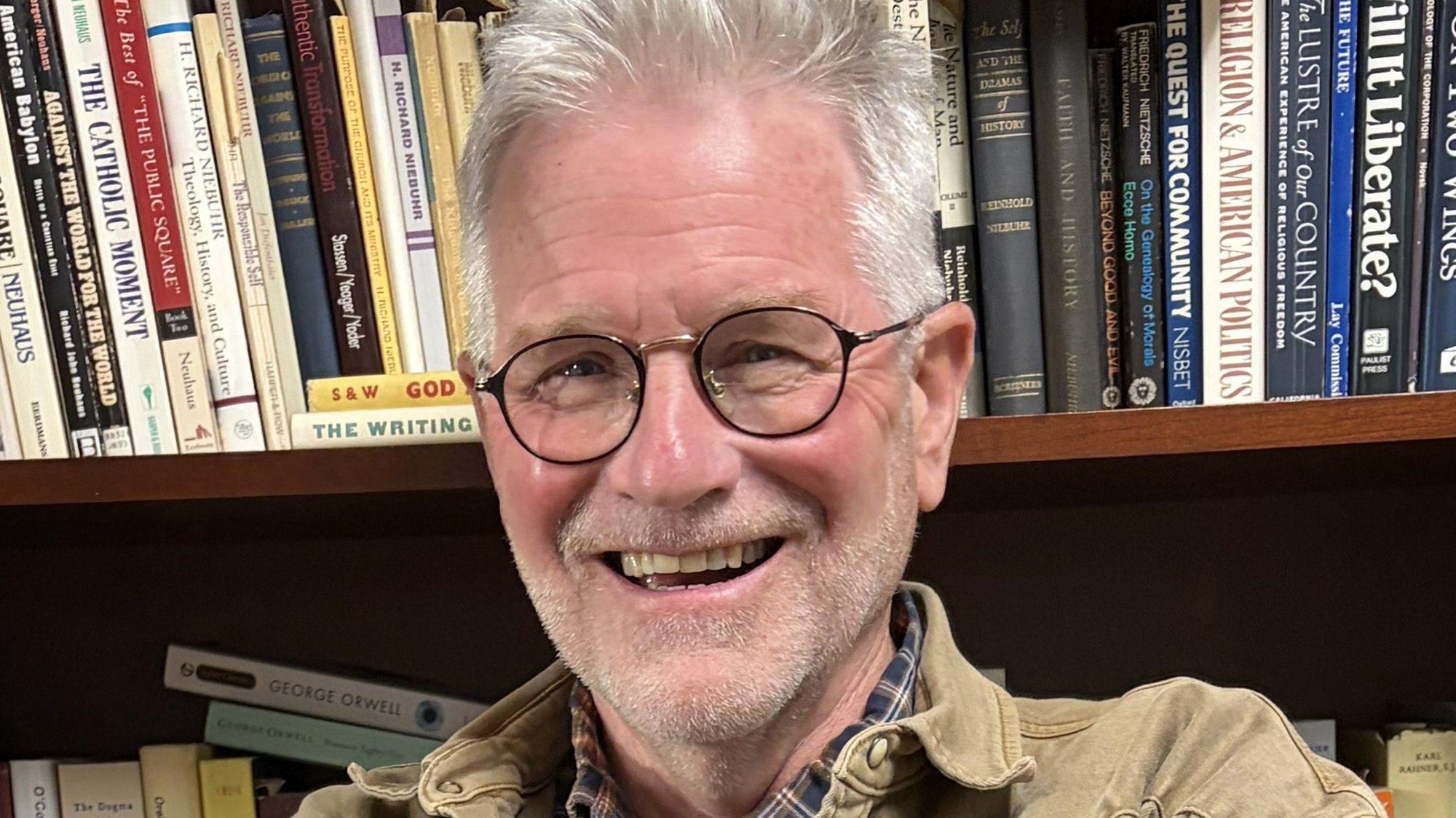
How are Catholic college students learning well in this time of artificial intelligence, how do they view their Catholic identity, and what do they make of a political scene that often conflicts with Catholic values? Offering a glimpse into the answers to these questions at the University of Notre Dame in South Bend, Indiana, theology professor Michael Baxter recently spoke with OSV News' Charles Camosy about what he's seen after decades of teaching.
Charles Camosy: Not all readers may be familiar with the paths you've taken in the last few years. Can you update folks on your story?
Michael Baxter: I taught theology at the University Notre Dame for 15 years, then at DePaul University for four years, then Regis University in Denver for eight years. In 2023, I began working again at Notre Dame for the McGrath Institute for Church Life developing an ecclesial approach to Catholic social teaching.
My focus is less on principles for policymaking and more on the sacraments, the saints and traditional spirituality as sources for social teaching. I have been using the theology of atonement and reparation to address anti-Black racism in the Church's involvement in slavery and segregation in the United States.
I've taught one-credit courses on the Eucharist and on the saints in relation to social teaching. And this semester, I'm teaching "A Faith To Die For," which I taught from 1996 to 2011.
Camosy: It is quite something to end up back at Notre Dame and teaching a course you haven't taught in 15 years. What insights do you have, teaching this course to a new generation of students? And at this particular moment?
Baxter: Students in my classes now more clearly identify as Catholics. They are catechized well and engage in traditional practices and devotions. This trend is visible on campus. More students attend the weekday masses at (the Basilica of the) Sacred Heart. Scores line up for confession beforehand. A dozen or so women wear veils. The Holy Cross priests are more visible, wearing Roman collars. Sometimes they don the traditional Holy Cross habit; unheard of 30 years ago.
Some people murmur that Notre Dame has become "Steubenville West." And there is a definite vibe shift in that direction. At the same time, Notre Dame is more secular in many ways than 30 years ago, and more bureaucratic. This overwhelms the family-store and village ethos that it used to have, and its religious ethos as well. Paradoxically, Notre Dame is becoming more traditional and more secular at one and the same time.
Camosy: Do you see this new traditionalism among Notre Dame students as a good thing?
Baxter: I do. The embrace of traditional Catholic belief and practice like adoration and the rosary, plus about 600 majors and minors in the theology department -- all this is to the good. But I do have a reservation -- or more pointedly, a warning.
As I see it, these young, traditionally minded Catholics tend to embrace a conservative political agenda, or at least to lean rightward in politics. This was also true in the 1990s with the first wave of JPII "evangelical" Catholics. But this movement got hijacked by Republican Party operatives who disseminated the message that "real" Catholics vote with the "five non-negotiable issues" in mind: abortion, euthanasia, fetal tissue research, cloning and same-sex marriage.
This messaging, propagated with the help of Catholic neo-cons, had a hypnotic effect on U.S. Catholics. And it still does. Which is troubling because, to put it mildly, Republican politics is deeply at variance with Catholic teaching. And Democratic Party politics also conflict with Catholic teaching.
Our taking sides in politics is what is tearing apart the Church in the United States. I want my students to go deeper than politics, to be formed in a tradition that exists prior to politics. In my course, I focus on John Paul II's encyclicals "Veritatis Splendor" and "Evangelium Vitae," as well as later encyclicals by Popes Benedict, Francis and Leo, to show how Catholic moral theology and social teaching present a challenge to U.S. politics across the board.
An honest reading of Catholic doctrine scrambles the liberal/conservative divide that dominates present-day politics. So I invite my students to live, in the words of Christopher Dawson, "beyond politics," to accept our homelessness and embrace our status as pilgrims.
Camosy: Catholic Social Teaching focuses on social transformation. Can we transform US society?
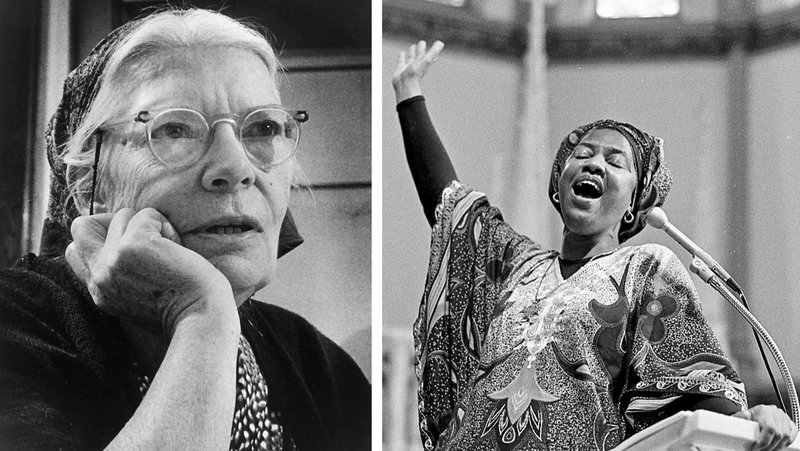
Baxter: I'm not sure we can. The transformational agenda can trap us, co-opt us. The best approach to social change, as I see it, is from the bottom up, in the manner of Dorothy Day, co-founder of the Catholic Worker and now a "Servant of God." Rather than dream about Catholicism transforming America, she started houses of hospitality, farming communities and advocated for local forms of love in action. For her mentor, Peter Maurin, the local parish is the locus for Catholic action. "We need parish homes," he declared, "as well as parish domes."
The Catholic Worker vision is often written off as marginal. But it is the vision set forth by Pope Benedict in "Deus caritas est," in which service, "diakonia," is essential to the Church's mission as word and sacrament. Love of neighbor goes back to the earliest days of the Church, which ordained deacons to meet the needs of widows and orphans (Acts 6:1-6), and it continued with a long line of exemplars: Lawrence, Augustine, Chrysostom, Basil of Caesaria, Martin of Tours, Benedict, Francis of Assisi, Vincent de Paul, Mother Teresa -- down to the present. And the need for charitable service will get more urgent as people are put out of work due to AI.
Camosy: OK, so yes, we are in the early stages of an AI revolution. What do you think this moment means for the Church?
Baxter: Pope Leo XIV wants the Church to take up the issue of AI in the same way that Leo XIII did regarding the Industrial Revolution. But I do not think the titans of industry today (Musk, Altman, Huang, et al) will listen to the pope(s) any more than did the titans of industry of yesteryear (Ford, Rockefeller, et al).
The industrial and AI revolutions are as stages of one single revolution: capitalism, with its tell-tale transformation of workers into machines and the people in charge reaping the profits. So, trying to apply the principles of CST to AI is fine, but just in case things with AI do not "go well" (as the people on the frontier euphemistically put it), I think the Church needs to help us defend the communities and ways of life we find. The anti-data center movement is hopeful. So are the reports of people simply saying no to AI at work.
Camosy: I've been extremely interested in drawing attention to AI-directed autonomous weapons. Can you say something about how the Church ought to respond to the development and use of such weapons?
Baxter: Resistance. Refusal. Conscientious objection. The Church should urge Catholics in the military to stand against these evils in much the same way that is needed in responding to nuclear weapons. More than 40 years ago, the U.S. Catholic bishops pledged to help people in the military to discern their consciences about participating in developing and deploying such weapons.
Military officers and chaplains should not be left alone to deal with this pastoral challenge. There is a pastoral need even here at Notre Dame what with the presence of the ROTC training programs.
Camosy: What are some other implications of AI for Catholic higher education?
Baxter: It presents a stiff challenge to the way we have been teaching, especially in assigning papers. It is gradually becoming irresistible for students to use AI to gather information about a topic. But we are resorting to other ways of learning from the past: blue books for tests, oral exams, discussions while paging through hard copy books.
These are ways to practice "slow learning." In the coming years, there will be a veritable flood of texts and images coming our way. We will be awash in information. What will matter most is teaching students how to sort through it all and find what is not only useful but also truthful.
This will take wisdom, the kind that comes from reading with others and talking about what we have read and what we think about it. And it will take time away from the digital universe that shapes too much of our world.
In this spirit, we should try to fast from using AI one day a week, on Sunday. The Lord's Day is an ideal time to set aside the machinery of the AI empire that will enshroud our vision. Our students need it. We all need it. Keeping the Lord's Day helps keep our eyes on our true horizon, which is God.
Charlie Camosy teaches moral theology and bioethics at The Catholic University of America in Washington.