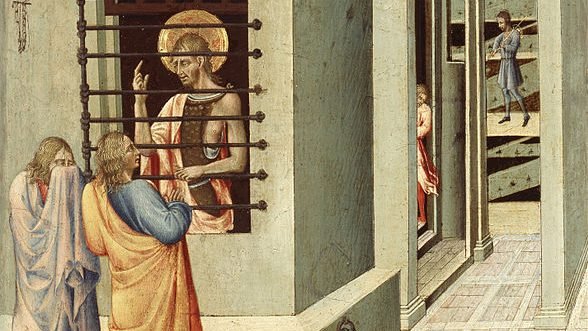
Optimizing our lives is hurting us, but Advent gives us an answer
All of these AI tools promise to make me more efficient, more productive … but for what? More efficiency? More productivity? More task-oriented scrolling couched as leisure?

One fall evening, after getting all four kids to bed, packing lunches, culling school emails, checking two youth sports apps, and answering texts from work and family, I opened Instagram for a few minutes of mindless scrolling — hoping, at least, to stumble across a new recipe for our dinner rotation or a rainy-day craft for the kids.
One particular ad gave me pause: “Meet Muse, your personal AI agent that gets things done across every part of life.”
The video showcased an AI that functions like a house manager or personal assistant, promising help with everything from school supply shopping to real-time calendar updates. In less than 60 seconds, Meta had me wondering how I might use Muse, including tracking my fitness goals, filling out forms, and changing travel plans.
I was admittedly tempted at the thought of outsourcing some of our modern family circus. Handling school, sports, and extracurricular emails is a part-to-full-time job. Signing kids up for camps, with alarms set months in advance, has rightly been compared to The Hunger Games. And feeding and clothing a family of six on a budget takes a sleuth’s eye for sales.
Then I remembered the banner ad I had just seen in my Gmail: “Boost your productivity with Gemini.” Google was offering to summarize my emails, track my tasks, and brief me on my day.
Curious, I logged into X. There it was: a paid post in which a husband — authentic or influencing, I could not tell — boasted about how Anthropic’s Claude saved his wife time and money by taking over meal planning and grocery shopping.
I closed my laptop. All of these tools with Greco-Roman names promised to make me more efficient, more productive … but for what? More efficiency? More productivity? More task-oriented scrolling couched as leisure, like what I had indulged in on Instagram? Unlike the muses for which Meta’s is named, none invited me to contemplate, create, rest, or be still, which is what I really need and what my family needs from me.

We don’t need help doing more; we need to be simplifying, discerning what is essential and what is extraneous. America’s children are feeling the ill effects of being over-scheduled and constantly stimulated. We need to model how to slow down.
If the pull toward optimization is strong at home, it’s even more forceful at work. As the AI economy booms and the threat of unemployment looms, white-collar workers are using AI to meet rising employer expectations. Output is up, but hiring is down. Employees are expected to do more with fewer support staff, and many wonder whether they can take time off, even weekends, since AI can cover for them.
We’re all on a giant hamster wheel. Be efficient, be productive, demonstrate your value, we hear. In short, be superhuman.
The most worrisome threat posed by the AI race remains the possibility that it will wipe out the human race. In a recent conversation with Ezra Klein for The New York Times, Bill Gates, chairman of the Gates Foundation and Technology Advisor to Microsoft, didn’t mince words: “There is no supervisory layer today. That supervisory layer is needed urgently to prevent bad people from using today’s A.I.s to shut down economies or kill millions of people.”
But if by God’s grace that doesn’t come to pass, another pernicious threat might figuratively kill us. It’s not only Man versus the Machine we have to worry about; it’s Man Becoming the Machine.
This is why we need Greco-Roman wisdom to counter all of these shortcuts.
We could start with the difference between chronos and kairos. Chronos indicates sequential, measurable time: what we mark with clocks and calendars, what AI promises to give us back.
Kairos, in layman’s terms, is an appointed time when God acts and we respond. For Christians, the Incarnation is the quintessential kairos — God enters history, into chronological time itself, giving it new and eternal meaning.
“But when the fullness of time had come, God sent his Son, born of a woman, born under the law, to ransom those under the law, so that we might receive adoption,” St. Paul writes (Gal 4:4-5).
It is a relief, then, to be arriving in Advent, the season in which we prepare for that divine in-breaking into history.
We can’t outsource our Advent preparation. It is not a beat-the-clock exercise. It beckons us to slow down, to linger, to cultivate attentiveness and stillness, to quietly prepare a place for the Lord who comes to us as an infant.
Little children are the antidote to the insatiable demand for productivity. In fact, they demand inefficiency. Anyone caring for little ones knows it takes longer to walk anywhere with them. They stop to wonder, adjust their shoes, zigzag instead of moving forward in a straight line.
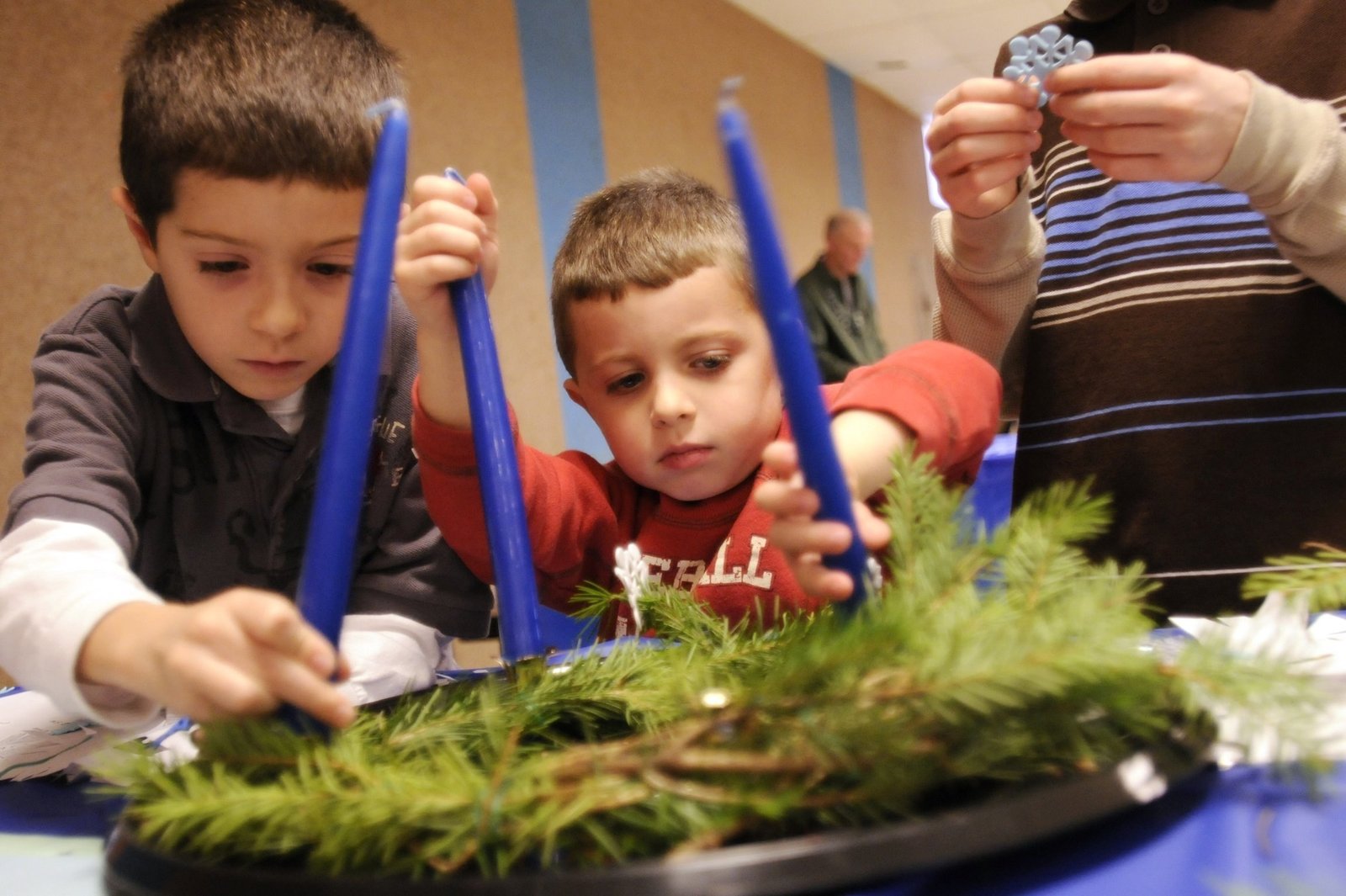
Just last week, on a walk with three of my four — one in the stroller, one on a scooter, one walking beside me — my Apple watch asked me seven times if I had finished my workout. We were walking at a pace of a 42-minute mile.
I chuckled and powered it down. Why was I tracking anything at that moment? Why hadn’t I simply entered into their experience of the walk, examining every fallen leaf and perusing the little library at the end of a neighbor’s driveway with them?
Not long ago, a friend who was expecting her first child asked me for my thoughts on mothering little ones.
“You never have enough time,” I warned. She thought I meant that they grow up fast.
“Yes, of course,” I said. “But you literally never have enough time. You see a three-minute window to throw in a load of laundry; your wobbly toddler sees a stairwell to climb. You think it’s quiet enough to call the insurance company; your child picks that moment to turn your kitchen utensils into percussion instruments. You want to clean the breakfast dishes; your kid wants you on the floor doing a puzzle for the tenth time.”
“Pick the puzzle,” I said. “Somehow you find time for your to-do list, but you don’t always get that moment back.”
Children live totally in the present moment, and they will persist until you surrender and enter into it with them. The child Jesus, who comes to us at Christmas, wants to do the same for all of us. He wants to help us resist conforming to the spirit of this age, from assigning every minute a task. He wants our attention, which we are finding it harder to give.
This takes effort. Unlike Lent, Advent doesn’t hand us disciplines like prayer, fasting, and almsgiving. We have to be creative. We can linger after meals with friends and family. We can buy an alarm clock so our phones aren’t beside us as we wake or sleep. We might rise a few minutes early to pray with Scripture, or close the day with a short examen, asking “Where did I love today?” instead of “What did I accomplish?”
Advent is also the start of a new liturgical year. What could be more important than a new beginning, a commitment to be human?
At the end of this season, we will celebrate that God became one of us — man, not a machine. It seems to me at this moment in history, he is coming to remind us of who we are.
“Waste time with your children, so they realize that love is always free,” Pope Francis once said. This Advent, the child Jesus yearns for our attention — and, even if just for a little while, our inefficiency.

Elise Ureneck is a regular Angelus contributor writing from Rhode Island.