Even in the multi-tasking of our lives, Brother Lawrence offers a solution
God is also Lord of being stuck in commuter traffic, answering e-mails, and changing the oil in our cars.
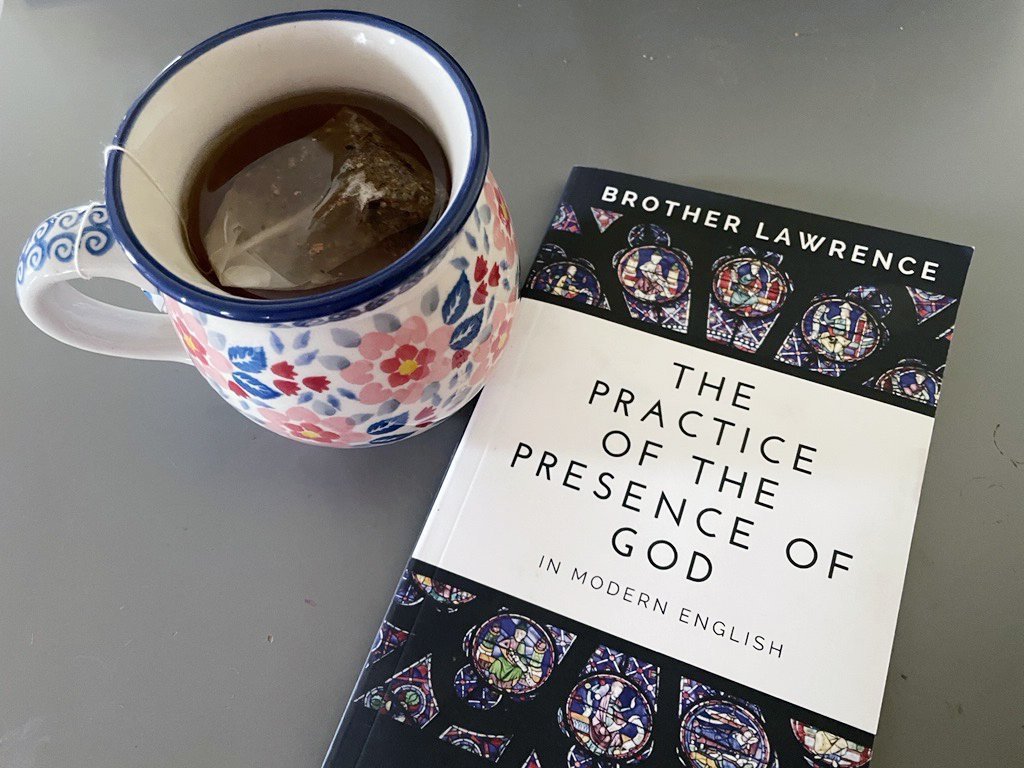
“The Practice of the Presence of God” (Barbour Publishing, Incorporated, $10.99), by Brother Lawrence of the Resurrection (c. 1614-1691), is an enduring guide for the spiritual seeker.
Born Nicholas Herman in French Lorraine, Brother Lawrence eventually became a consecrated lay brother at a Discalced Carmelite monastery in Paris.
As a child, however, he did poorly in school and worked briefly as a soldier and a valet, describing himself as “a great awkward fellow who broke everything.”
His conversion took place in the winter of his 18th year. Regarding a leafless tree he knew would burst into fruit at spring, he felt a deep and permanent sense of God, and determined ever after “to walk as in His presence.”
He entered the monastery in 1666 and from that point forward was known as Brother Lawrence.
Known for humility, he welcomed the prospect of being made “to smart” for his clumsiness. Instead, he was assigned to the kitchen and found “God has disappointed him, he having met with nothing but satisfaction in that state.”
Cleaning pots and scrubbing floors, Brother Lawrence grew quietly resplendent in love. He was also eventually made head cook. We should continually converse with God, he learned, and refrain from concerning ourselves with anything other than carrying out his will.
For one four-year period he became obsessed with the notion that he deserved to be, and would be, damned. Eventually he chalked up his tortured thoughts to a lack of faith, came to realize that God’s abundance overcomes even our worst failings and sins, and from that day forward until he died in his late 70s, experienced perfect interior freedom and joy.
His spirituality has come down through letters he wrote and notes of conversations, which were compiled by Father Joseph de Beaufort and first published shortly after Brother Lawrence’s death.
Later were added “Collected Thoughts of Brother Lawrence,” taken from a short piece he wrote in 1691, and “Ways of Attaining to the Presence of God,” originally published in 1741 as “Spiritual Maxims.”
Now known as “The Practice of the Presence of God,” these collected writings comprise profound meditative meat.
He preferred the Gospels to all other spiritual writings, insisting “Christ alone can reveal Himself to us.” He also eschewed penances and special practices in favor of simply putting ourselves, at each moment, before God, and doing each moment’s work for love.
Whether Brother Lawrence was turning a frying cake, picking up a straw from the ground, or washing dishes, he “resolved to make the love of God the end of all his actions.” To gently place ourselves in God’s presence, he recommended such simple phrases as “My God, I am all yours,” or “Love, create in me a new heart.”
He wrote:
“Lord of all pots and pans and things … / Make me a saint by getting meals / And washing up the plates!”
He reminds us that, translated into contemporary terms, God is also Lord of being stuck in commuter traffic, answering e-mails, and changing the oil in our cars.
Instead of railing against our daily chores, Brother Lawrence invites us to lose ourselves in Christ: “Men invent means and methods of coming at God’s love, they learn rules and set up devices to remind them of that love. … Is it not quicker and easier just to do our common business wholly for the love of him?”
We sometimes erroneously think that the contemplative life can take place only in silence and solitude.
To that end, these words of Brother Lawrence are as relevant to our multi-tasking times as they were almost 400 years ago: “The time of business does not with me differ from the time of prayer, and in the noise and clatter of my kitchen, while several persons are at the same time calling for different things, I possess God in as great tranquility as if I were upon my knees at the blessed sacrament.”
On the character of Brother Lawrence, Father Beaufort, who knew him personally, observed: “With all his virtue, Brother Lawrence was intensely human. He had a frank open manner which, when you met him won your confidence at once, and made you feel that you had found a friend in whom you could confide completely.”
“On his part, as soon as he knew with whom he was dealing, he spoke quite freely and gave immediate proof of his great goodness of heart. What he said was very simple, but to the point and full of sense.”
“Beneath a rather rough exterior, one found remarkable wisdom, a spaciousness of mind quite beyond the range of the ordinary lay brother, and insight that surpassed all expectation.”
“As a man of affairs he was capable of carrying through the greatest matters, and of giving wise and safe counsel. Such were the characteristics that struck the ordinary observer.”
Edgar Beltrán of The Pillar has noted that Brother Lawrence was hardly promoting “quietism” or passivity. Instead, his focus was on making our prayer concrete. “We prepare our time of prayer by the way we live the rest of the time,” writes Beltán. “That’s where to start the inner work of sorting, tidying, stilling.”
By the way, “The Practice of the Presence of God” is apparently one of Pope Leo’s favorite books.
Humble and succinct, Brother Lawrence himself might have boiled down his thought to this: “Count as lost each day you have not used in loving God.”

Heather King (heather-king.com) writes memoir, leads workshops, and posts on substack at "Desire Lines: Books, Culture, Art."