Young people don’t know how to date anymore. Can 'The Dating Project' help?
The Church needs healthy, happy families, and every family begins with a “boy meets girl” story.
The short documentary “The Dating Project” may open with a prologue from a Catholic priest explaining how he prays for young men and women to find one another for a holy Catholic marriage, but this is probably the most secular product the storied Family Theater Productions company has ever produced.
The film, streaming now on EWTN’s new on-demand digital platform EWTN+, is must-watch TV, not only for any serious single Catholic, but for all those Catholic parents of single adult children praying for a good Catholic partner to walk into their child’s life.
It is a short film, but a big topic. And the situation is urgent. According to the film, for the first time in American history, more people are single than married.
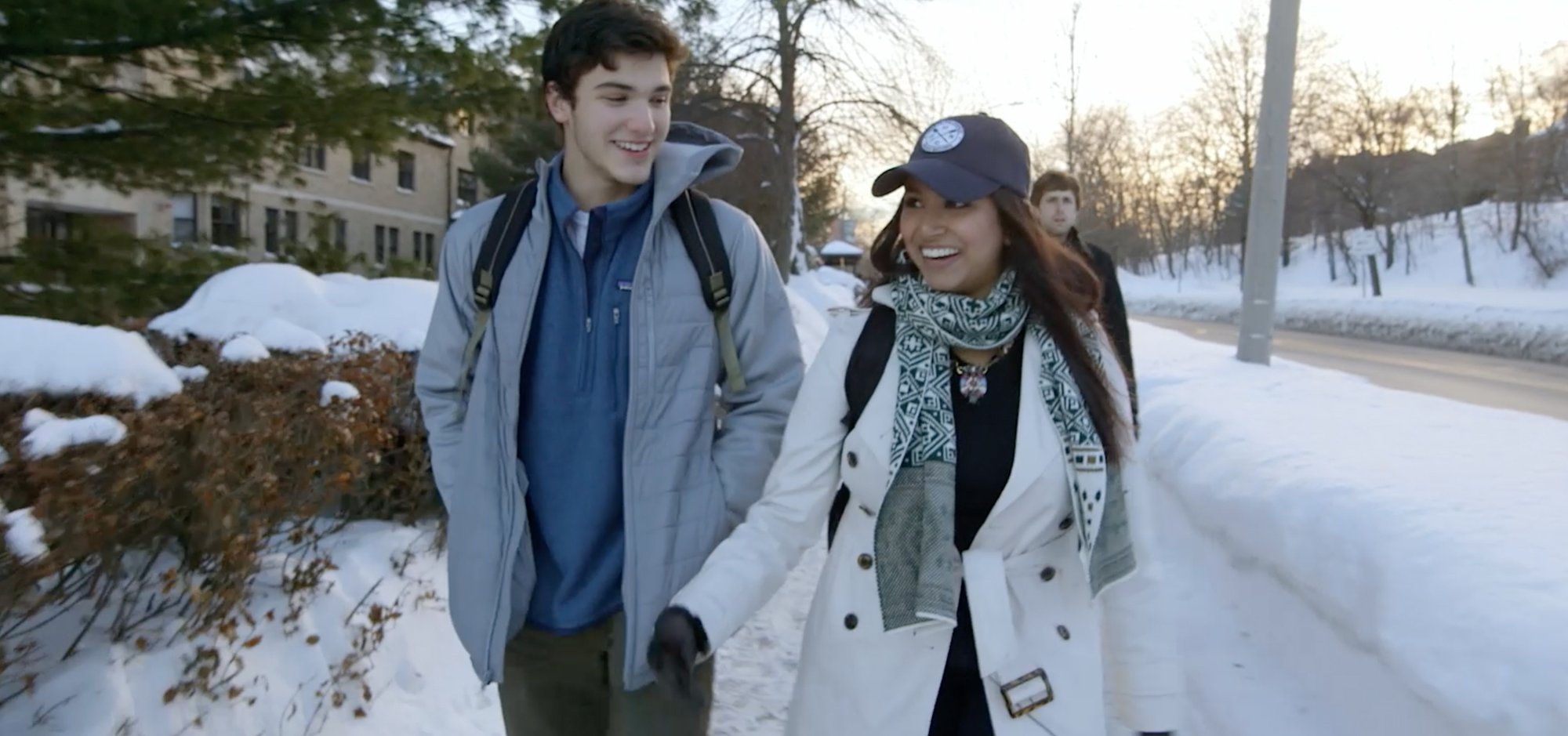
“The Dating Project” puts flesh and blood to this demographic red flag by following four distinct groups.
First, there are young people in college experiencing “adulting” for the first time and finding that the collegiate “hookup culture” has replaced traditional dating.
Next, we meet a woman in her mid-20s. She has not been on a date in years, and when she did last go on one, what the young man wanted was not what she was looking for.
Then there is the vibrant career woman in her 30s who works 70 hours a week, lives in the hectic world of New York City, and has little time for anything resembling a romantic relationship.
Finally, there is a single man pushing 40 who has never been married and is actively trying to find someone from online dating services.
Catholic Boston College scholar Kerry Cronin, Ph.D., is the film’s tour guide into the dateless culture we reside in, and has become kind of a legend on campus with her “Dating Assignment” class. To pass the class, a student must ask someone out for a date and do it face-to-face — no DMs or texts. Simply asking someone out for a cup of coffee is a passing grade.
Other than the abundant cartilage in their knees, there is little I envy about young people, and I certainly am glad I do not have to navigate the dating terrain today. As the film shows, especially among college-age students, they do not really know what dating is, and few of them in the film recall ever having gone on one.
There are so many obstacles in their way. The solitary-inducing effects of the internet, the loosening bind of traditional extended families, and the breakdown of social support systems have made the traditional concept of dating seem, well, dated.
But as Cronin makes clear to her students, getting back to basics is a pathway to a real relationship. Like all worthy journeys, the first steps are the smallest. If anyone is looking for an example of how far afield this concept has become for college-aged young adults, I suggest you check out the latest headlines from the sordid affair on the Cornell University campus.
But if dating has been left to atrophy, the desire among people to forge relationships has not. Cronin identifies her students’ main challenge: for the past two generations, the culture has been telling people that relationships and sex are “no big deal.”
Cronin counters that those two “deals” are actually huge. The young college people in the film, having lived their lives with TV sitcoms, movies, and music selling them the opposite view, seem to have an inner desire for the professor’s view, if her overflowing lecture hall is any indication.
As the film’s writer and producer Megan Harrington puts it, “The film offers viewers hope, inspiration, and tools for navigating the relationship landscape.” Since we did not get to this point overnight, it will take time and more efforts like Cronin’s to re-prioritize the “big deals” when it comes to relationships.
To that end, the production company has also launched a YouTube series called “Dating Decoded: Beyond the Dating Project” that dives deeper into the film’s themes, including unseen footage from the original.
It is not a trite subject. The Church needs healthy, happy families, and every family begins with a “boy meets girl” story. If this film helps facilitate that plotline, it is doing God’s work. Who knows, it may sound like a rom-com pitch at the Hallmark channel, but maybe some young man and woman are in the same coffee shop, on their laptops watching “The Dating Project,” and when they look up to see if their latte is ready, their eyes meet and they follow Cronin’s advice.

Robert Brennan writes from Los Angeles, where he has worked in the entertainment industry, Catholic journalism, and the nonprofit sector.