‘Scapegoats’
“Any society, any family, which cannot share or take seriously the pain of its children and views that pain as something normal or to be expected is a society ‘condemned’ to remain a hostage to itself, prey to the very things which cause that pain.” Last September, Pope […]
“Any society, any family, which cannot share or take seriously the pain of its children and views that pain as something normal or to be expected is a society ‘condemned’ to remain a hostage to itself, prey to the very things which cause that pain.”
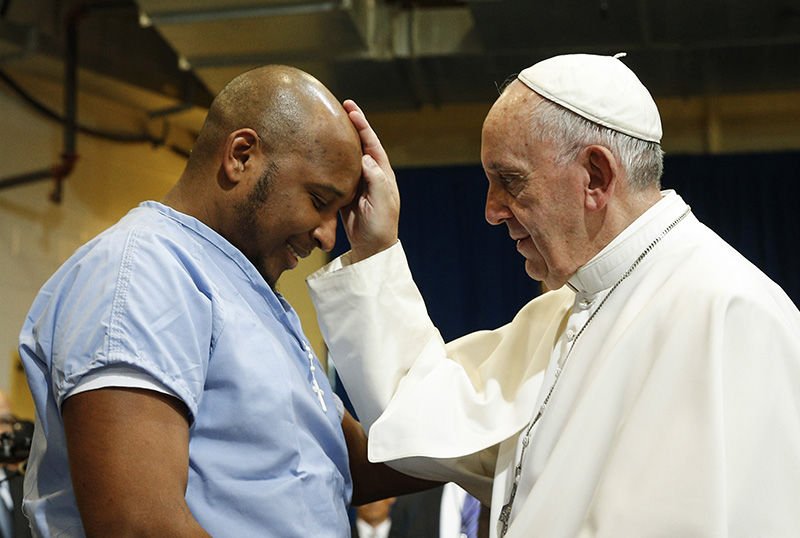
Last September, Pope Francis spoke those words to inmates during his visit to the Curran-Fromhold Correctional Facility in Philadelphia. In Spanish, he told the captive congregation, “I am here as a pastor but, above all, as a brother to share your situation and to make it my own.”
In doing so, the pope addressed the issue of mass incarceration, a topic he hasn’t shied away from. Through words and actions, he has often declared that it’s a sacred Christian belief to treat prisoners with respect and mercy.
In 2014, addressing the International Association of Penal Law, Pope Francis warned against the modern practice of locking members of society up for lengthy periods.
“A widespread conviction has taken root in recent decades that public punishment can resolve the most disparate social problems, as if completely different diseases could be treated with the same medicine,” he pointed out.
Before adding, “Scapegoats are not only sought to pay, with their freedom and with their life, for all social ills such as was typical in primitive societies, but over and beyond this, there is at times a tendency to deliberately fabricate enemies — stereotyped figures who represent all the characteristics that society perceives or interprets as threatening.”
Editor's note: This piece is part of Angelus News' "Prison on Parole" edition. Read more about the issue from our editor-in-chief, JD Long-Garcia.
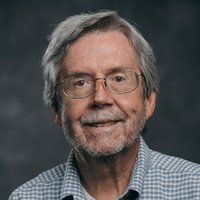
R.W. Dellinger is the former Angelus features editor. In a career spanning three decades, Bob has told the story of the Church's work for justice and peace through expert analysis, and narrative and investigative reporting from the peripheries of Los Angeles. In 2018, the Catholic Press Association named him ”Writer of the Year."