Back in the days when people still read books, a bestseller had the power to capture the public’s imagination and become a driver of popular culture. This phenomenon goes back a long way through human history.
In the 20th century, books like “Gone With the Wind,” “The Godfather,” and “The Exorcist” were so popular when they were first published, speculation about who was going to be making the film version of the story quickly followed. Coffee-break conversations speculated which actor would fit best for the juicy character parts these books had created, and the ensuing conversations would debate the wisdom of the casting decisions that followed.
Bestselling books had a second life in those days, when the tome would come out in paperback. When this happened to “Jaws” and the purchase coincided with my meager monetary output of my teenage years, I pounced and bought it: I had heard so much about this book, and so looked forward to jumping into the deep end with it.
I was never so disappointed in a book in my life. The book had a hokey subplot and unlikeable protagonists. Frankly, I began rooting for the shark. Usually, it is the other way around, where the book is miles above the attempt of filmmakers to capture the story on film.
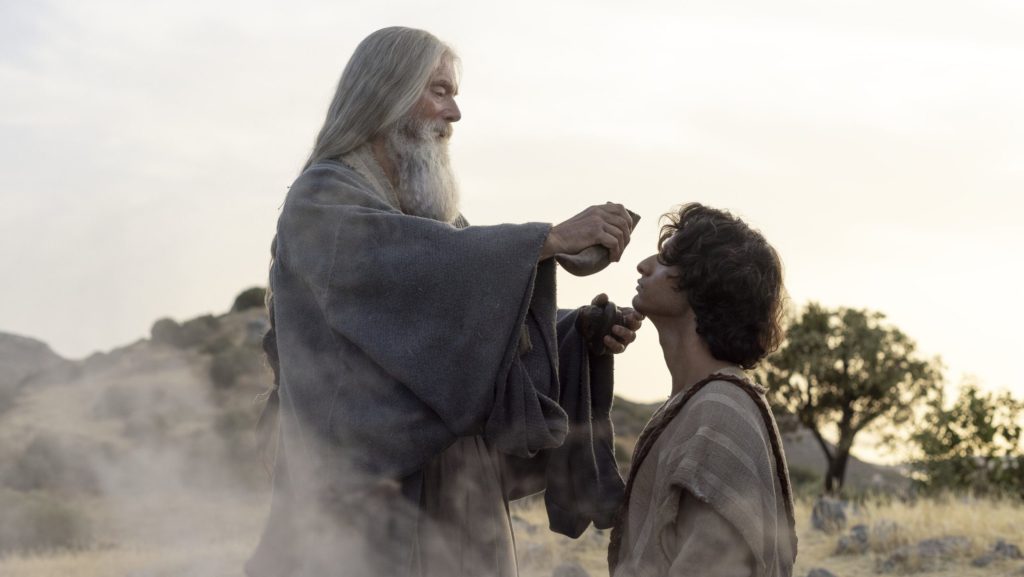
Fast forward to this year, in which I have just finished the second season of the series “House of David” (streaming on Amazon Prime Video). The show was so good that it made me go back to the source material. I am no biblical scholar, but through my own efforts and attending roughly 3,588 Sunday Masses (and probably a few thousand more weekday and Masses of obligation), I have gone through the New Testament more than a few times.
The Old Testament is different. We know the “big” ones: Genesis, the Garden, Moses, David, and selected Psalms. But names like Elhanan, Abimelech, and Habakkuk would make my eyes glaze over and make a lot of the Old Testament a slog that I would eventually abandon to the more easily digestible New Testament.
The “House of David” series has shown me how much of my spiritual lineage I have been missing, and it also has shown, by my revisiting the Book of Samuel, how faithful to the story the filmmakers have been and how spectacularly cinematic the real story of King David was and is.
When I began watching this series, with my ignorance of the Book of Samuel almost total, I thought the filmmakers were giving the story the Hollywood treatment. There were just too many elements in the series that made me think these plot developments were spewing forth from a clever and talented screenwriter rather than from inspired tradition handed down through thousands of years.
For example, there is a race of giants in the film, which I thought was a bit too much “Lord of the Rings,” except for the fact that the Bible mentions giants more than once. Even though excerpts from the Dead Sea Scrolls have cut Goliath down to size, suggesting he was “only” six-and-a-half-feet tall rather than the over nine feet described in Samuel, that height and weight would have dwarfed the average Israelite or Philistine.
The TV David falls in love with the king’s second daughter, but due to political expediency is betrothed to the eldest daughter. Sounded like a clumsy Hallmark movie until I looked it up and once again Samuel proves prophetic. The friendship between David and Saul’s oldest son, Jonathan, sounded like a Paul Newman/Robert Redford “buddy picture” of days past. Would the heir apparent be so willing to let go of his “right” to the throne and befriend the man who would replace him? The simple answer is yes, according to the “book.”
There are many more elements in the miniseries that are lifted almost exactly how they are written down in the Book of Samuel.
Amid my neophyte Old Testament scholarship, I came across one episode that this miniseries left out in the story of David as told in the First Book of Samuel. I ascribe no malevolence or secret agenda for this “oversight” — it is not cinematic and does not push the plot forward. But as biblical exegesis, it is a bombshell.
When David finds himself at odds with King Saul, he returns to the holy site of Nob, where the priesthood guards sacred things. He asks for bread for his men. The priests have no “common bread,” but do have “holy bread,” but that is reserved for people in a state of grace. When David assures the priest his men are in that state, the priest dispenses it.
I knew, even in my ignorance, that Jesus is foretold many times in the Old Testament, but reading that passage and knowing the House of David is taking form from its beginnings in Bethlehem, was one of those God-sent moments of grace.
I think the makers of the “House of David” owe the Prophet Samuel a residual check.