The pope who spoke out against war, division and hatred. No, not Pope Leo
The quotes read like they came over the internet from the Press Office of the Holy See, but they are not from Pope Leo XIV, Pope Francis, Pope Benedict XVI, or Pope St. John Paul II.
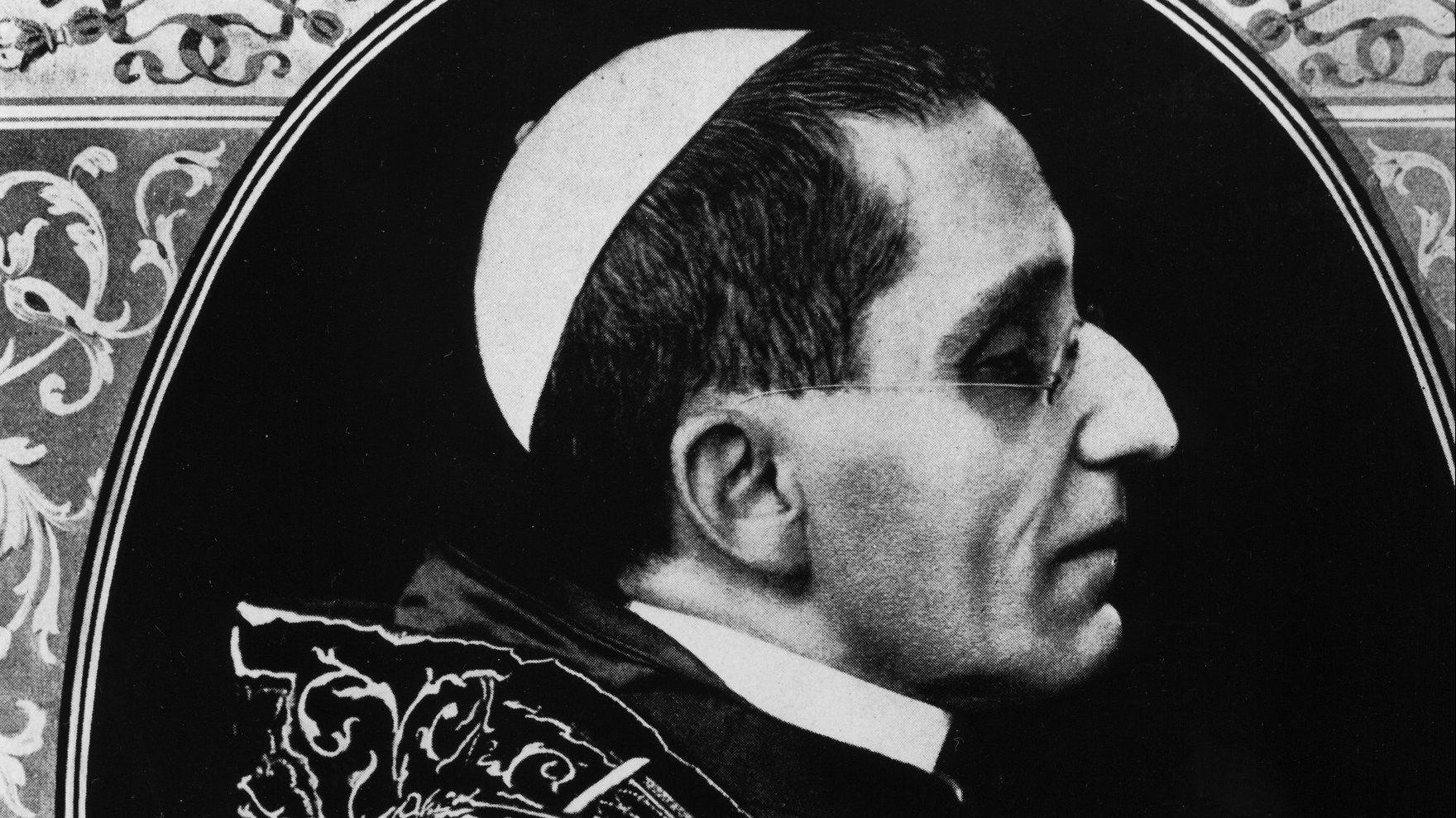
Here is a papal quote that deserves our attention:
“The fundamental point must be that for the material force of arms should be substituted the moral force of law, hence a just agreement by all for the simultaneous and reciprocal reduction of armaments, according to rules and guarantees to be established to the degree that is necessary and sufficient for the maintenance of public order in each State.”
It reads like it just came over the internet from the Press Office of the Holy See, but it is not from Pope Leo XIV, Pope Francis, Pope Benedict XVI, or Pope St. John Paul II.
It is from Pope Benedict XV, writing about the calamity that was World War I. November is the month when our hearts and minds turn to all the souls and saints who have gone before us. Call it God’s timing, but it is also the month when we think of soldiers, sailors, airmen, and Marines who have lost their lives in all the cataclysmic failures of humanity we call war.
I do not know if this is any solace to Leo, who inherited a world full of theological, political, and kinetic strife, but think of what Pope Benedict XV had dropped in his lap. World War I was supposed to be the war to end all wars because it was the first major conflict of the industrial age that introduced industrialized killing through machinery. It was new territory we humans brought our old habits to, and the carnage was stupefying.
The Guns of August began to roar in August of 1914, and European armies mobilized from Russia to Great Britain. One month later, Cardinal Giacomo Paolo Giovanni Battista della Chiesa was escorted into the “crying room,” vested, and led out to the balcony overlooking St. Peter’s Square as Pope Benedict XV. I wonder what he was thinking when he walked back inside and they closed those doors. He certainly heard a lot of cheering, but was probably thinking, “Now what?”
It is unknown if he had any fears or doubts about his ability to cope with the world on fire, but the evidence he left behind is clear. He wasted little time making numerous efforts to put the fire out. His proactive approach, from which this quote is one of many, generated responses from leaders on both sides of the trenches. Some were diplomatically polite toward input from the pope, while others were resolutely dismissive of all entreaties to peace he made.
As the war raged on, Benedict redoubled his peace efforts, but they were met with stronger resistance and even antagonism. Sounds familiar? The Central Powers declared him an agent for Allied intentions, and the Allies called him the “German Pope.”
Understanding the power the U.S. represented in the conflict, Benedict wrote a personal note to President Woodrow Wilson, in which he said, “Divine Providence has reserved for you and for the great Republic over which you preside the immortal glory of restoring bleeding humanity to peace.” Wilson dismissed it out of hand, though some of the pope’s suggestions in that letter found their way into Wilson’s historic post-war peace plan.
After the war, Benedict realized the “peace” process followed by the victors was insufficient in solving the root problem. “If almost everywhere the war somehow ended, and some peace pacts were signed, the seeds of ancient grudges remain.” Those “ancient grudges” morphed into the rise of Nazism and communism, and those unheeded words from the pontiff exploded into World War II.
Benedict’s efforts for peace knew no limits. In 1917, when hundreds of thousands of men were dying on open fields and languishing in rat-infested and muddy trenches, the pope resorted to that absolute comforter, the Blessed Mother. On May 5, 1917, he wrote, “Let it bear to her the anguished cry of mothers and wives, the wailing of innocent little ones, the sighs of every generous heart: that her most tender and benign solicitude may be moved and the peace we ask for be obtained for our agitated world.”
The world at war once again disregarded this pope’s plea. But eight days later in a field in Portugal, the Blessed Mother made her first appearance to three shepherd children.
The pope may have failed to get the attention of kings, presidents, and generals, but the Blessed Mother seemed to hear. And when we read or hear things that come from the Holy See today, even if kings, presidents, and generals differ, we would all be better served to follow the lead of the Queen of Heaven.

Robert Brennan writes from Los Angeles, where he has worked in the entertainment industry, Catholic journalism, and the nonprofit sector.