Italy: Catholic Church distributes $1.2 billion from annual tax fund
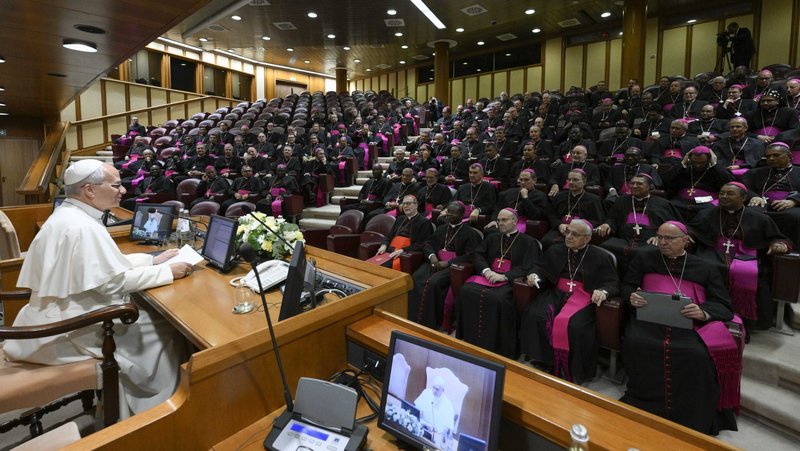
Accounting for its share of Italian income tax distributions, the Italian bishops' conference said it distributed about $1.2 billion in 2019. In a statement published Dec. 18, Bishop Stefano Russo, secretary general of the conference, said the money provided by the "Otto per mille" ("Eight per thousand") tax […]

Accounting for its share of Italian income tax distributions, the Italian bishops' conference said it distributed about $1.2 billion in 2019.
In a statement published Dec. 18, Bishop Stefano Russo, secretary general of the conference, said the money provided by the "Otto per mille" ("Eight per thousand") tax was used to pay priests' salaries, maintain churches and parish ministries and support charitable projects.
"While it is true that this is a duty toward the Italian State, our desire to let everyone know the destination of these precious resources is even stronger," Bishop Russo said, releasing the annual report on how the tax money was spent.
Passed in 1984, the "Eight per thousand" tax allows Italians to allocate a portion of their taxes -- 0.8 percent -- to government social projects, the Catholic Church or one of 12 other religious organizations. Religious organizations who receive contributions are subject to auditing and required by law to publish how the money is distributed.
According to the financial statement released by the bishops' conference, of the 1.1 billion euros ($1.2 billion) received in 2019, nearly 40% -- an estimated $535 million -- was used for the pastoral care of Italian dioceses as well as the conservation of religious and cultural heritage sites. Other initiatives included catechism and Catholic education, church tribunals and lay ministries.
The Italian bishops' conference said that 285 million euros ($349 million) was dedicated to charity: 150 million euros to diocesan Caritas organizations; 70 million euros to charitable projects and emergency relief abroad; and 65 million euros to projects on a national level.
Finally, 384 million euros ($470 million) went to "clergy support," including the salaries of more than 30,000 priests working in dioceses across Italy, 400 diocesan priests working as missionaries in poor countries and pensions for 2,800 elderly priests, the Italian bishops' conference said.
Nearly 90% of a priest's salary comes from the "Eight per thousand" tax; the rest comes from diocesan institutions that support the clergy.
"It is thanks to the use of the resources from the 'Eight per thousand' that in this time -- marked by the crisis due to COVID-19 -- outreach that benefits the population, families, organizations and associations have multiplied exponentially throughout the country," Bishop Russo said.
Junno Arocho Esteves writes for Catholic News Service. You can follow him on Twitter: @arochoju