10th Sunday in Ordinary Time: Jesus as the one promised
Gn. 3:9–15 / Ps. 130:1–2, 3–4, 5–6, 7–8 / 2 Cor. 4:13–5:1 / Mk. 3:20–35 In today’s Gospel, Jesus has just been healing and casting out demons in Galilee. Along with the crowds, who flock to him so that he can’t even take a break to eat, come […]

Gn. 3:9–15 / Ps. 130:1–2, 3–4, 5–6, 7–8 / 2 Cor. 4:13–5:1 / Mk. 3:20–35
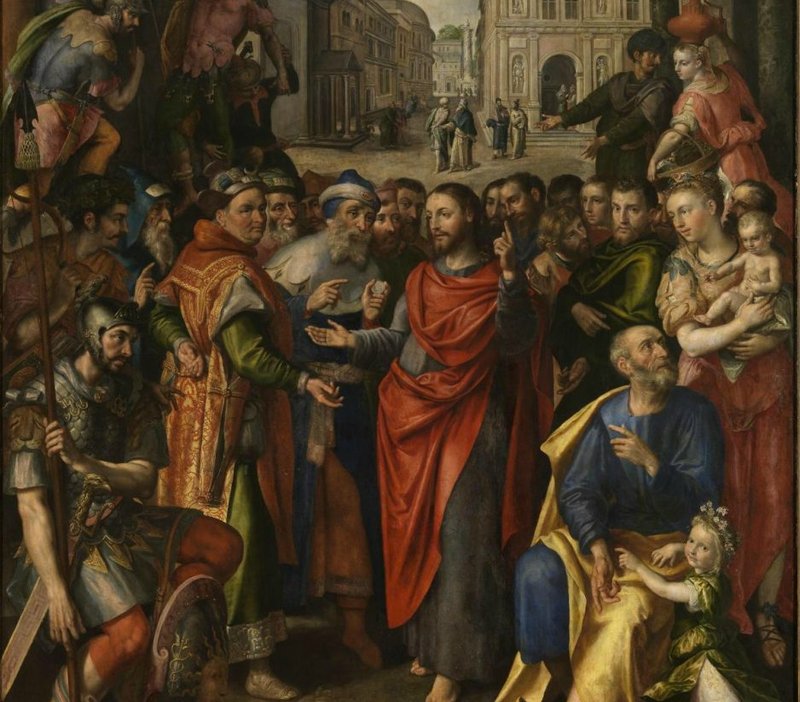
In today’s Gospel, Jesus has just been healing and casting out demons in Galilee. Along with the crowds, who flock to him so that he can’t even take a break to eat, come people who do not understand what he is doing.
Even his friends think he has lost his mind and needs to be taken away for a while. But the scribes who came down from Jerusalem are not just honestly mistaken; they accuse him of being possessed by the prince of demons.
The reality is just the opposite. Jesus is revealing himself as the one promised in our first reading. He is the seed of the woman who has come to crush the head of the demonic serpent. In the parable of the strong man, Jesus reveals that He has come not just to punish the devil but to free those bound by him.
As St. Bede explains, “The Lord has also bound the strong man, that is, the devil: which means, He has restrained him from seducing the elect, and entering into his house, the world; He has spoiled his house, and His goods, that is men, because He has snatched them from the snares of the devil, and has united them to His Church.”
The scribes blaspheme by attributing this work of the Holy Spirit to demons. Jesus adds a statement that shocks us at first: “Whoever blasphemes against the Holy Spirit never has forgiveness.”
That does not mean that there are any limits to the mercy of God (CCC 1864). Rather, the only sin that cannot be forgiven is the deliberate refusal to accept the mercy offered through the Holy Spirit. Instead, we must imitate those who sat at Jesus’ feet. For, as he said, “Whoever does the will of God is my brother, and sister, and mother.”
Scott Hahn is the founder of the St. Paul Center for Biblical Theology, stpaulcenter.com.
He is the author of “Joy to the World: How Christ's Coming Changed Everything (and Still Does)” (Image, $24).