There will be fireworks, of course, but more importantly there will be grace.
The approaching 250th anniversary of the United States will bring many civic ceremonies, historical retrospectives, and patriotic observances. Yet among the most striking commemorations will be a profoundly religious act: the planned consecration of the nation to the Sacred Heart of Jesus by the bishops of the United States. The initiative, announced by the United States Conference of Catholic Bishops, will take place in 2026, the semiquincentennial year of American independence.
To modern ears, the word “consecration” may sound exotic or archaic. Yet the concept is deeply biblical and profoundly human. To consecrate something is to set it apart for God — to dedicate it formally to divine service, protection, and blessing. In Scripture, people, places, objects, and even entire nations are consecrated. Moses consecrated Aaron and his sons for priestly service (Exodus 28:41). Solomon consecrated the Temple in Jerusalem (1 Kings 8). The prophet Joel called upon the people to “consecrate a fast” and assemble the nation before the Lord (Joel 1:14).
When Catholics consecrate themselves to the Sacred Heart, they place their lives under the lordship and mercy of Christ. When bishops consecrate a country, they are not creating a political establishment or baptizing a constitution. Rather, they are publicly entrusting a people to Christ’s care and calling the nation to conversion. Such acts acknowledge that no society can flourish apart from the source of all charity, justice, and truth.
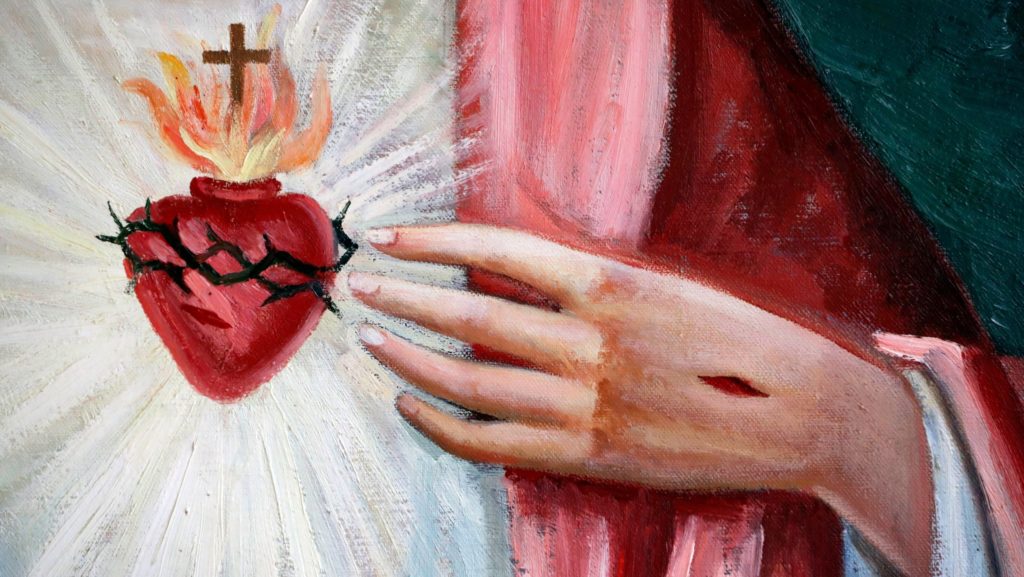
The choice of the Sacred Heart is especially significant. Few images are more immediately recognizable as Catholic than the image of Christ pointing to his exposed Heart — burning with love, crowned with thorns, wounded yet radiant. The image is sentimental only to those who have not understood it. In reality, it is one of Christianity’s boldest theological statements. The Sacred Heart proclaims that God has loved humanity not abstractly, but with a human Heart.
The roots of the devotion lie deep in the New Testament, especially in the Gospel according to John. Again and again, John directs the reader’s attention to the side and Heart of Christ.
At the Feast of Tabernacles, Jesus cries out, “He who believes in me, as the Scripture has said, ‘Out of his heart shall flow rivers of living water’ ” (John 7:38). The Church Fathers saw in this saying a prophecy of the life of grace that would pour forth from Christ for the salvation of the world.
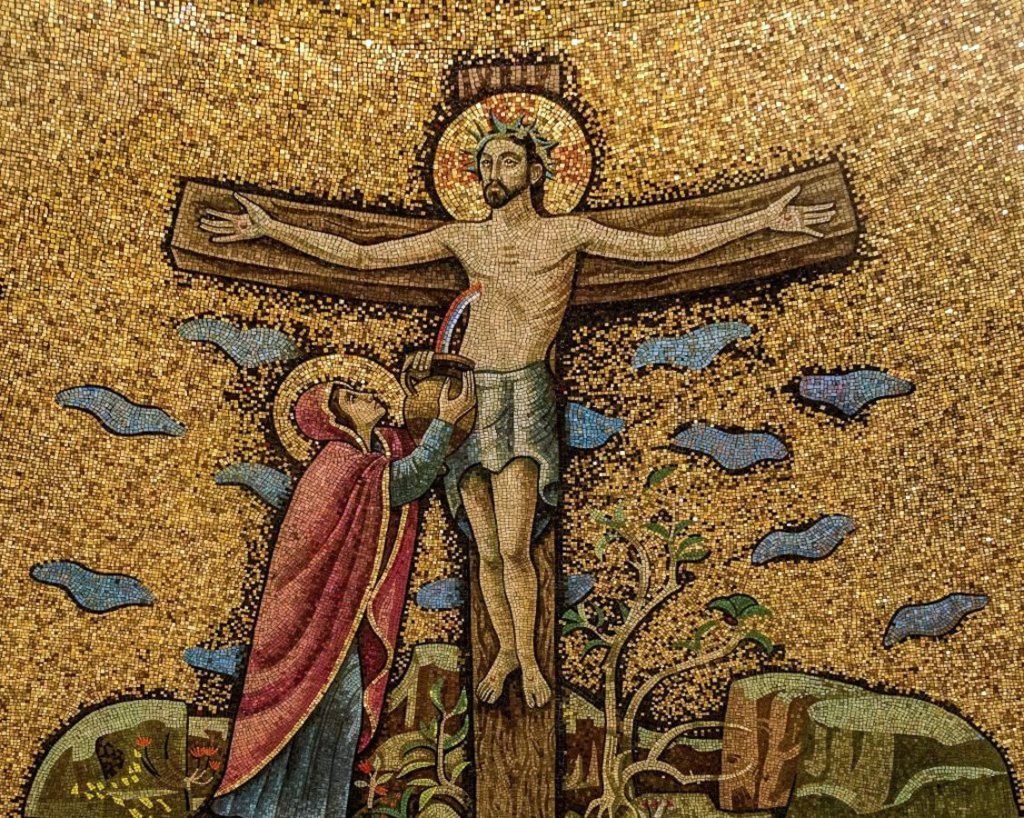
That prophecy reaches fulfillment on Calvary. John records with unusual solemnity: “One of the soldiers pierced his side with a spear, and at once there came out blood and water” (John 19:34). The evangelist immediately insists on the eyewitness character of the event, almost as though he fears readers might miss its importance. Christians from the earliest centuries interpreted the blood and water sacramentally — signs of the Eucharist and baptism, the life of the Church flowing from the wounded side of Christ as Eve once came from the side of sleeping Adam.
Then, after the resurrection, Jesus invites doubting Thomas into the mystery of that wound: “Put out your hand, and place it in my side; do not be faithless, but believing” (John 20:27). Faith, in John’s Gospel, comes through entering the opened side of Christ. The wound remains even in glory. The Heart of Jesus is not merely a symbol; it is the enduring revelation of divine love.
The devotion itself unfolded gradually across Christian history. The early Fathers meditated often on the wound in Christ’s side. St. Augustine of Hippo wrote that the evangelist chose the word “opened” rather than merely “struck,” because in that opening “the gate of life was thrown open.” Medieval monks and mystics deepened this meditation. Figures such as St. Bernard of Clairvaux and St. Bonaventure contemplated the Heart of Christ as the refuge of sinners and the fountain of divine charity.
The devotion took on its modern form in the 17th century through the visions of Margaret Mary Alacoque at Paray-le-Monial in France. Christ revealed his Heart as “so much in love” with humanity and lamented human indifference and ingratitude. The revelations coincided with a period of religious rigorism and fear. Against this coldness, the Sacred Heart appeared as a declaration of mercy.
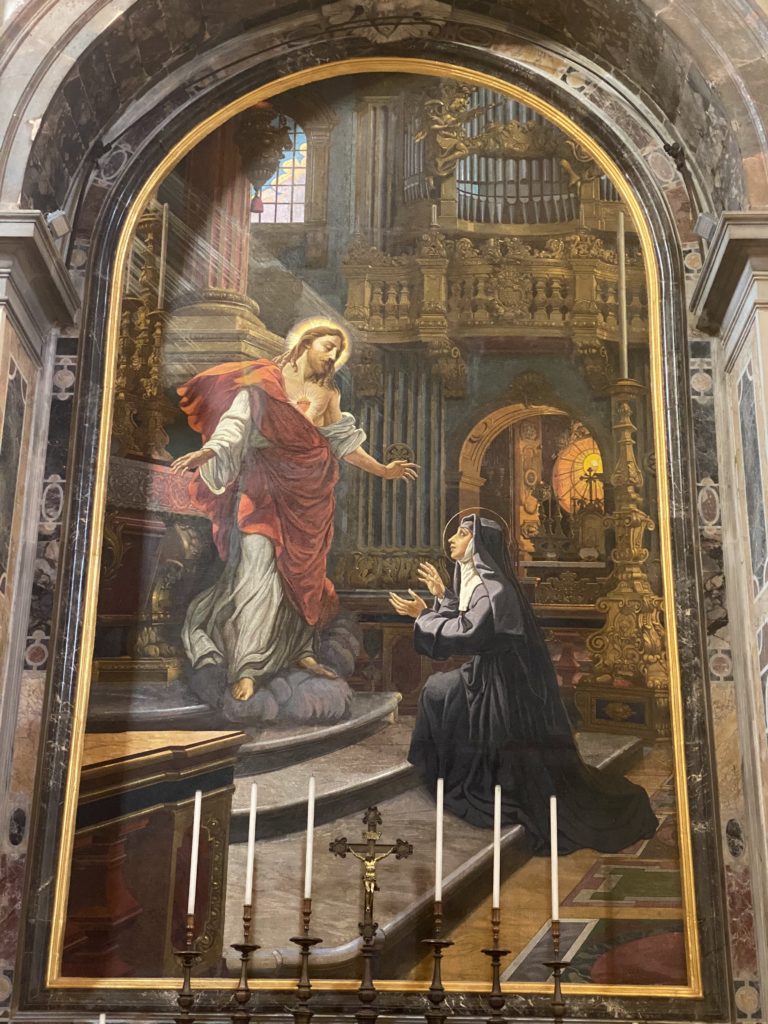
The Church gradually embraced the devotion. In 1856, Pope Pius IX extended the Feast of the Sacred Heart to the universal Church. In 1899, Pope Leo XIII consecrated the entire human race to the Sacred Heart, calling the act “the greatest act” of his (astonishing and lengthy) pontificate. Later popes repeatedly reaffirmed the devotion, especially Pope Pius XII in his 1956 encyclical Haurietis Aquas (“You Shall Draw Waters”), whose title itself comes from Isaiah’s prophecy of drawing water joyfully from the wells of salvation.
Over time, the image spread everywhere Catholics lived: in churches, homes, schools, hospitals, holy cards, stained-glass windows, statues, and family enthronements. The Sacred Heart became not only an object of devotion, but almost a visual shorthand for Catholic civilization itself.
That is why the bishops’ planned consecration carries such symbolic power. In an age marked by polarization, loneliness, violence, and spiritual exhaustion, the Church proposes not a political program but a Heart — wounded, living, and burning with divine love. The act reminds Americans that nations, like individuals, require repentance and grace. It recalls the truth at the center of Christianity: that history itself is finally governed not by power, wealth, or ideology, but by the merciful Heart of Jesus Christ.