The role of an auxiliary bishop
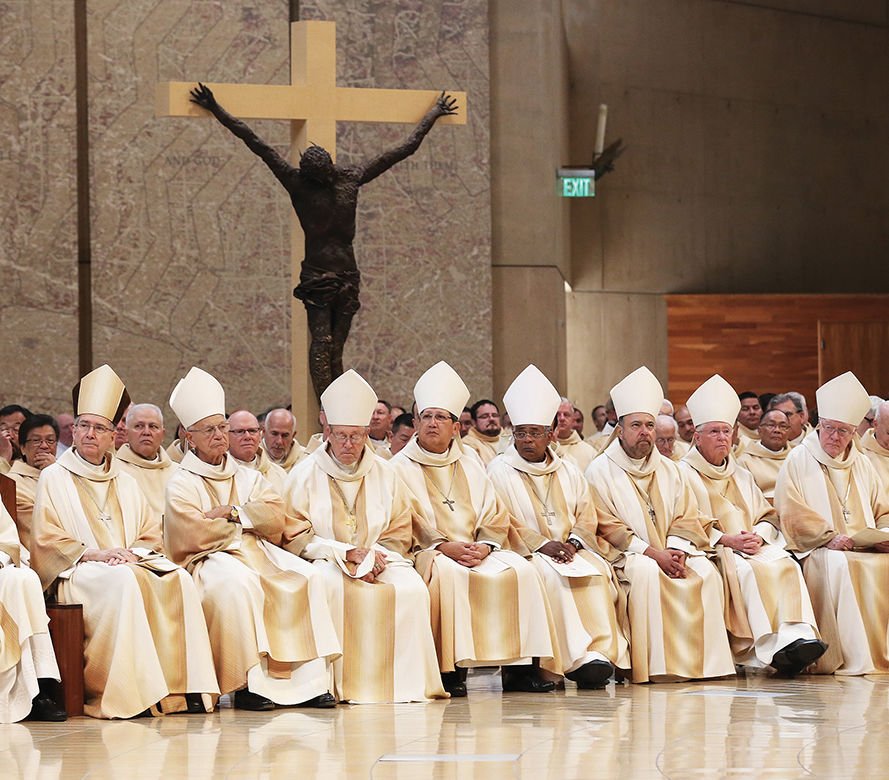
Auxiliary bishops are appointed by the pope at the request of the diocesan bishop “when pastoral needs require” their presence, according to the Code of Canon Law (Can. 403, §1).
Their role is to assist the diocesan bishop in the functions of the office and the diocese, but the exact nature of his duties depends on the diocese, its demographics and the responsibilities a bishop assigns him.
A diocese with a large geographic area, for example, may require an auxiliary bishop to travel to more “outlying” areas, to maintain a more regular episcopal presence to the faithful. In smaller geographic areas with larger populations, an auxiliary bishop may head diocesan offices or departments or serve as vicar general.
Generally speaking, dioceses or archdioceses with large populations are more likely to have auxiliary bishops. A request for an auxiliary bishop (or additional auxiliary bishops) must be submitted by the diocesan bishop to, and approved by, the Congregation of Bishops.
Thereafter, filling a vacant auxiliary position created by resignation, retirement, reassignment or death becomes less cumbersome, though not necessarily less lengthy.
The Archdiocese of Los Angeles, with both a large geographic area and the largest Catholic population in the U.S., has had six active auxiliary bishop positions in place since 1990, although over the years some have been vacant for varying periods of time.
Five auxiliary bishops head the five pastoral regions established in 1986; four of those regions, each with more than a million Catholics, have larger populations than most U.S. dioceses. Each auxiliary bishop lives in his region, has an office and office staff, and works closely both with the people and institutions of that region, and with the archbishop and leadership team at the Archdiocesan Catholic Center.
Los Angeles’ sixth auxiliary bishop — currently, Bishop Alex Salazar — serves at the Archdiocesan Catholic Center (Bishop Salazar is director of the Offices of Ethnic Ministries and Life, Justice and Peace). Previous “downtown”-based auxiliaries have served as vicars general, superintendents of schools and heads of other diocesan departments.
The Code of Canon Law (Can. 407) notes, too, that, “for the greatest present and future good of the diocese,” the diocesan bishop and auxiliary bishops “are to consult with each other on matters of greater importance” (§1).
In assessing such matters, “particularly those of a pastoral nature,” the diocesan bishop is to consult his auxiliary bishops “before all others” (§2). And, auxiliary bishops, since they are called to share in the cares of the diocesan bishop, “should so exercise their office that they act and think in accord with him” (§3).
Mike Nelson is the former editor of The Tidings (predecessor of Angelus).