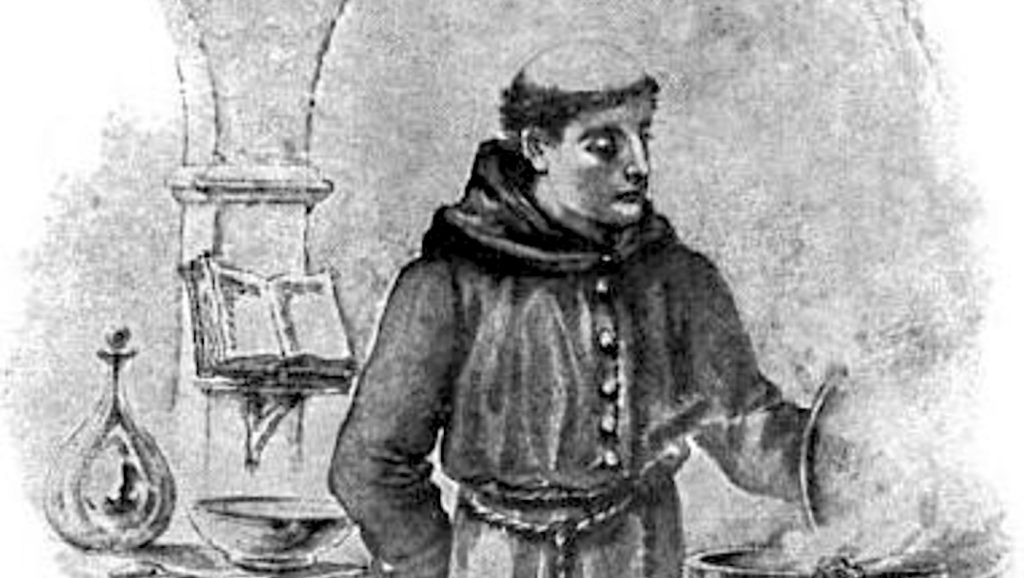
I know I wasn’t the only one to suddenly pick up their long-neglected copy of Brother Lawrence’s “The Practice of the Presence of God” (ICS Publications, $14.87) a few weeks ago.
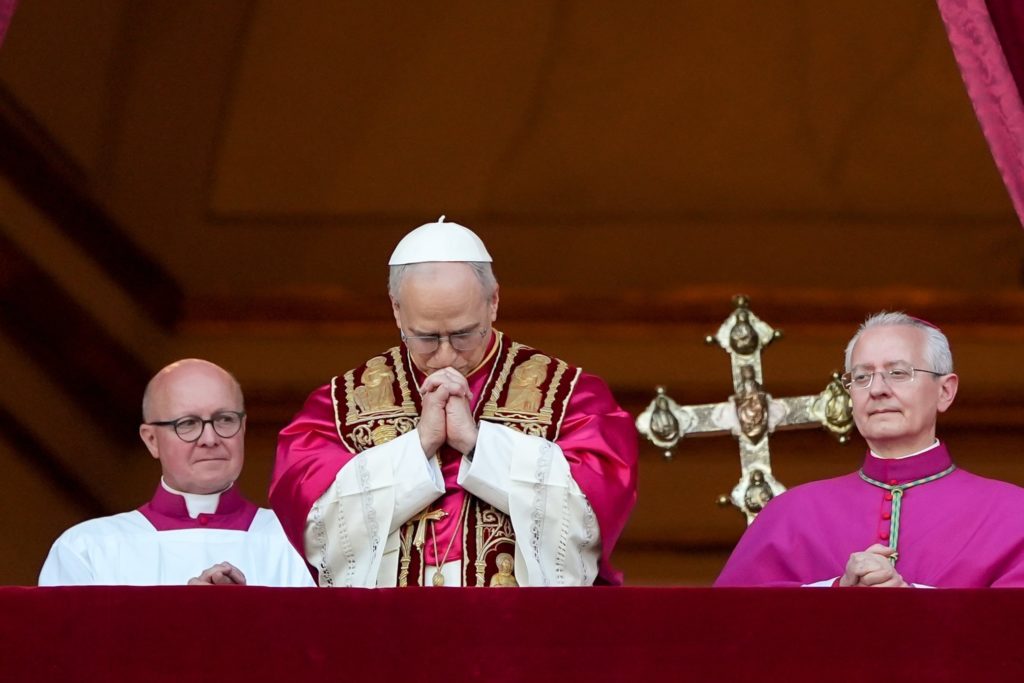
That was when, in remarks to reporters on the plane ride back to Rome from his apostolic voyage to Lebanon, Pope Leo XIV cited the short book as key to understanding his spirituality.
“It describes, if you will, a type of prayer and spirituality where one simply gives his life to the Lord and allows the Lord to lead,” said Leo during the Dec. 2 press conference. “If you want to know something about me, that has been my spirituality for many years.”
Re-reading the famous spiritual classic this time, I was less interested in its content and more in opening a window into the interior life of a pope the world is still getting to know.
But what exactly was it that attracted a 21st-century Vicar of Christ to a 17th-century Carmelite lay brother known for spending most of his life in the monastery kitchen?
The answer — at least in part — arrived very quickly.
A few lines into the book, I came across this striking line: “We ought to give ourselves up to God, with regard both to things temporal and spiritual, and seek our satisfaction only in the fulfilling of His will, whether He lead us by suffering or by consolation.”
There you have it. If that didn’t appeal to the spiritual father of more than a billion souls, I don’t know what would. Of course, he’s not alone. For several centuries, millions have been spiritually enriched by the teaching of this tiny tome.
Lawrence’s core message is plain but profound, accurately summarized by the book’s deceptively simple title: all about the practice of the presence of God. That’s it. No syllogisms. No tightly constructed systematic theology. No high-brow philosophical arguments. He simply wants us to live as if we are always with Our Lord.
That said, given the lack of academic rigor and brevity of his work, it is tempting to dismiss Lawrence as nothing more than a holy helper or spiritual servant, as some have. They mistakenly view his counsel on continuous conversation with God as lightweight, more akin to a spiritual “easy-listening” radio station.
On the contrary, it’s obvious that this unassuming keeper of pots and pans had a serious interior life, reaching spiritual heights achieved by very few. I’d even venture that critics would be hard-pressed to identify which famous Carmelite shared spiritual advice like, “To attain to this state [of union], we must mortify the senses … we must leave behind the creature.”[1] Was that John of the Cross — or the guy washing dishes? Or what about this one: “I make it my business only to persevere in … an habitual, silent, and secret conversation with God, which causes me joys and raptures inwardly, and sometimes also outwardly, so great that I am forced to use means to moderate them and present their appearance to others.” Teresa of Ávila — or “God’s cook”? Hmm.
Read his book, and you’ll see that Lawrence was anything but a spiritual “lightweight.” For a man viewed by some as nothing more than a “less anxious Martha,” he appears to be quite steeped in the rich spiritual tradition of his religious order. He even anticipates the famous “little way” of another Carmelite great, St. Thérèse of Lisieux. Nearly two centuries before her birth he wrote, “The littleness of the work lessened not one whit the value of the offering, for God regards not the greatness of the work, but the love which prompts it.”
And this littleness is at the heart of one of the central themes of “The Practice of the Presence of God.” Namely, the necessity for a total surrender to God: If we trust that God is truly our loving Father who wants only the best for us, why wouldn’t we give ourselves over to him in every aspect of our lives?
On the topic of prayer, Lawrence echoes St. Paul’s admonition to “pray constantly” (1 Thes 5:17). “It [is] a great delusion,” wrote Lawrence, “to think that the times of prayer ought to differ from other times.”
For Lawrence, life is prayer. It is meant to be a constant union and communion with God. After all, is there ever a moment when we’re not supposed to be in the presence of God? Yet, all too often we tend to compartmentalize our spiritual lives from daily activity. We easily slip into the habit of “saying” our prayers, checking them off our spiritual “to do” list so we can move on to everything else that needs doing.
Even the way we speak of the “active-contemplative” life can artificially separate what should never be divided. Yes, there is a real need for activity. Yes, work needs to be done. But Lawrence would remind us, “For me the time of action does not differ from the time of prayer, and in the noise and clatter of my kitchen, while several persons are together calling for as many different things, I possess God in as great tranquility as when upon my knees at the blessed sacrament.”
As a Discalced Carmelite lay brother, Lawrence’s life moved to the rhythms of the monastery. Rather than separate Mary and Martha, he practiced the “one thing necessary” (Luke 10:42) in both the chapel and the kitchen. For him, it all flowed together in “unceasing acts of love and worship, of contrition and of simple trust, of praise and prayer, and service; at times indeed life seems to be one long unbroken practice of His Divine Presence.”
At the end of the day, “The Practice of the Presence of God” is a call “to be wholly devoted to Him” from the heart of a man who has experienced the breathtaking grace of God.
“It is our one business, my brethren, to worship Him and love Him, without thought of anything else.” Taken together, it’s all a sentiment — and a summons — worthy not just of a pope, but of every one of us.