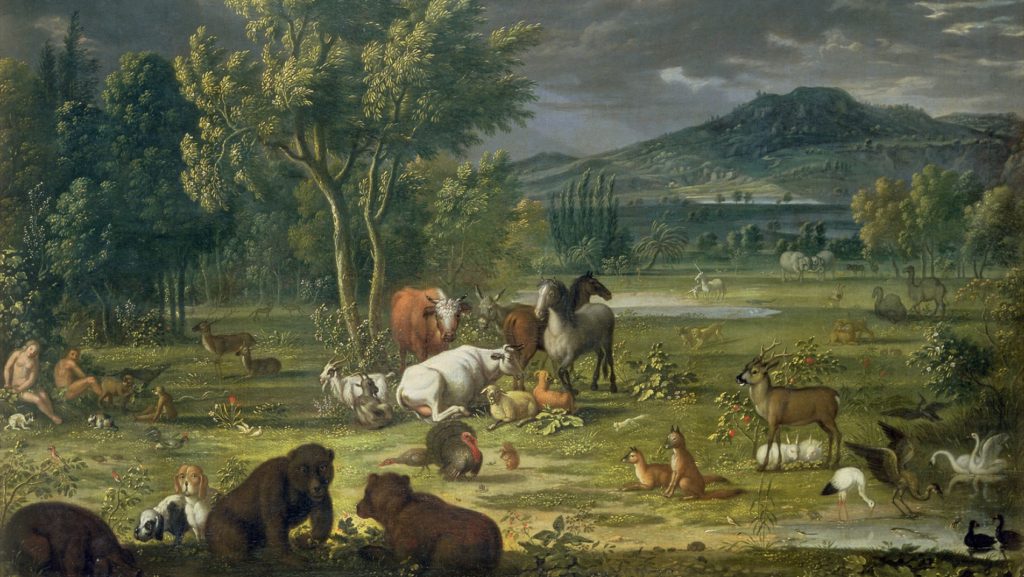
Work was one of God’s original blessings. “The LORD God took the man and put him in the garden of Eden to till it and keep it” (Genesis 2:15). God made Adam, Genesis tells us, because “there was no man to till the ground” (Genesis 2:5).
There was a job opening. So God created the perfect candidate for the position.
Work, then, was not a burden that the Almighty placed on his most beloved creature. It was a blessing. Work was integral to the human condition in its original goodness; and so Adam and Eve could not find fulfillment apart from work.
And only through work could they become truly Godlike. It’s not that they earn the grace of divinization by their labors. Grace is a gift and cannot be earned. But work itself is a gift that makes men and women ever more like God.
Genesis depicts God himself as a worker: “And on the seventh day God finished his work … and he rested ... from all his work which he had done” (Genesis 2:2). Work itself is something divine, something God does. So, when human beings work, they imitate their creator; they share his life. For he made the earth out of nothing, but he willed that a creature should till and keep it. He willed that work itself should be a cooperative act of creation, a co-creation, by both the Father and his heirs.
God gave humanity work when he gave Adam life, in a time of pristine innocence. Genesis tells the story with the utmost economy, making every word count. We should take a moment and examine the terms of the work God gave us.
God’s command for Adam “to till [the garden] and keep it” employs two Hebrew verbs ‘āvad and shamar. Both words are rich, and both are capable of dual meanings. They appear together elsewhere in the Bible — and, whenever they do, they are describing the ministerial duties of the Levites, ancient Israel’s priestly tribe (see Numbers 3:7–8; 8:26; 18:5–6). The verb ‘āvad, often translated as “serve,” has in Hebrew a dual meaning: it can denote either manual labor or priestly ministry (as in a “worship service”) — or it can suggest both meanings. The verb shamar means “to keep” or “to guard,” and it describes the Levites’ protection of the holy place, the tabernacle, which they guarded and kept from defilement.
So take note: God made Adam to work; and God made him to be a priest in the cosmic temple. These were not separate activities. A priest is one who stands as a mediator between God and man and offers sacrifice. And Adam’s sacrifice was to be his work, offered every day to his Father God.
Alas, he failed in this task and was stripped of his priesthood. But that office has been restored in Jesus Christ, and now we share in it through baptism.
All our work is a holy offering to God. Remember that this Labor Day — and every day!