If you want to make an impression at the Christmas party this year, announce how you lament that mainstream Hollywood stopped making adult films by 1980.
Before your hostess bops you over the head with the charcuterie board, you add the caveat that by “adult” films you mean films about grownups and for grownups. When it looks like she still may come after you with the ladle from the punch bowl, further explain how the onset of the summer blockbuster and the “three-day weekend” holiday premieres recalibrated the Hollywood movie-making machinery, creating the “tent pole” film industry. The result has been the mass production of hundreds of comic book movies, sci-fi fantasy films, and other over-the-top action films that defy gravity, logic, and credulity.
The cottage industry of small, independent films was the response to this, and that is why most films nominated for Best Picture at the Oscars these days are films with tiny niche audiences, which most people watching the awards shows on TV have never heard of.
I miss those days when “big” films came with lofty ideas, big production values, and big performances. Now it seems the “big” pictures Hollywood produces must have at least a robot or crazed AI computer, or have a plot wrapped around some massive international conspiracy theory that everybody seems to know about but the protagonist of the film.
It is not impossible, though, to find small films with adult themes. Thanks to the revolutionary world of streaming, producers can make a good living making the kinds of films that few people see but win awards and prestige. The problem is finding one of these films that does not assault one’s Catholic sensibilities.
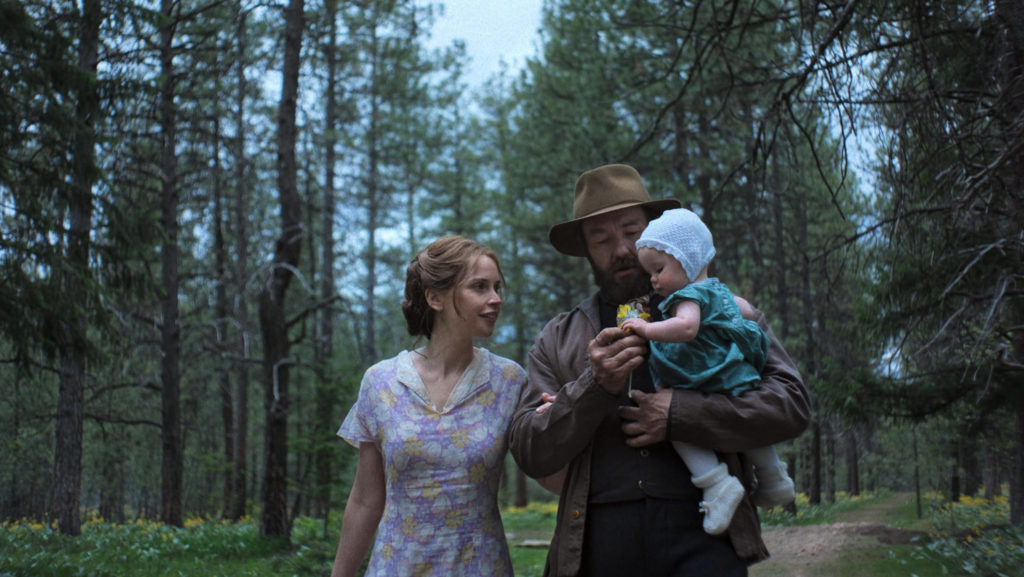
The Netflix movie “Train Dreams” is not really about trains, or dreams for that matter. The protagonist does not fly, he is not from another planet, and he does not possess a diabolical secret he must tell the world before it is too late. He is just a board-certified male human being with longings and hope and in need of completing himself in a marital union. Not exactly the stuff of “Transformers VIII,” but a movie with profound simplicity and gentleness, all wrapped up in a dream-like reality.
The location is the American Northwest. The time is the early part of the 20th century, and the man works with his hands. We see him wielding axes and pushing and pulling a giant handsaw built for two as he builds railroad bridges and provides raw material that would help build 20th-century America. That is a “big” thing, but it happens from the labor and the lives of a lot of “little” people whose everyday existences would make any movie executive break out in a yawn.
And that is who our protagonists are in this film: a simple man and a simple woman. They meet at church. They fall in love. They have a little girl. I can almost hear the studio commissary conversation about such a plot line sounding so weird. With his craftsman’s skills, the man builds a modest house near a river. The man and the woman have the kind of symbiotic relationship most marriages before the Industrial Revolution had.
The woman did not leave the home … and the husband did not either, unless he was out in a field plowing, sowing, or reaping. If there is a villain in this piece, it just may be the mechanical revolution that dragged men out of their homes and away from their families. That is a central plot point to this film, as the man must spend inordinate amounts of time away from home to work as a lumberman so he can provide for that very family he misses so much.
The man’s long times of separation from his family are painful, the scenes of his returns joyful. The couple dream of the day when he will not have to leave so often and that dream turns into a jointly agreed-upon strategy to open their own sawmill close to home. To make their dream a reality, the husband must go out on one last big job to raise the capital for the sawmill venture.
This film may not include an alien invasion, but plenty happens in “Train Dreams.” It just does so to the rhythmic cadence of ordinary people living ordinary lives. There is a stillness about the film, emphasized by the loving bond between two married people living life on the same page. Like all good art, there is conflict and yes, there is tragedy as well.
“Train Dreams” could have taken the uncomplicated way out, and there is a moment toward the end where one is lured into thinking a “Hollywood” ending may be on the way. But these filmmakers resisted that, and by resisting, pulled the audience out of its dream and into the grown-up adult world where endings are never so definitive in one direction or the other.
This little film about “little” people celebrates the uniqueness and inherent value of every single person no matter what their lot in life may be. And if God can feel it every time a sparrow falls to the ground, imagine how he feels about a man and a woman, loving each other and loving their child, while they travel together through this vale of tears.