The U.S. Department of State announced June 5 that a $240 million grant in humanitarian and disaster response assistance, the first of a series of such grants, will be made to Catholic Relief Services, the overseas relief and development agency of the U.S. Catholic Church.
The award was announced at an event in Rome by Ryan Shrum, a senior official with the State Department Bureau of Disaster and Humanitarian Response; U.S. Ambassador to the Holy See Brian Burch; Ambassador Lynda Blanchard, permanent representative of the United States to the U.N. Agencies in Rome; Jennifer Poidatz, CRS vice president for humanitarian response; and Alistair Dutton, secretary general of Caritas Internationalis.
U.S. officials said the grant is the first in a series of awards the State Department intends to make to "trusted and vetted implementing organizations," the department said in a press release.
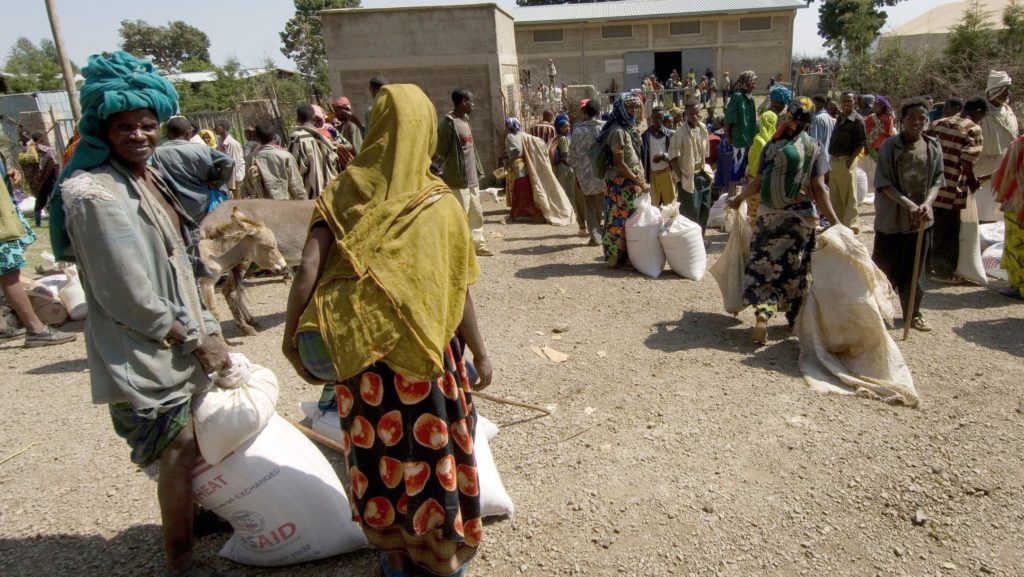
In its own press release, CRS said the funding will support its global rapid response fund, used to quickly get assistance to countries in crisis, such as Ethiopia, Haiti, Nigeria and the Democratic Republic of the Congo.
"CRS is grateful for the opportunity to reach more people affected by crisis, at a time when humanitarian needs far exceed available resources," Poidatz of CRS said in a statement. "We appreciate the leadership of the United States and of national governments committed to responding to new and enduring crises."
"The communities in these countries are experiencing severe food insecurity, conflict, displacement, extreme weather and so much more," Sean Callahan, CRS’ president and CEO, added. "This funding will help us respond to their unique needs quickly."
Callahan said in a statement that CRS is "proud to continue upholding a rigorous system of accountability to ensure the resources go where they are most needed. When combined with privately raised resources, we are able to increase their reach and benefit."
The State Department said in its press release that CRS demonstrated its "capacity to provide assistance in challenging political environments," citing Cuba, where department officials said "its local partnerships enabled humanitarian assistance to reach those in need without regime interference."
"The Church plays a unique role because it is rooted in community life across generations," Poidatz said. "In places marked by conflict, displacement and polarization, religious leaders and faith-based institutions often remain trusted before, during and after crisis -- helping communities navigate uncertainty, foster compassion and create space for reconciliation and peaceful coexistence."
In 2025, the Trump administration moved to formally dissolve the U.S. Agency for International Development, moving its remaining functions under the purview of the State Department. Cuts to funding for the government’s now-shuttered humanitarian aid agency in countries all over the globe included funding for efforts by Catholic and other faith-based humanitarian groups such as CRS.