You can easily spot the Lithuanian embroidery on John Sepikas’ shirt.
What you can’t see is that he also wears his heart on his sleeve.
Yet as soon as he speaks, the love for his church and his heritage is obvious. Like many parishioners of St. Casimir Church in Los Feliz, Sepikas’ Lithuanian parents were World War II refugees who found safety in America.
“Christ and freedom won,” Sepikas said. “My parents settled here and heard about this church. It’s the only home we have, and we’ll preserve it for all future generations.”
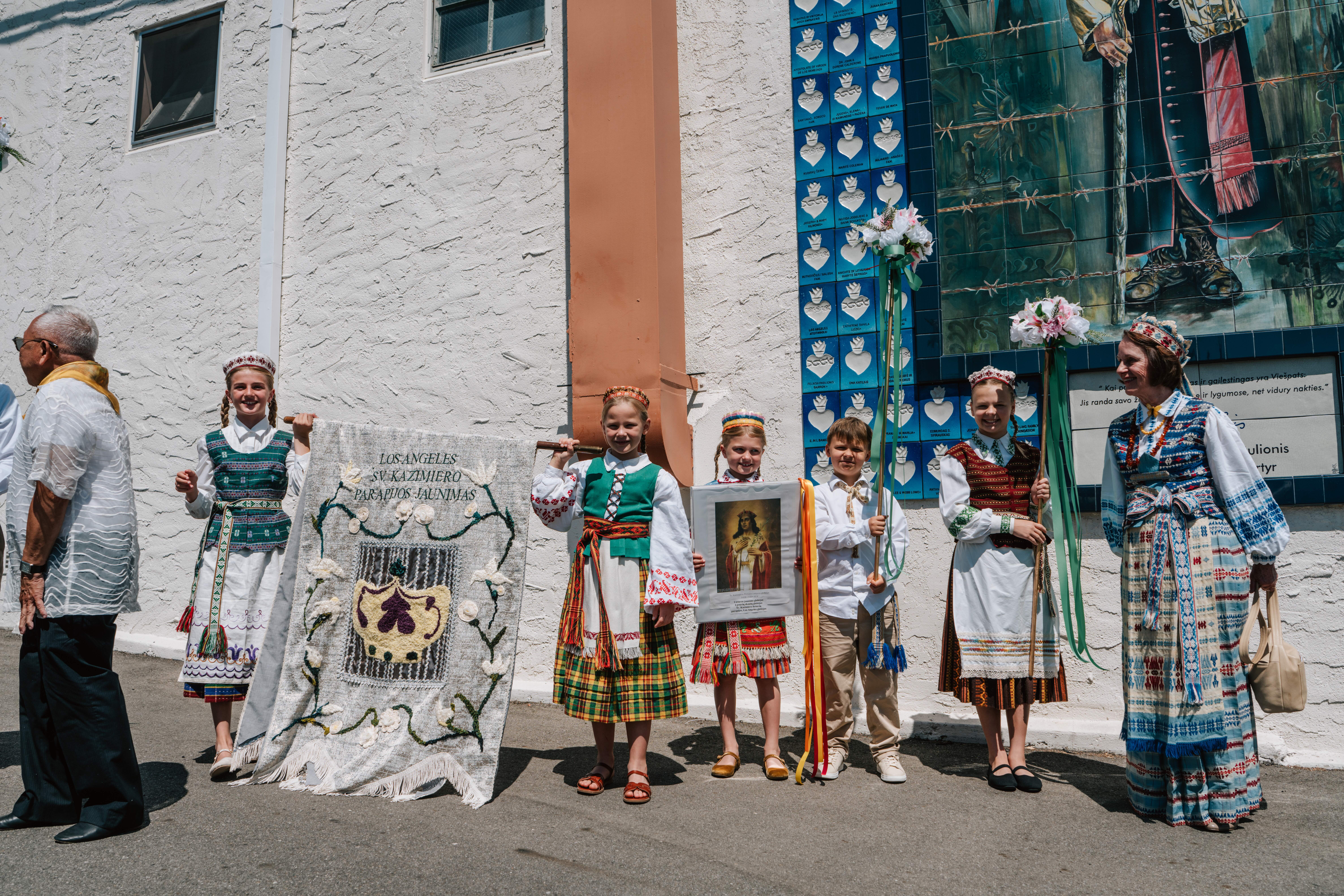
Keeping tradition alive was the cornerstone of the May 31 opening of St. Casimir’s parish Jubilee year. The commemoration marked the 85th anniversary of the parish’s founding as well as the 75th anniversary of the church’s dedication. To celebrate, some 400 parishioners took part in a Eucharistic procession and Mass, recreating the 13th-century Lithuanian tradition of “Atlaidai” — a cultural event to celebrate a sacred occasion.
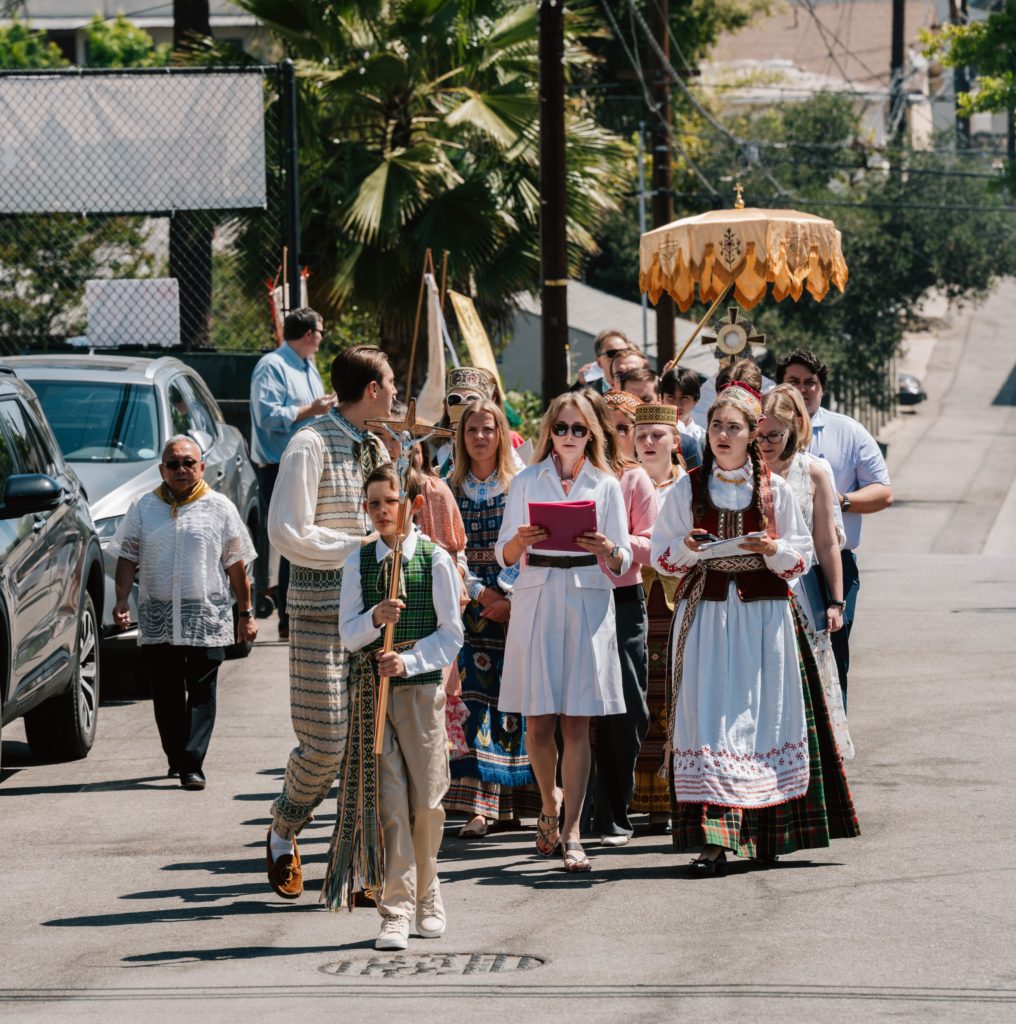
Lithuanian honor guards hoisting large flags led the colorful procession. Behind them came rows of singing choir members, folk dancers, and parishioners in traditional attire. Father Tomas Karanauskas, the pastor at St. Casimir, held up the monstrance while others carried candles or flowers.
The crowd moved from the pavement to the pews for the conclusion of the Eucharistic procession, followed by a Mass held in both English and Lithuanian. The day culminated with a “Šaltibarščiai” festival featuring Lithuania’s signature chilled beet soup.
In his homily, Karanauskas spoke about the parish’s Lithuanian legacy, while also being a place where Catholics of any nationality can find community.
“Many immigrants know what it means to leave home and begin again in a new land. [They] found here not only a church building, but friendship, faith, encouragement,” said Karanauskas, a native Lithuanian. “As we celebrate [our anniversaries], may we thank God for the blessings of the past, serve faithfully in the present, and embrace the future with hope.”
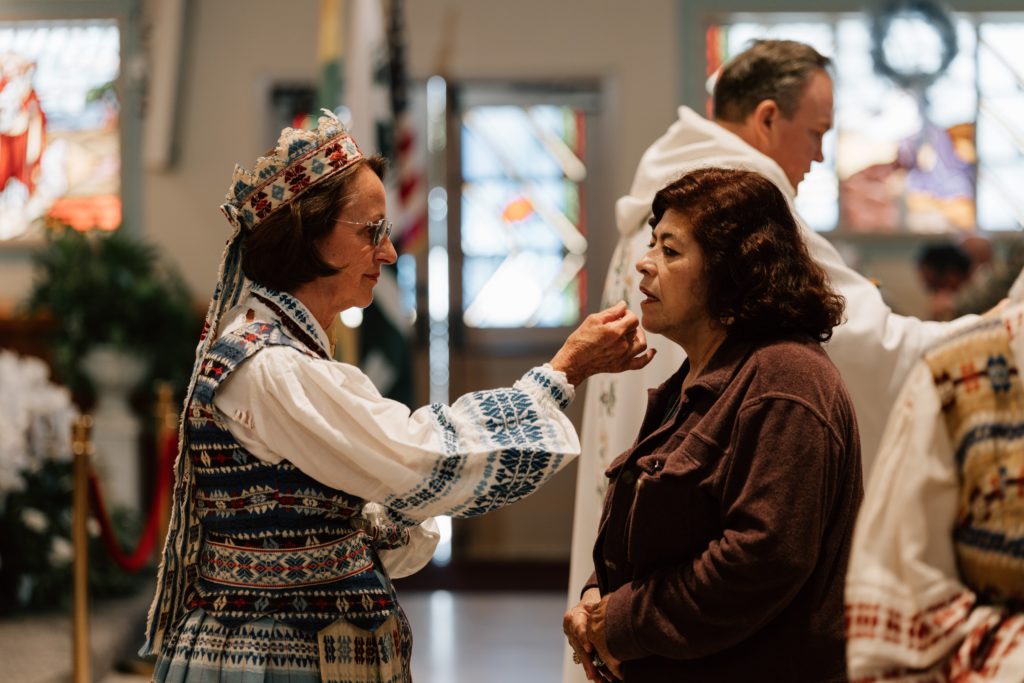
Special guests included Sandra Brikaitė, the Los Angeles area consul general of Lithuania, as well as Daiva Navarrette, the honorary consul of Lithuania. The latter, a second-generation parishioner, walked in the procession with her husband and son.
“My parents came from Lithuania and this is the church that they were married at, the church I was baptized at, the church my son was baptized at. There are lots of years of history,” said Navarrette. “I’m thinking of my parents today … I think they’re eating pink beet soup in heaven.”
The parish’s story is very much an immigrant one. After escaping Russian forces during the Second World War, a group of Lithuanian refugees, including a priest, relocated to the LA area. Needing a place to worship in their native language, they gathered in the priest’s home for their first Mass on June 1, 1941. But it was largely kept secret, says Atlaidai organizer Vidal Aguas.
“They were afraid to be reported back to the Lithuanian Russian authorities and then their families over there may be persecuted,” Aguas said. “They felt they could not trust anyone … but they wanted to keep their Catholic faith.”
Despite their fears, the group flourished and St. Casimir was built a decade later. The church, with classic Baltic architecture, was dedicated on Nov. 4, 1951. Ever since, the parish has strived to be a beacon of religious and cultural freedom.
To support that mission, the Lithuanian Heritage School was established at St. Casimir. Students attend Saturday classes to study their ancestral language and customs, and prepare for their sacraments.
Classmates Benas Borvainas and Paulius Anelauskas donned traditional ties and sashes for the jubilee event. Even at 14, Borvainas said he hoped someday his own children would learn about their Lithuanian Catholic roots.
“I think it’s going to be important to me,” Borvainas said. “I’ll teach them about all the traditions so they can have fun like me. It’s really a unique culture.”
Whether performing in the Spindulys folk dance group or just hanging out in a “Lithuania” T-shirt, Anelauskas says he likes to “represent.”
“We’re very prideful,” said Anelauskas, an eighth-grader. “That comes from the heart. It’s special, and I feel like it’s within all Lithuanians.”
Marija Newsom has worked at the school since 1978 and has witnessed the evolution of what it means to be Lithuanian American.
“When Lithuania was under Soviet occupation, the kids really felt a mission to maintain the language and tell the world about this little country,” said Newsom, the school’s director. “Now more than 50 percent of our students come from families who immigrated after Lithuania's independence. They learn the language so they can go back to Lithuania and speak with their grandparents.”
Other changes through the decades include the dispersion of the Baltic community that once lived in the Los Feliz district. The West Coast’s only Lithuanian church now includes many Hispanic or Filipino parishioners like Crisbepa Acayan.
“When I first started, it felt not quite right because I’m Asian,” said Acayan, volunteer religious coordinator. “But the thing is, the parishioners are very welcoming. And then there’s always food. I love the diversity.”
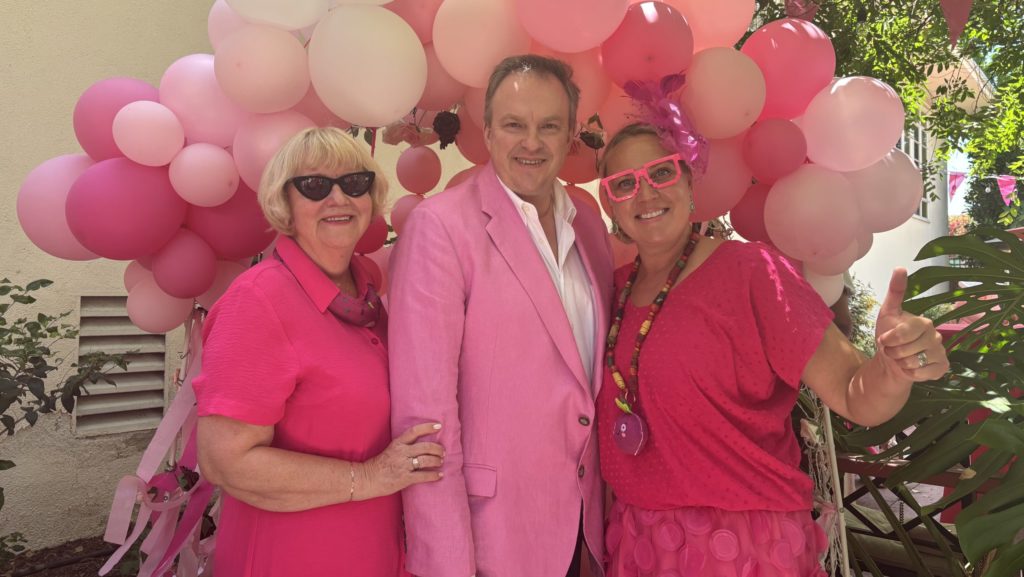
After Mass, Acayan was part of the crowd that flocked to the Šaltibarščiai festival. The festival’s namesake is a tangy soup made with beets, buttermilk, cucumber and dill. In honor of the traditional dish, the parish garden was decorated with pink balloons and banners. Father Karanauskas delighted parishioners when he arrived in a rosy blazer and matching loafers.
The Atlaidai kicked off six months of Jubilee Year observances. Future events include the installation of the first-class relics of Blessed Jurgis Matulaitis and Blessed Teofilius Matulionis, whose mural marked the starting point of the procession.
Parish leaders said they hope the Jubilee Year sparks faith where it is needed most.
“We are reviving Atlaidai to open our parish Jubilee celebrations with hope and prayer of the return of non-practicing Catholics in our community,” Aguas said. “The church doors remain open and the light of faith is kept burning. God continues to be present.”