This year, Catholics in Los Angeles have a rare opportunity to receive one of the Church’s most beloved indulgences — the Pardon of Assisi — close to home.
In connection with the Jubilee Year of St. Francis proclaimed by Pope Leo XIV, Archbishop José H. Gomez has designated certain local churches where the indulgence may be obtained. What was once tied to a single small chapel in Italy is, for a little while, being extended in a special way to the faithful of Southern California.
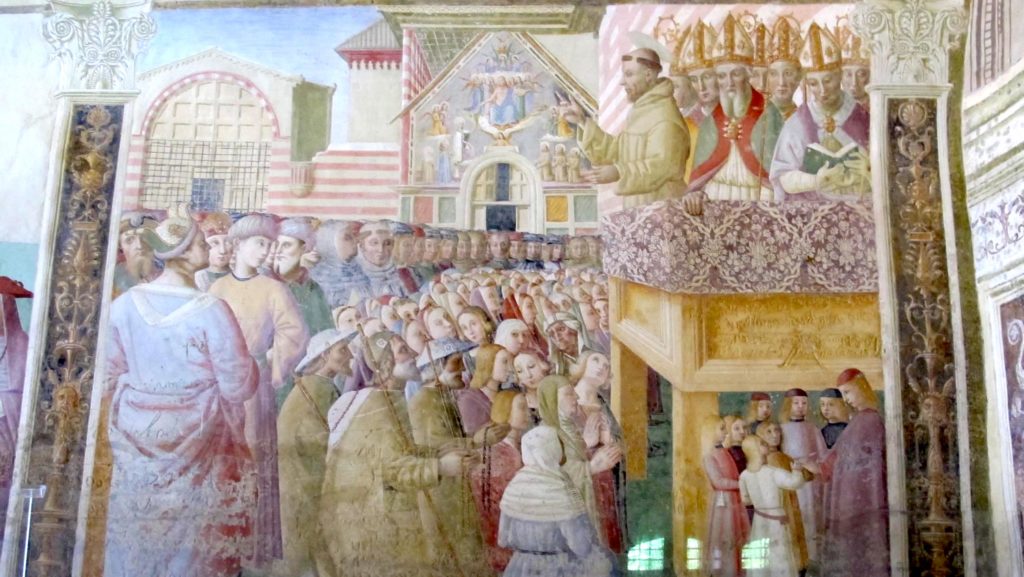
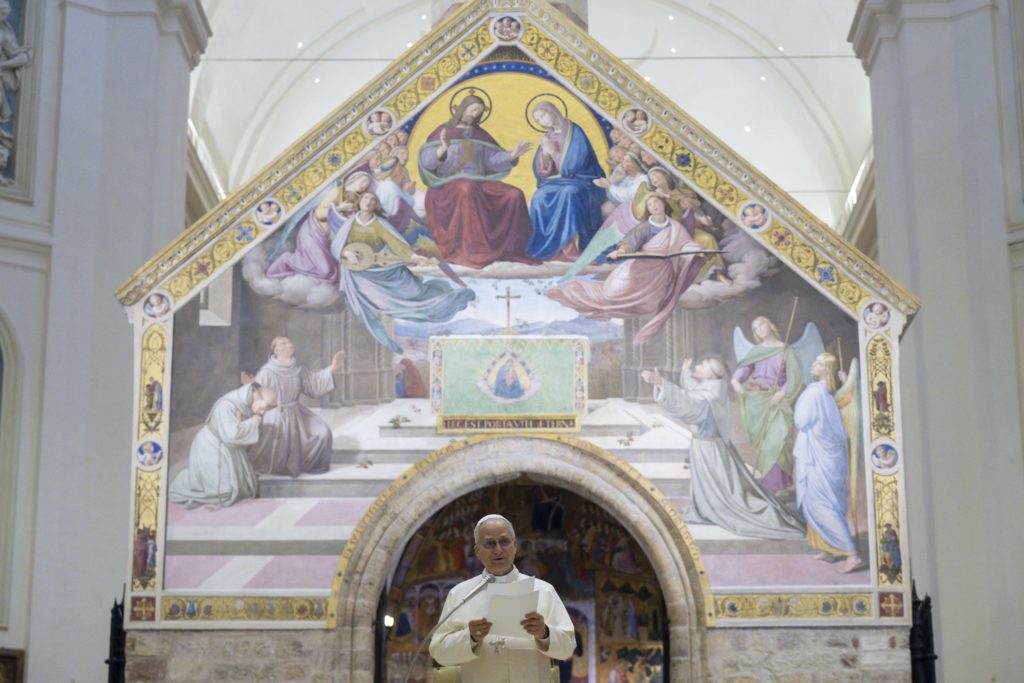
The origins of this indulgence reach back to St. Francis of Assisi and the humble chapel known as the Porziuncola. In 1216, Francis asked for — and received — permission from Pope Honorius III to grant a plenary indulgence to all who would come there in repentance. It was a startling request in its simplicity. Francis wanted forgiveness to be not distant or difficult, but immediate and accessible.
That same spirit animates the Church’s practice today.
How to receive the indulgence
To obtain the Pardon of Assisi under the norms of the Catholic Church, the faithful should:
- Visit one of the designated churches identified by the Archdiocese of Los Angeles during this Jubilee period.
- Pray there, typically the Our Father and the Creed.
- Receive sacramental confession, within about 20 days before or after the visit.
- Receive holy Communion, preferably on the same day.
- Pray for the intentions of the pope, usually an Our Father and Hail Mary.
- Be free from attachment to sin, even venial sin.
When these conditions are fulfilled with sincere devotion, the indulgence is plenary, remitting all temporal punishment due to sin.
What an indulgence means today
Modern Catholic teaching, clarified in Indulgentiarum Doctrina of Pope Paul VI and summarized in the Catechism of the Catholic Church, helps us understand what is happening spiritually.
Sin is forgiven in confession — but it leaves behind a kind of wound, a disorder that needs healing. This is what tradition calls “temporal punishment.” An indulgence is the Church’s application of the grace of Christ and the communion of the saints to bring that healing to completion.
In other words, the indulgence is not a substitute for repentance. It is the fruit of repentance, brought to fullness by grace.
Why this Jubilee moment matters
The extension of the Pardon of Assisi to local churches highlights something essential about the Church today: her desire to make God’s mercy widely accessible.
What began in a tiny Umbrian chapel is now offered in parish settings, within reach of ordinary life. No long pilgrimage is required. No extraordinary penance is demanded. The path is simple: confession, communion, prayer, and a sincere turning of the heart.
In this way, the indulgence reflects the Church’s modern emphasis on the universal call to holiness — the conviction that sanctity is possible for everyone, not just the few.
It also underscores the communal nature of the Christian life. We pray for the pope. We receive grace as members of the Church. We draw, mysteriously but truly, on the holiness of Christ and all his saints.
A grace close at hand
For Catholics in Los Angeles this Jubilee Year, the Pardon of Assisi is not a distant medieval practice. It is a present invitation.
And it carries the insight that St. Francis of Assisi grasped so well: that God’s mercy is not scarce. It is abundant, ready, and — especially in moments like this — astonishingly near.