Pope Francis during coronavirus: Beware the 'poison' of laziness, complaining
Pope Francis Tuesday warned Christians to avoid living in a “fog” of sadness, sloth, and complaining, instead of rejoicing in the spiritual healing they have received from Christ. There are “many Christians who live this state of sloth, unable to do anything but complain about everything,” the pope […]
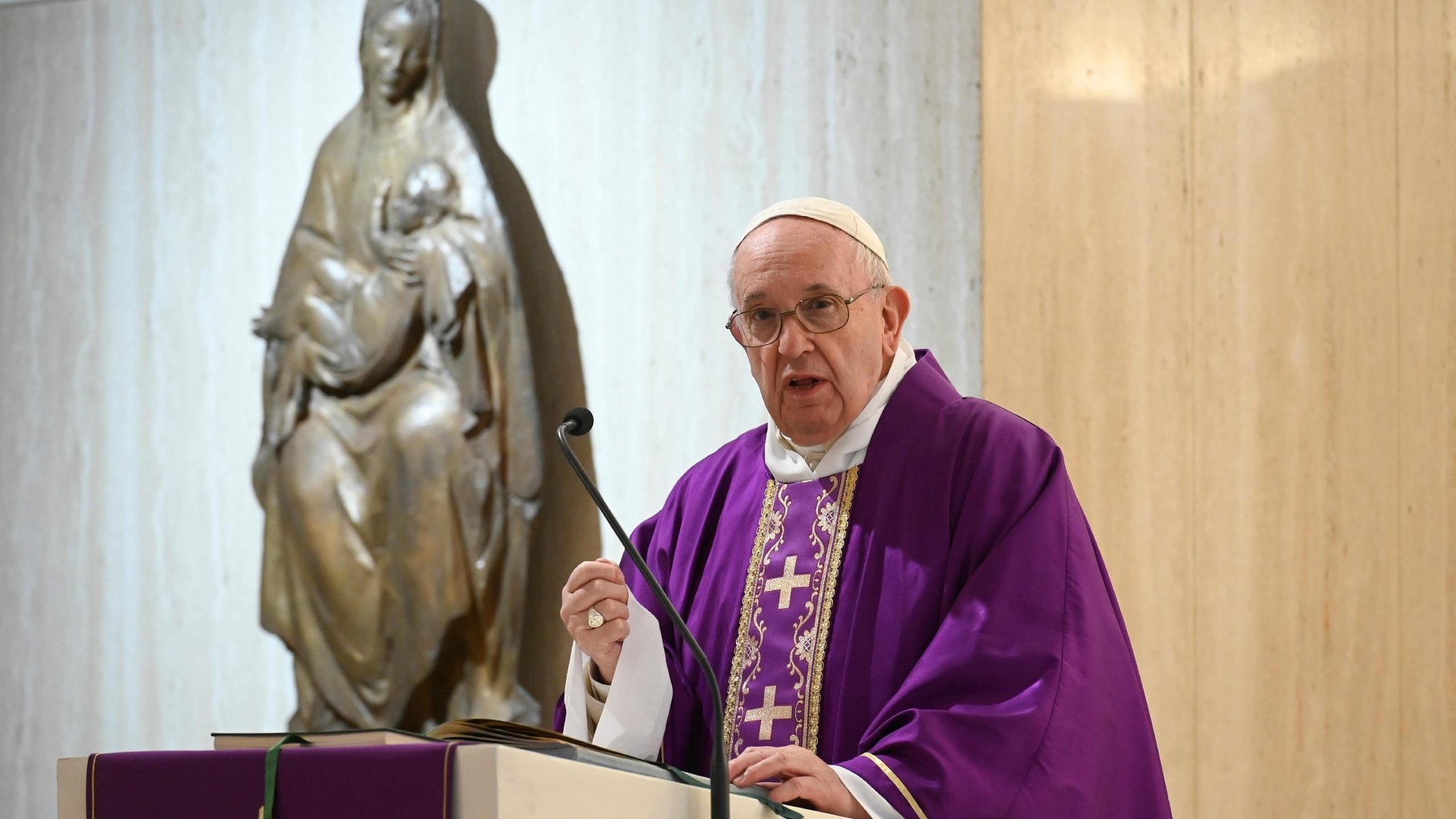
Pope Francis Tuesday warned Christians to avoid living in a “fog” of sadness, sloth, and complaining, instead of rejoicing in the spiritual healing they have received from Christ.
There are “many Christians who live this state of sloth, unable to do anything but complain about everything,” the pope said at Mass in the Vatican’s Santa Marta guesthouse March 24.
“Sloth is a poison, it is a fog that surrounds the soul and does not let it live,” he continued. “It’s also a drug, because if you taste it often, you like it. And you end up a ‘sad-addict,’ a ‘sloth-addict.’”
Francis added that sloth is a “fairly usual sin among us,” one which the devil “can use to annihilate our spiritual life as well as our life as people.”
He urged people to reflect on the healing water of their baptism, through which Christ gave them new life, and through which they find salvation.
The pope is offering his daily morning Mass for those affected by COVID-19. The Masses are being livestreamed throughout the coronavirus emergency.
Francis prayed Tuesday particularly for the doctors and priests who have died from the coronavirus after treating or visiting the sick.
“I have heard that some doctors, priests have passed away in recent days, I don’t know if [there are] any nurses [who have died],” the pope said March 24.
“We pray for them, for their families, and I thank God for the example of heroism they give us in treating the sick,” he added.
In his homily, Pope Francis gave a reflection on the story of Jesus’ healing of a man who had been ill for 38 years, as told in St. John’s Gospel.
When Jesus asks the sick man if he wants to be well, he responds by complaining about others and about his situation, the pope said.
“It makes us think, the attitude of this man,” Francis stated. He may have been paralyzed, but he was also “sick in the heart, sick in the soul, sick with pessimism, sick with sadness, sick with sloth.”
The answer to Jesus’ question should be: “Yes, I want to be healed!” the pope underlined.
Francis explained that the man’s illness was not his sin; his sin was “complaining about the lives of others: the sin of sadness that is the seed of the devil, of that inability to make a decision about one’s life.”
“Yes, to look at the lives of others to complain. Not to criticize them: to complain. ‘They go first, I am a victim of this life,’” he said.
Pope Francis noted that the blind man healed by Jesus in last Sunday’s Gospel responded in a different way: he responded with “much joy.”
He recommended that people read chapter 5 of the Gospel of John to see what spiritual disease they may being falling into.
“Jesus healed me: do you not see the reaction of others who have recovered, who take the stretcher and dance, sing, give thanks, saying it to the whole world?” he said.
Hannah Brockhaus is EWTN News’ Deputy Vatican Editor.