In the lead-up to Christmas, Angelus has been looking at three Old Testament prophets who anticipated the story of Christ’s birth. The following is Part Two of our three-part series. Read Part One here, and Part Three here.
In the centuries leading up to Jesus’ birth, the scattered remnants of Israel were united by a common hope. Through the prophets, the Lord God had promised to deliver them. And the scriptural record of God’s promises coalesced around a single figure: the “Anointed.” In Hebrew, the word was “Mashiach,” or “Messiah.” In Greek, it was translated as “Christos.”
Ancient prophecy made clear that the Messiah, the Christ, would be a descendant of King David. God vowed to “establish the throne of [David’s] kingdom forever” (2 Samuel 7:13).
With this expectation in mind, scholarly and pious Jews gathered other prophecies that indicated the identity of the anointed king or the circumstances of his arrival. Thus, when foreign Magi appeared in Jerusalem asking about a newborn “King of the Jews,” they stepped into the ongoing conversation.
The reigning king, Herod, feared a rival, and so he asked “all the chief priests and scribes … where the Christ was to be born” (Matthew 2:4).
And they responded immediately with “Bethlehem,” citing an oracle from the Prophet Micah: “And you, O Bethlehem, in the land of Judah, are by no means least among the rulers of Judah; for from you shall come a ruler who will govern my people Israel” (Matthew 2:6; Micah 2:4).
By mentioning “Bethlehem,” both the ancient prophet and the first-century priests and scribes were invoking King David — because Bethlehem was one of two cities known as the “City of David.”
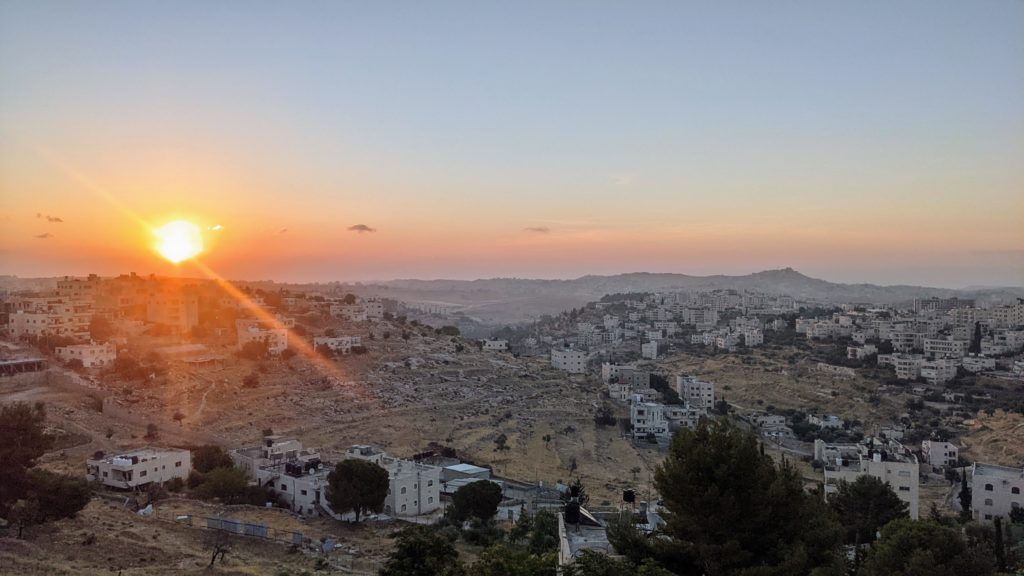
One was Zion, the Temple precinct in Jerusalem, the city that David conquered and made his capital. That was the site most commonly called “City of David” in Scripture.
But there was also humble Bethlehem, David’s birthplace. He was a Bethlehemite (see 1 Samuel 16:18). Tiny, rural Bethlehem was less glamorous than Jerusalem, but no less beloved by the King. When David’s enemies took hold of his native town, he expressed his longing for “water to drink from the well of Bethlehem which is by the gate” (2 Samuel 23:15) — so vivid were his memories of the place.
Bethlehem was foundational in David’s life, and so it was foundational in the record of his dynasty.
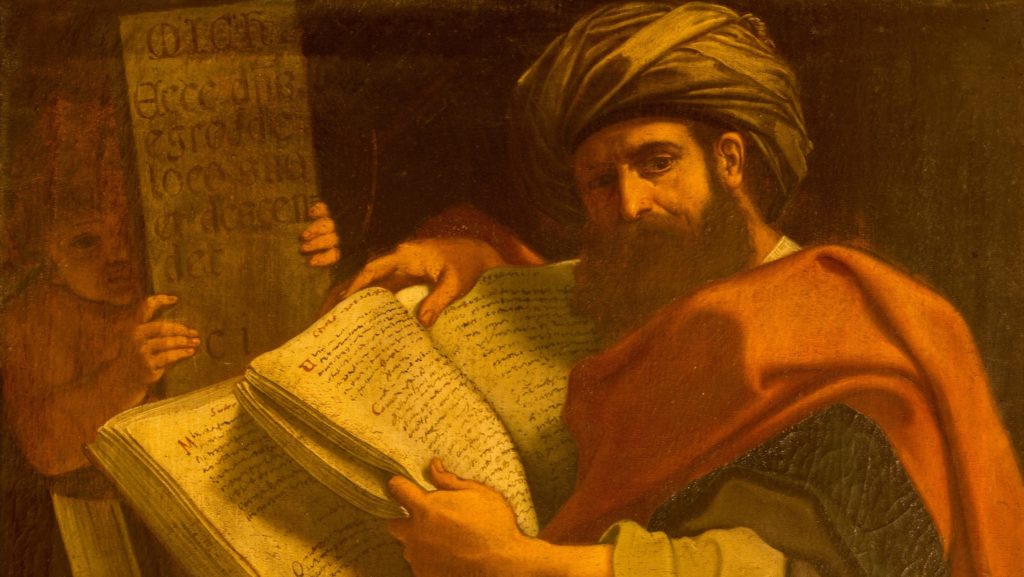
The Prophet Micah lived in the eighth century before Christ, and he lived in the declining years of the Davidic dynasty. A contemporary of the Prophet Isaiah, he rebuked the kingdom for its corruption and idolatry. These sins had weakened the land and left it vulnerable to invasion by the Assyrians.
David’s dynasty finally came to an end with the Babylonian conquest of Jerusalem in 586 B.C. The reigning king, Zedekiah, was taken to Babylon with his household. There he was forced to witness the slaughter of all his sons, after which the Babylonians blinded him, so that the last thing he saw was the death of his last son — and the apparent end of the line of King David.
Yet the Jews in exile remembered God’s promise to establish the throne of David’s kingdom “forever.” To David, God had sworn:
I will establish his line for ever
and his throne as the days of the heavens. …
I will not violate my covenant,
or alter the word that went forth from my lips.
Once for all I have sworn by my holiness;
I will not lie to David.
His line shall endure forever,
his throne as long as the sun before me.
Like the moon it shall be established for ever;
it shall stand firm while the skies endure.
— Psalm 89:29, 34–37
By the time of Jesus’ birth, the Jews — both in the Holy Land and in exile — were certain that the Davidic line would resume where David’s life had begun, in Bethlehem.
And so it did.
The New Testament begins with the claim that Jesus is “the son of David” (Matthew 1:1) and soon proceeds to the story of Jesus’ miraculous conception and birth in David’s city.
How did this happen? With Zedekiah, the line had appeared to come to an abrupt end. But Zedekiah was not the only descendant of David alive in the sixth century B.C. David had fathered 18 children with eight wives. His line presumably continued in many children other than Solomon — and then multiplied over the course of centuries.
Jesus’ contemporaries who disbelieved in him, the Pharisees, still witnessed to this fact. They expected the Messiah to be the Son of David (see Matthew 22:41–42).
For those who believed, the oracle of Micah was Jesus’ identification card. It proved him to be King Messiah. And so it is sung today in Christmas carols such as “O Little Town of Bethlehem,” whose very title is a direct reference to Micah 5:2, which prophesies the birth in David’s native city.
Micah foresaw a shepherd ruler, like David, who would “feed his flock in the strength of the LORD” and who would “be great to the ends of the earth” (5:4).