Ir al contenido principal
Mundo

Para muchos, la Pascua representa un momento de alegría y peligro

ROMA - Litúrgica y espiritualmente, la Pascua es la suprema celebración cristiana de la victoria de la vida sobre la muerte. En los ritos centrales del Triduo, el horror y la pérdida del Viernes Santo dan paso a la tumba vacía, el anuncio angélico y, finalmente, la gloria de Cristo resucitado. Sin […]
John L. Allen Jr.| |5 min de lectura

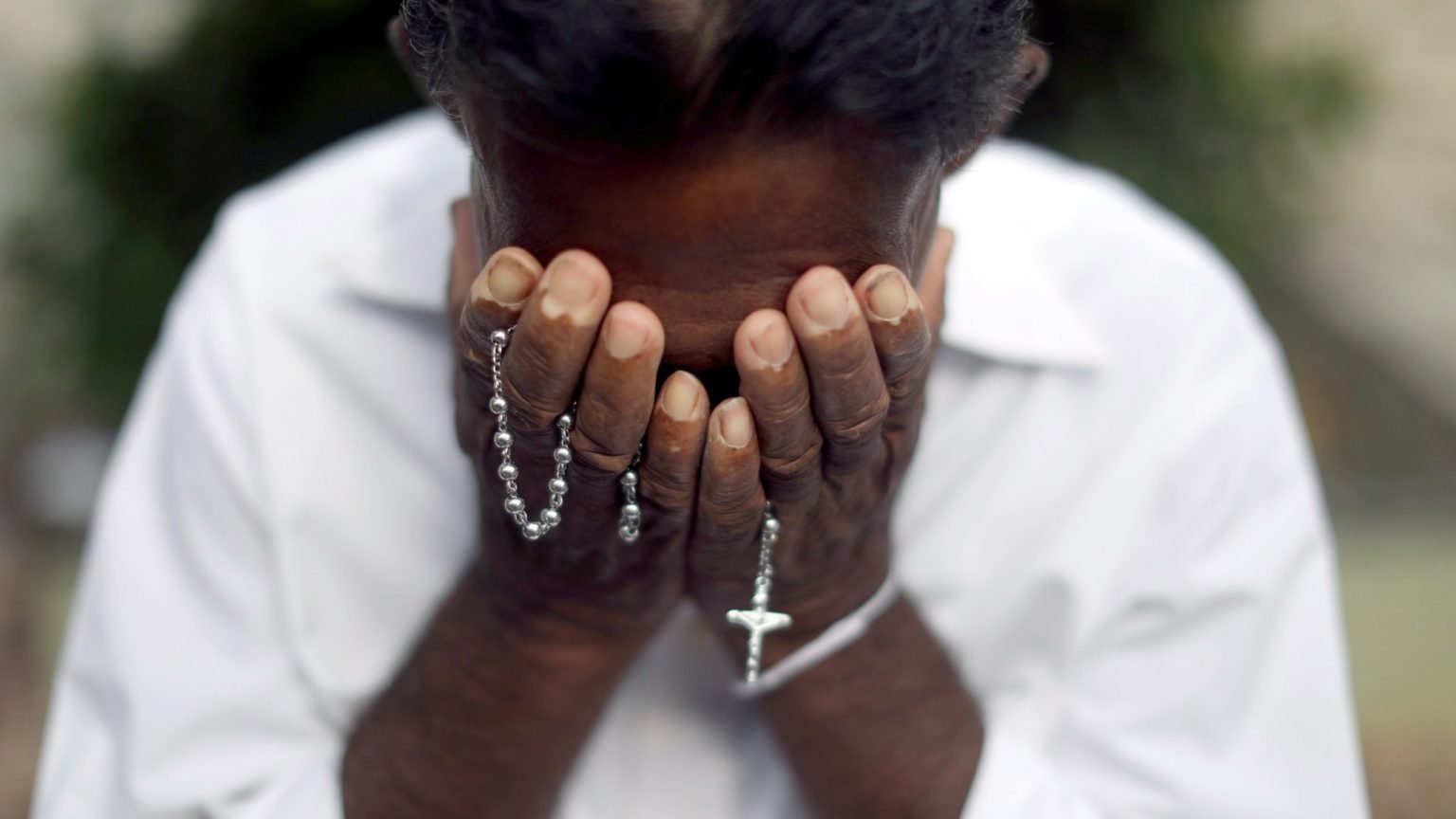
A person mourns near the grave of a suicide bombing victim at Sellakanda Catholic cemetery in Negombo, Sri Lanka, April 23, 2019. (CNS photo/Athit Perawongmetha, Reuters) ROME – Liturgically and spiritually, Easter is the supreme Christian celebration of the victory of life over death. In the core rites of the Triduum, the horror and loss of Good Friday give way to the empty tomb, the angelic announcement and, finally, the glory of the risen Christ. Yet in some parts of the world, the real-life experience of Christians at Easter, as opposed to the liturgical symbolism, savors more of death than life. That’s because in the early 21st century, Easter has become a peak moment for bursts of anti-Christian violence and persecution. Consider the following examples … and, to be clear, this is only a partial list. In 2004, three masked gunmen wearing all-black gear and riding motorcycles opened fire on hundreds of Christians celebrating Easter Sunday in the Tentena region of Indonesia, by population the world’s largest Muslim nation. Seven people were injured, including a four-year-old child shot in the right leg. A 2011 bomb attack on Sacred Heart Catholic Church in central Baghdad left four people injured, including two civilians and two policemen. Fortunately, the explosion came after Easter Sunday celebrations when the church was mostly empty. In 2012, a car bomb detonated by Boko Haram outside an All Nations Christian Assembly Church service in Kaduna, Nigeria, on the dividing line between the predominantly Muslim north and the Christian south, killed 38 people. One year later, violence in central Nigeria over the Easter holiday left an estimated 80 people, including 19 Christians killed in an assault by Muslim Fulani gunmen in a rural area of Kaduna state. The violence also displaced at least 4,500 people. Kenyan Christians in 2015 marked Easter as a day of mourning after a Holy Thursday assault on Garissa University in the eastern part of the country that left 148 people dead, mostly students. Four gunmen linked to the radical Islamist group al-Shabab stormed the campus, demanding to know who was Muslim and who was Christian, killing the Christians on the spot. In 2016, a radical Muslim group known as Jamaat-ul-Ahrar bombed a popular children’s park in a Christian-dominated neighborhood of Lahore on Easter Sunday, killing 76 people and leaving more than 300 injured, many of them children. Coptic Christians in Egypt were compelled to curb or abandon Easter celebrations in 2017 after bombings on Palm Sunday at St. George's Church in the northern Egyptian city of Tanta on the Nile delta, and Saint Mark's Coptic Orthodox Cathedral, the principal church in Alexandria, seat of the Coptic papacy, left 45 people dead and 126 injured. One year later, a Christian family was assaulted on Easter Monday in Quetta, a provincial capital of Pakistan, killing four people. Also in 2018, a series of Holy Week attacks on Christians in India carried out by radical Hindu nationalists culminated in an Easter Sunday assault on a church in Coimbatore, in southern India, which left the pastor badly beaten and members of the congregation dispersed. In 2019, 31 Nigerian Christians died in a series of Easter assaults on churches in the states of Benue, Adamawa and Gombe. Also on Easter Sunday 2019, nine bombers inspired by the ideology of the Islamic State attacked churches and luxury hotels in the Sri Lankan capital of Colombo, leaving 269 people dead and more than 500 injured. In 2022, a mob of more than 100 rioters in India’s Odisha state assaulted Christian families and churches on Easter Sunday, driving the villagers from their homes and leaving several with injuries severe enough to require hospitalization. In 2021, the anti-Christian violence watchdog group “Open Doors” estimated that during the prior seven years, meaning 2013-2020, at least 526 Christians had been killed around the world while celebrating Easter Sunday, with hundreds more injured. Though no one knows where the contagion of anti-Christian violence will strike this year, it’s worth noting that Christian leaders in the Holy Land recently appealed to the Israeli government to provide additional security for Easter services in light of a mounting pattern of acts of desecration and violence directed at Christian targets over the past year. “As we have all seen in recent months, escalating violence has engulfed the Holy Land,” reads the message. “For over the past year, some of our churches, funeral processions, and places of public gathering have become targets of attack; some of our holy sites and cemeteries have been desecrated; and some of our ancient liturgies, such as the Palm Sunday Procession and the Holy Fire Ceremony, have been closed off to thousands of worshipers.” In part, terrorists launch assaults on Easter for the shock value of striking Christians on the holiest day of their year, and on a day which is supposed to express the victory of life. Media coverage of Christian celebrations on Easter Sunday also ensures greater publicity when such assaults occur. In addition, there’s a macabre practicality involved: Easter and Christmas tend to be the two days every year when Christian churches all around the world attract the largest crowds, ensuring the greatest possible carnage – more bang for the buck, so to speak. After the Kenya massacre in 2015, Pope Francis used his traditional Urbi et Orbi Easter message to acknowledge the realities of Christian suffering around the world. “We ask Jesus, the victor over death, to lighten the sufferings of our many brothers and sisters who are persecuted for his name, and of all those who suffer injustice as a result of ongoing conflicts and violence - and there are many,” he said. These are the realities of our time, when more than two-thirds of the 2.6 billion Christians in the world live outside the West, often in fairly dangerous neighborhoods. Una persona llora cerca de la tumba de una víctima de un atentado suicida en el cementerio católico de Sellakanda en Negombo, Sri Lanka, 23 de abril de 2019. (CNS photo/Athit Perawongmetha, Reuters)
Compartir

Read in English

ROMA - Litúrgica y espiritualmente, la Pascua es la suprema celebración cristiana de la victoria de la vida sobre la muerte. En los ritos centrales del Triduo, el horror y la pérdida del Viernes Santo dan paso a la tumba vacía, el anuncio angélico y, finalmente, la gloria de Cristo resucitado.

Sin embargo, en algunas partes del mundo, la experiencia de la vida real de los cristianos en Pascua, en contraposición al simbolismo litúrgico, sabe más a muerte que a vida. Esto se debe a que, a principios del siglo XXI, la Pascua se ha convertido en un momento álgido de estallidos de violencia y persecución anticristianas.

Consideremos los siguientes ejemplos... y, para que quede claro, ésta es sólo una lista parcial.

  • En 2004, tres pistoleros enmascarados, vestidos de negro y en motocicletas, abrieron fuego contra cientos de cristianos que celebraban el Domingo de Resurrección en la región de Tentena, en Indonesia, la nación musulmana más grande del mundo. Siete personas resultaron heridas, entre ellas un niño de cuatro años con un disparo en la pierna derecha.
  • En 2011, un atentado con bomba contra la iglesia católica del Sagrado Corazón, en el centro de Bagdad, causó cuatro heridos, entre ellos dos civiles y dos policías. Afortunadamente, la explosión se produjo después de las celebraciones del Domingo de Pascua, cuando la iglesia estaba casi vacía.
  • En 2012, un coche bomba detonado por Boko Haram a la salida de un servicio religioso de la Asamblea Cristiana de Todas las Naciones en Kaduna (Nigeria), en la línea divisoria entre el norte predominantemente musulmán y el sur cristiano, mató a 38 personas.
  • Un año después, la violencia desatada en el centro de Nigeria durante las vacaciones de Pascua se saldó con la muerte de unas 80 personas, entre ellas 19 cristianos, en un asalto perpetrado por pistoleros fulani musulmanes en una zona rural del estado de Kaduna. La violencia también provocó el desplazamiento de al menos 4.500 personas.
  • En 2015, los cristianos kenianos celebraron la Pascua como un día de luto tras el asalto del Jueves Santo a la Universidad de Garissa, en el este del país, que dejó 148 muertos, en su mayoría estudiantes. Cuatro hombres armados vinculados al grupo islamista radical Al Shabab irrumpieron en el campus, exigiendo saber quién era musulmán y quién cristiano, y mataron a los cristianos en el acto.
  • En 2016, un grupo radical musulmán conocido como Jamaat-ul-Ahrar bombardeó un popular parque infantil en un barrio de Lahore dominado por cristianos el Domingo de Pascua, matando a 76 personas y dejando más de 300 heridos, muchos de ellos niños.
  • Los cristianos coptos de Egipto se vieron obligados a frenar o abandonar las celebraciones de Pascua en 2017 después de que los atentados con bomba perpetrados el Domingo de Ramos en la iglesia de San Jorge, en la ciudad septentrional egipcia de Tanta, en el delta del Nilo, y en la catedral copta ortodoxa de San Marcos, la principal iglesia de Alejandría, sede del papado copto, dejaran 45 muertos y 126 heridos.
  • Un año después, una familia cristiana fue asaltada el Lunes de Pascua en Quetta, capital de provincia de Pakistán, matando a cuatro personas.
  • También en 2018, una serie de ataques de Semana Santa contra cristianos en India perpetrados por nacionalistas hindúes radicales culminaron en un asalto el Domingo de Pascua a una iglesia de Coimbatore, en el sur del país, que dejó al pastor gravemente golpeado y a los miembros de la congregación dispersos.
  • En 2019, 31 cristianos nigerianos murieron en una serie de asaltos de Semana Santa contra iglesias en los estados de Benue, Adamawa y Gombe.
  • También el Domingo de Resurrección de 2019, nueve terroristas inspirados en la ideología del Estado Islámico atacaron iglesias y hoteles de lujo en Colombo, capital de Sri Lanka, dejando 269 muertos y más de 500 heridos.
  • En 2022, una turba de más de 100 alborotadores en el estado indio de Odisha asaltó familias e iglesias cristianas el Domingo de Resurrección, expulsando a los lugareños de sus hogares y dejando a varios con heridas lo suficientemente graves como para requerir hospitalización.
  • En 2021, el grupo de vigilancia de la violencia anticristiana "Open Doors" calculó que durante los siete años anteriores, es decir, de 2013 a 2020, al menos 526 cristianos habían sido asesinados en todo el mundo mientras celebraban el Domingo de Resurrección, y cientos más habían resultado heridos.

Aunque nadie sabe dónde golpeará este año el contagio de la violencia anticristiana, vale la pena señalar que los líderes cristianos de Tierra Santa apelaron recientemente al gobierno israelí para que proporcionara seguridad adicional para los servicios de Pascua a la luz de un patrón creciente de actos de profanación y violencia dirigidos contra objetivos cristianos durante el año pasado.

"Como todos hemos visto en los últimos meses, la Tierra Santa se ha visto envuelta en una escalada de violencia", reza el mensaje. "Durante el último año, algunas de nuestras iglesias, procesiones funerarias y lugares de reunión pública se han convertido en blanco de ataques; algunos de nuestros lugares santos y cementerios han sido profanados; y algunas de nuestras antiguas liturgias, como la Procesión del Domingo de Ramos y la Ceremonia del Fuego Sagrado, han sido cerradas a miles de fieles".

En parte, los terroristas lanzan ataques en Semana Santa por el valor de conmoción que supone golpear a los cristianos en el día más sagrado de su año, y en un día que se supone expresa la victoria de la vida. La cobertura mediática de las celebraciones cristianas del Domingo de Resurrección también garantiza una mayor publicidad cuando se producen esos asaltos.

Además, existe un macabro sentido práctico: Pascua y Navidad suelen ser los dos días del año en los que las iglesias cristianas de todo el mundo atraen a las mayores multitudes, lo que garantiza la mayor carnicería posible: más beneficio por el dinero, por así decirlo.

Tras la masacre de Kenia en 2015, el Papa Francisco utilizó su tradicional mensaje de Pascua Urbi et Orbi para reconocer la realidad del sufrimiento cristiano en todo el mundo.

"Pedimos a Jesús, vencedor de la muerte, que aligere los sufrimientos de nuestros muchos hermanos y hermanas perseguidos por su nombre, y de todos los que sufren injusticias como consecuencia de los conflictos y la violencia actuales -y son muchos-", dijo.

Estas son las realidades de nuestro tiempo, cuando más de dos tercios de los 2.600 millones de cristianos del mundo viven fuera de Occidente, a menudo en barrios bastante peligrosos.

Como escribió una vez C.S. Lewis: "Nunca sabes hasta qué punto crees realmente en algo hasta que su verdad o falsedad se convierte en una cuestión de vida o muerte para ti". La valentía mostrada por legiones de creyentes, que acudirán el domingo a las celebraciones de Pascua a pesar de los riesgos, confirma este punto de la forma más dramática que se pueda imaginar.

Reciba el boletín de Angelus

Las noticias y perspectivas católicas esenciales de la semana, en su correo.

Artículos relacionados

Usamos cookies para entender cómo se lee Angelus y mejorar el sitio. Puede aceptar o rechazar las cookies de analítica. Directiva de cookies