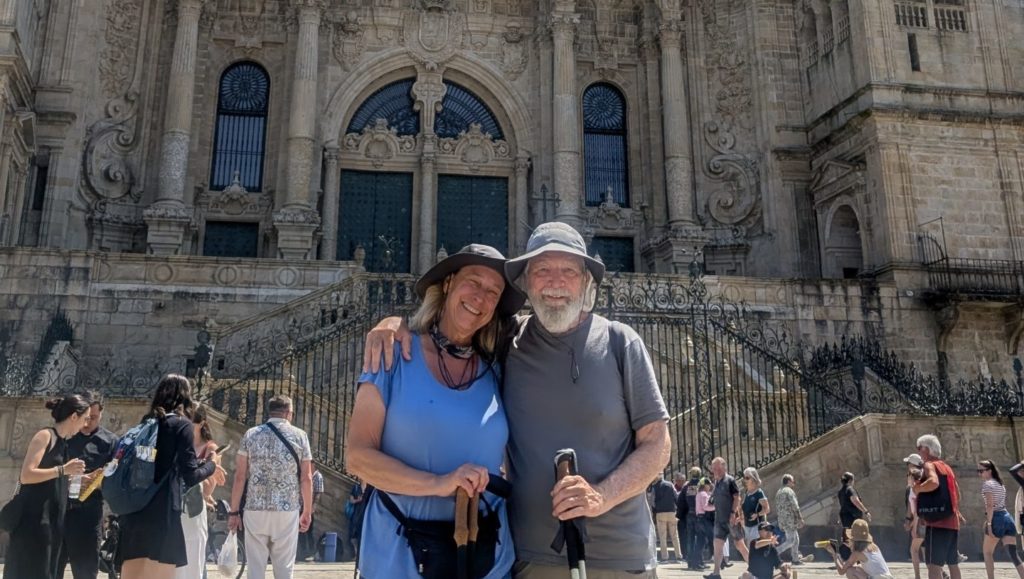
My husband and I hadn’t put much thought into the timing of our Camino de Santiago, other than our decision to go in springtime, just after Easter.
But as we started our trek on April 13, it dawned on me that the trip coincided with the Easter season. This alignment, though unplanned, was perfect.
The Mass readings every day featured the Acts of the Apostles, one of my favorite books of the Bible. I love reading about the newly formed Church in its infancy, and the disciples figuring out how to live without Jesus in the flesh, and to carry on and extend his teachings to the entire world.
And here we were on “The Way,” as the Camino de Santiago is often called, with our destination the cathedral built in honor of, and purportedly housing the relics of St. James the Greater, one of the apostles, and first of the group to be martyred. In the Acts of the Apostles, “The Way” was initially the name used by the followers of Jesus to describe their movement.
One of the adages of the Camino is to make it “your Camino,” meaning that everyone arrives at and accomplishes it with different motivations, expectations, style, and experiences. But there is a very palpable Catholic dimension to the experience, with many churches and Marian shrines on the route, pilgrim Masses and blessings in practically every town. Even non-Catholics and non-Christians on our Camino were respectful of this distinction.
Those who have walked the 500-mile Camino Francés across northern Spain know the challenges of the experience: variable weather conditions ranging from severe heat to rain and snow; finding accommodations each night if not pre-booked; mastering ascents and descents, sometimes steep; trying to avoid blisters and the other physical hazards of walking 10-18 miles every day; and scouting out food and bathrooms. All of this is done on less-than-optimal sleep, especially if staying in the albergues, or group hostels. There’s monotony too, and at times I found myself praying decades of the rosary to stay motivated.
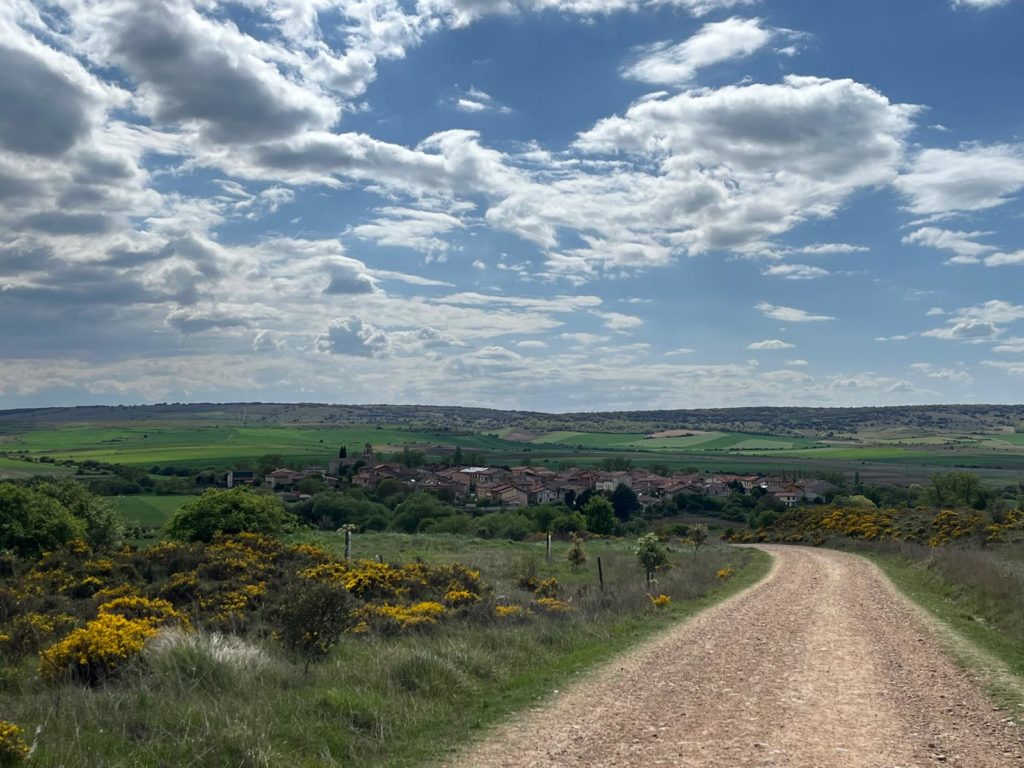
What makes up for all of this is the scenery of the trek. The physical and sensory beauty of the landscapes of each region in France and Spain; the symphony of bird calls that accompanies each step; the multitude of animals that feed in the lushness of the fields; the churches that astound with their often extravagant, and sometimes sparingly modest testament to the collective faith over the past two millennia; and the lovely towns and hospitality of their inhabitants offered to the constant wave of pilgrims.
One of the highlights of the Camino is the sense of community that arises — the friendships and “Camino families” that form. Our “Camino family” consisted of Australians, Dutch, Canadians, Koreans, and Americans. We were all bonded by the purpose and logistics of our Way, but also by our openness to others of us, most in our 60s and 70s and retired.
One time in Burgos we were caught in a sudden downpour of rain and ducked into the nearest café. It was full, but I spied one lone backpacker at a table. Guessing (correctly) that he was a fellow pilgrim, I asked if we could sit at his table, and he graciously obliged. We continued to see Scott from Colorado throughout the rest of our Camino, and for the last time in Santiago. Experiences like these were a gift of the Camino, helping me to rethink my aversion to disturbing boundaries and space with other people, and being more open to spontaneous connection.
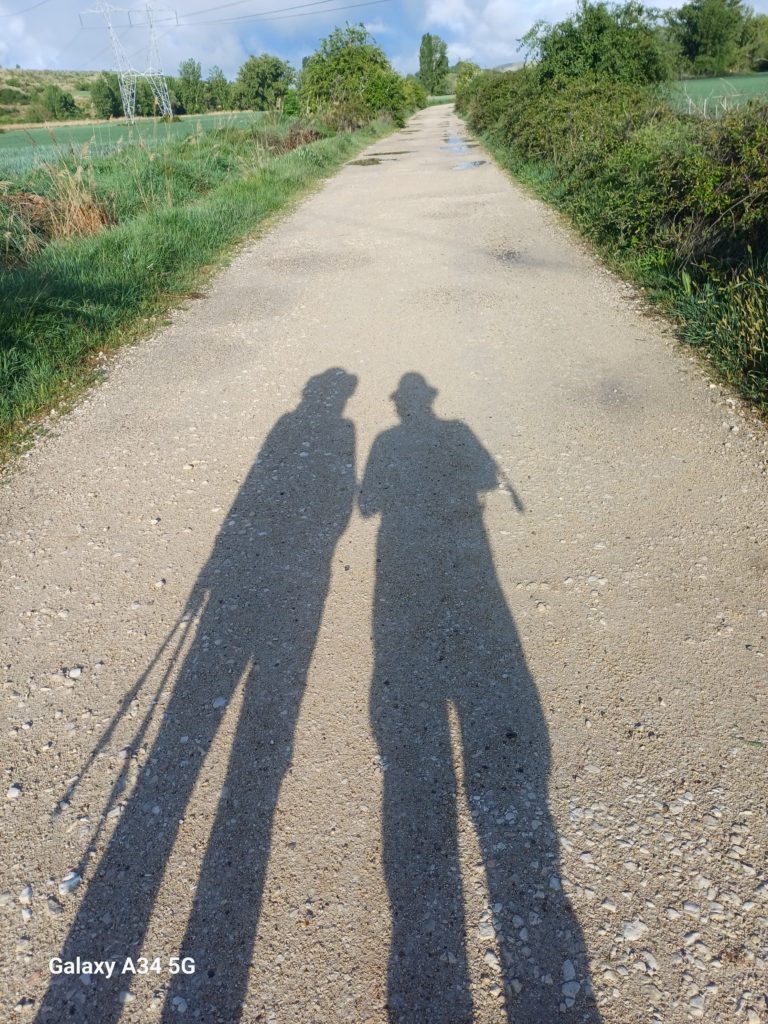
The albergues run by volunteers, or religious groups, such as the Franciscans in Astorga, or Marianists in Sahagun, were our favorite places to stay. They demonstrated true Christian hospitality and offered time and space for group reflections, where we shared our reasons for doing the Camino.
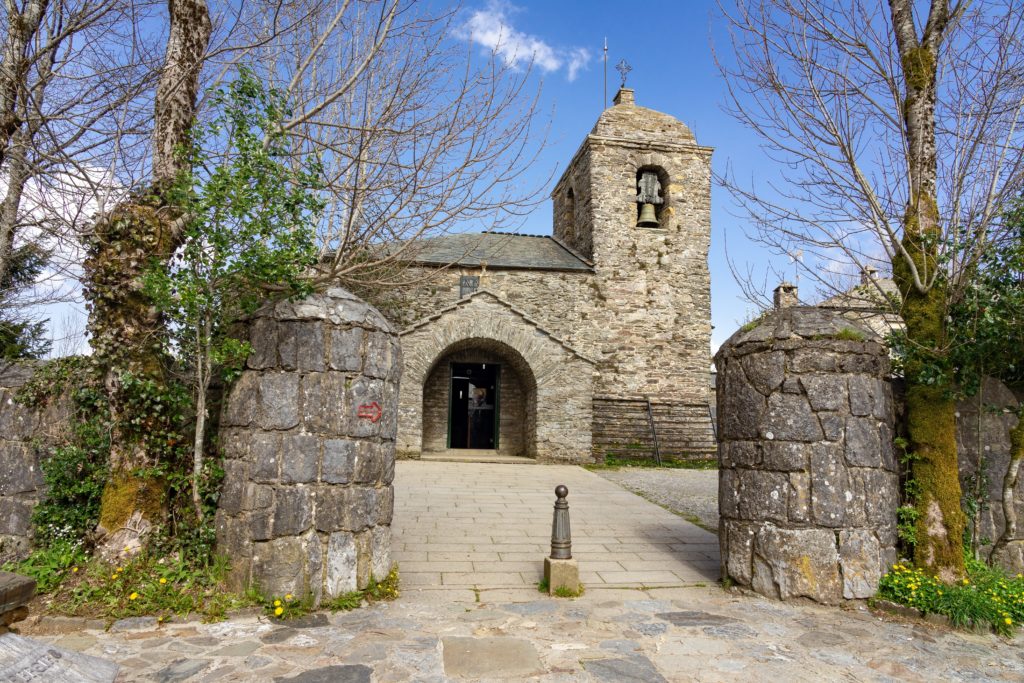
But the most powerful holy moment for me was in O’Cebreiro, the first town perched high in the hills when we entered Galicia. In the year 1300, a Eucharistic miracle took place in the ninth century Iglesia de Santa Maria Real. A priest whose faith had foundered was celebrating Mass resentfully for a lone farmer during a snowstorm when they both witnessed the bread and wine transformed into living tissue and blood. The remnants of this miracle are still preserved in a reliquary in the church, and the priest and farmer are buried there as well. The Real Presence was, and is, palpable.
In Sarria, about 100 kilometers from our final destination, we celebrated Pentecost. On May 28, we entered Santiago de Compostela’s cathedral plaza and cried tears of joy. Our spirits lifted in celebration, along with the botafumeiro (giant swinging incense burner) in the cathedral. After trekking a few more days on the western coast of Spain, we went to Madrid to spend the last six days of our trip.
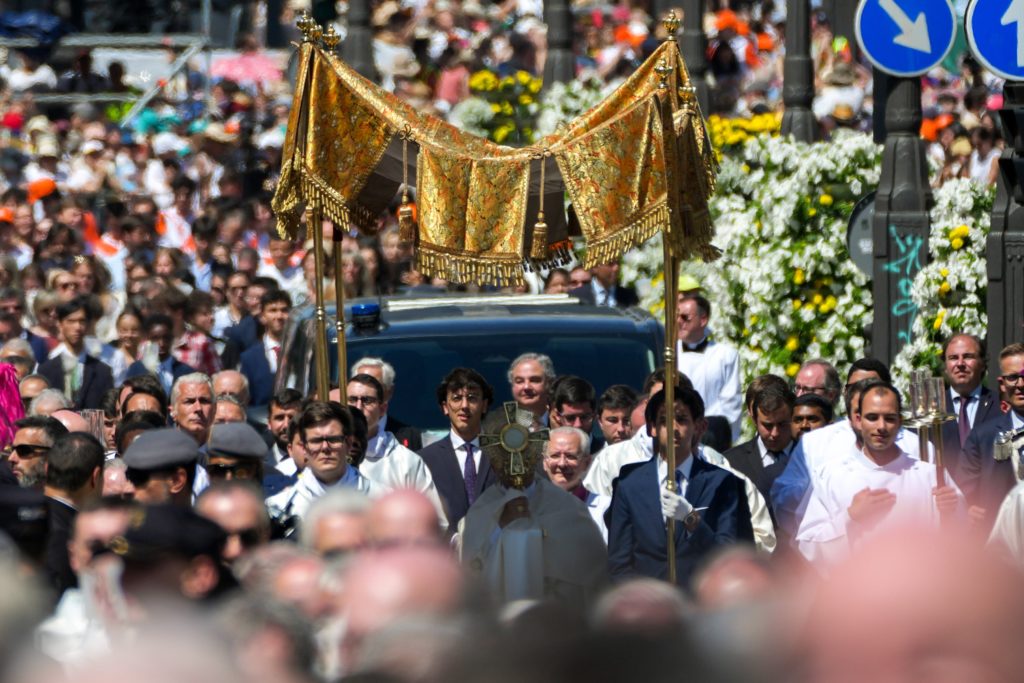
A few weeks into the trip, we learned of another surprise that had escaped our planning: that Papa Leon was going to be in Madrid while we were. Along with more than a million Spaniards, we witnessed the devotion and enthusiasm of the crowds while attending the Papal Mass on the feast of Corpus Christi in Madrid’s landmark Plaza de Cibeles.
Pope Leo emphasized the Church’s mission of mercy, love, inclusion of all, including migrants, and dignity and respect for life from conception to natural death. The Eucharistic adoration at the youth vigil and the Eucharistic procession in the streets of Madrid after the Mass resonated deeply for me following my time at O’Cebreiro a few weeks before.
Our Camino, following the “Way” of the first Christian communities, brought us in the footsteps of the apostles, including St. Peter. In Madrid, our Way unexpectedly brought us face-to-face with his successor. Whether following a path marked with yellow directional arrows, or simply being open to life’s twists and turns, the Way of Jesus leads us home.