Marcion of Pontus was one of the most dangerous men in Christian history — and one of the most fascinating.
He arrived in Rome around the middle of the second century, the son of a bishop from Pontus on the southern coast of the Black Sea. He was wealthy, brilliant, disciplined, and utterly convinced that the Church had misunderstood the Gospel. Christianity, he believed, could not be reconciled with the religion of ancient Israel. The God of the Old Testament was a deity of law, wrath, judgment, and tribal violence. The Father proclaimed by Jesus Christ was a different God altogether — a God of mercy, love, and pure grace.
Marcion’s solution was bold and terrifyingly simple: cut Christianity loose from Judaism.
Discard the Old Testament. Reject the creator God. Keep only a purified version of Luke’s Gospel and the letters of Paul.
Christianity would then become what Marcion believed it was always meant to be: a universal religion of spirit and love, freed from the burdens of history, ritual, law, sacrifice, and Jewish particularity.
Marcion’s ideas did not arise in a vacuum. He lived in the aftermath of the great Jewish revolts against Rome — above all the Bar Kokhba revolt of A.D. 132–135. The Roman world had grown increasingly hostile to Jews. Emperor Hadrian crushed the revolt with terrible severity, refounded Jerusalem as a pagan city, and barred Jews from entering it. To many Roman observers, Judaism now appeared stubborn, separatist, and politically dangerous.
At precisely this moment, Christians were struggling to define themselves within the empire. Were they simply another Jewish sect? Or were they something entirely different?
Marcion offered a radical answer. Christianity, he insisted, had nothing essentially to do with Judaism at all.
His teaching therefore aligned — whether intentionally or not — with wider Roman prejudices of the time. By severing Christianity from the God of Israel, from Jewish law, and from the Hebrew Scriptures, Marcion also distanced Christians from a people increasingly viewed with suspicion throughout the empire.
Yet the Church responded with horror.
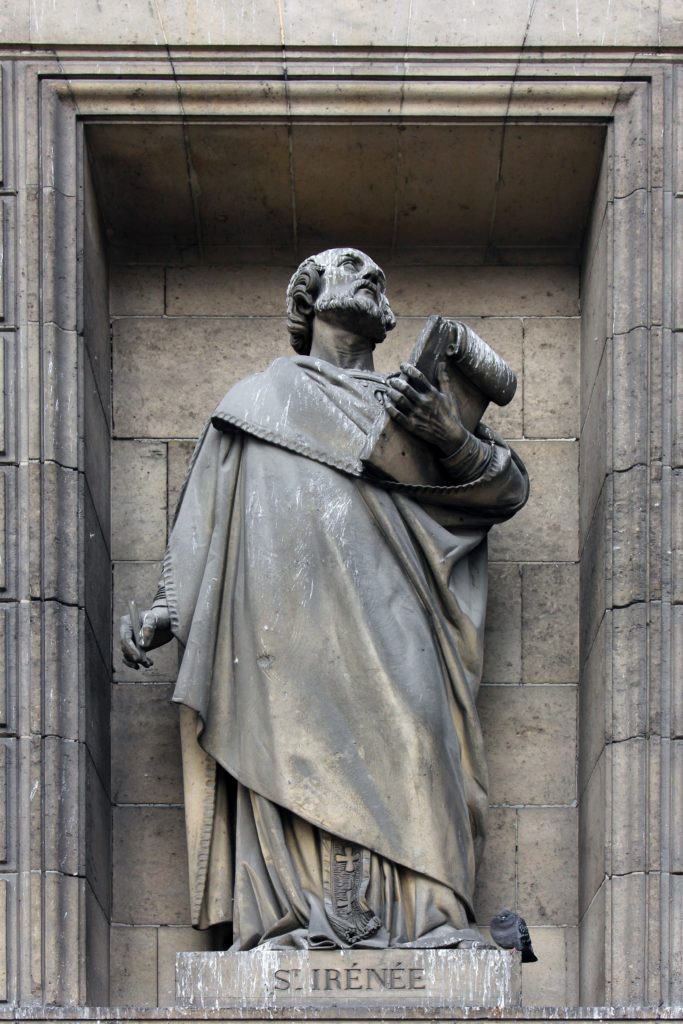
The great Fathers — men such as Irenaeus of Lyon and Tertullian — understood that far more was at stake than the status of the Hebrew Scriptures. If Marcion were right, then Christianity itself would collapse.
One famous story captures the depth of the Church’s revulsion. It was preserved by Irenaeus, who had personally known the aged bishop Polycarp of Smyrna, himself a disciple of the apostle John. According to the account, Marcion once approached Polycarp on the streets of Rome and said, “Do you recognize me?”
Polycarp replied: “I recognize you as the firstborn of Satan.”
To modern ears, the response sounds shockingly harsh. Yet Polycarp understood something many modern Christians have forgotten. Marcion was not merely proposing a revised canon or a different interpretation of Paul. He was proposing a Christianity detached from Abraham, Moses, creation, covenant, and history itself.
For the Fathers, the God of Abraham was the Father of Jesus Christ. Creation and redemption were the work of the same divine hand. Genesis and the Gospel belonged to one continuous story. Christ did not abolish Israel’s Scriptures; he fulfilled them.
Without the Old Testament, they believed, Christians would no longer understand: covenant, sacrifice, Passover, Messiah, temple, priesthood — or even creation itself.
More fundamentally, they would no longer understand Jesus.
The Church rejected Marcion decisively. And for centuries, Christians regarded him as the arch-heretic — the embodiment of the temptation to sever Christianity from its Jewish roots.
Yet in modern times, Marcion returned.
In the 19th and early 20th centuries, several German scholars began to reconsider him sympathetically. The greatest among them was Adolf von Harnack, whose monumental work “Marcion: The Gospel of the Alien God” (Wipf & Stock Publishers, $26) portrayed the heretic not as a monster but as a tragic reformer — “the first Protestant,” some would say.
The contrast was astonishing. Polycarp had called Marcion “the firstborn of Satan.” Harnack effectively called him the first reformer.
Harnack did not embrace Marcion’s theology outright. Yet he admired Marcion’s seriousness, his devotion to Paul, and his attempt to distinguish Christianity sharply from Judaism. In one of his most controversial statements, Harnack suggested that while the ancient Church had been right to reject Marcion in the second century, modern Christians no longer needed to retain the Old Testament as fully authoritative Scripture.
That argument would acquire a dreadful resonance only a few decades later.
When the Nazi movement sought to create a de-Judaized Christianity, it often reached instinctively for Marcionite themes. Nazi theologians attempted to remove the Old Testament from Christian life. Some tried to portray Jesus as Aryan rather than Jewish. An infamous Nazi-era institute dedicated itself to eliminating “Jewish influence” from German Christianity.
Ancient Marcionism and Nazi ideology were not the same thing. Marcion was a theologian, not a racial ideologue. His system was metaphysical and ascetical, not nationalist or biological. Yet the parallels were unmistakable enough that many postwar theologians saw in modern neo-Marcionism a grave warning.
The danger lay in the habit of opposing Christianity to Judaism so absolutely that Jesus himself became detached from his own people, his own Scriptures, and ultimately his own history.
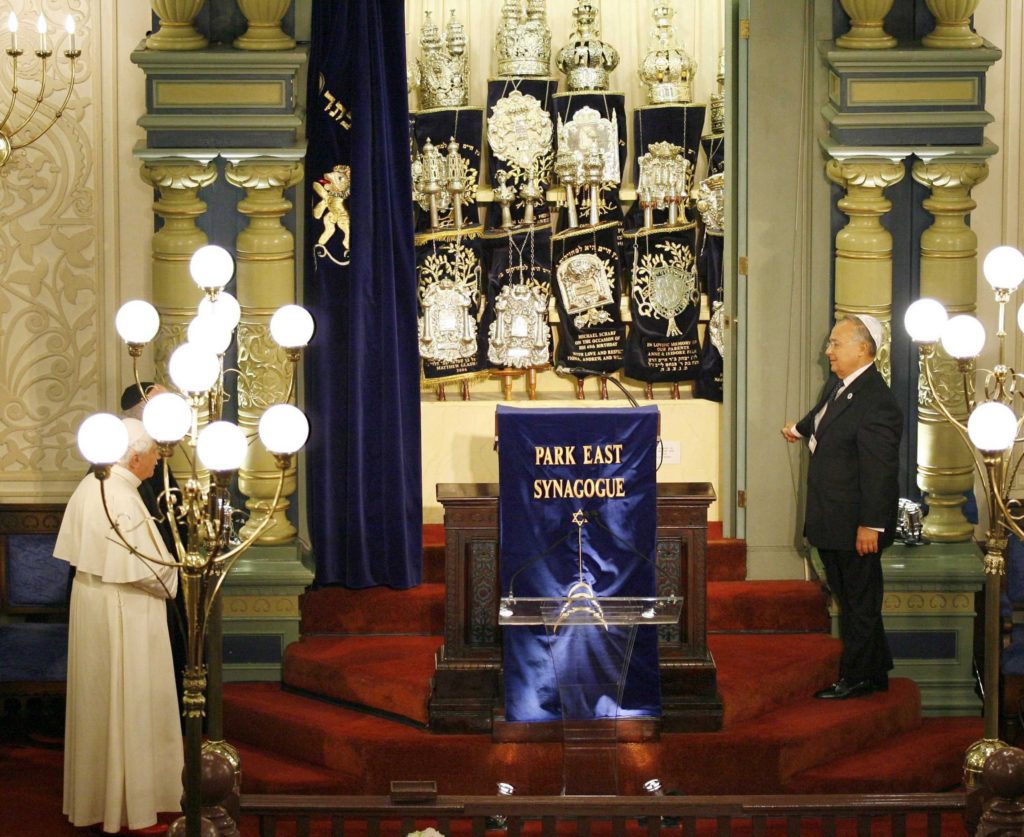
Few modern theologians reflected more deeply on this problem than Joseph Ratzinger, the man who would later be Pope Benedict XVI. Ratzinger argued for the unity of the Bible, the permanence of Israel’s vocation, and the Church’s debt to Judaism. Again and again, he warned against what he explicitly called “neo-Marcionism” — the recurring temptation to reject the Old Testament as embarrassing, primitive, violent, or obsolete.
For Ratzinger, the Church’s rejection of Marcion was one of the decisive moments in Christian history. Christianity, he said, could never become a religion detached from Israel without ceasing to be Christianity.
In his book “Many Religions — One Covenant” (Ignatius Press, $19.95), he insisted that the New Testament itself is inseparable from the Scriptures of Israel. Jesus does not appear out of nowhere. Every title Christians use for him — Messiah (Christ), Son of David, Lamb of God, Son of Man — comes from the world of Israel’s faith. The Eucharist itself emerges from Passover. The cross fulfills the sacrificial imagery of the Temple. Pentecost completes Sinai rather than abolishing it.
Christianity without the Old Testament quickly dissolves into abstraction.
Ratzinger understood something that the Fathers understood before him: once Christians begin to despise the “Jewishness” of revelation, they risk losing the realism of the faith itself. Christianity becomes vague spirituality — a religion of sentiments detached from creation, history, liturgy, and covenant.
And history has shown how easily such habits of thought can darken into something worse.
To say this is not to claim that every criticism of the Old Testament is antisemitic. Nor is it to deny the long and painful history of anti-Jewish rhetoric among Christians themselves, including some of the Fathers. Historical distinctions matter. Anti-Judaism, Marcionism, and modern racial antisemitism are not identical.
Yet they are not wholly unrelated either. Again and again in Western history, hostility toward Judaism has begun with a familiar contrast:
- the “harsh” God of the Old Testament versus the “loving” God of the New;
- law versus grace;
- ritual versus spirit;
- tribalism versus universality.
Marcion did not invent all these oppositions. But he gave them their most radical theological form. That is why his story matters now.
We live in an age increasingly uncomfortable with the Old Testament. Modern readers recoil from its wars, judgments, sacrifices, and rituals. We also live in an age where Israel, the Jewish state founded in the shadow of the Holocaust, has become a flashpoint of intense political and religious dispute.
In the face of this, we see new pressures to distance Jesus and Christianity from their ancestors in the faith. Many Christians are tempted to prefer a softened Jesus detached from doctrine, covenant, and divine authority. The temptation remains what it always was: to construct a Christianity purified of whatever seems difficult, scandalous, or too “Jewish.”
But once Christianity is severed from Israel, it loses its roots in history. The Incarnation itself begins to fade. Jesus becomes less the fulfillment of a divine covenant than a wandering teacher of universal ethics.
The ancient Church saw the danger clearly. So did Ratzinger.
The God who spoke to Abraham is the God who raised Jesus from the dead. The Scriptures of Israel are not an embarrassing prelude to Christianity; they are part of the Church’s own sacred memory. Christians worship a Jewish Messiah, pray Israel’s Psalms, inherit Israel’s promises, and read Israel’s prophets.
The Church rejected Marcion because she knew that to abandon Israel was finally to abandon Christ himself. That lesson is not merely ancient. It may be one of the most urgent lessons modern Christians have to remember.