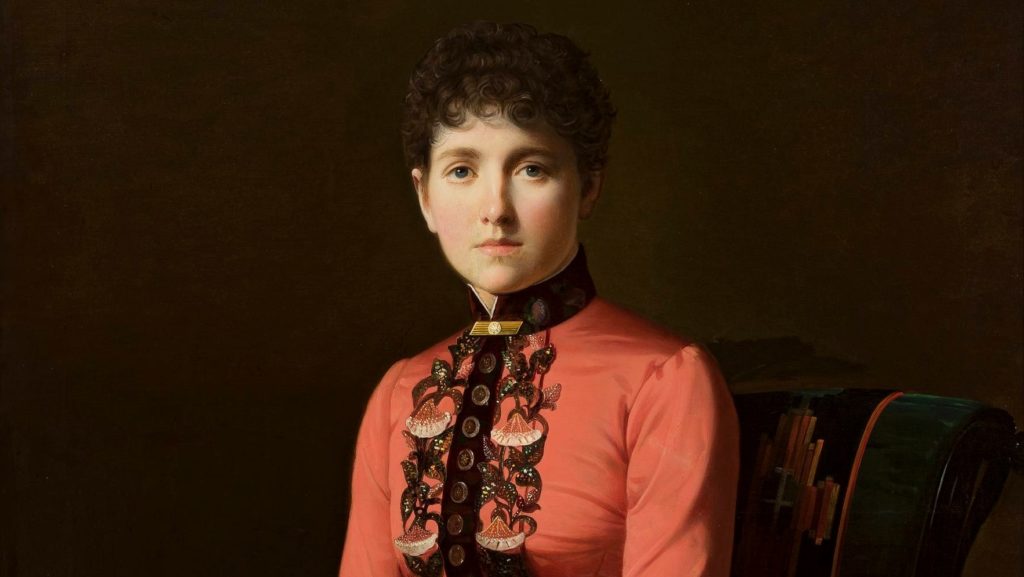
Leo Tolstoy’s “Anna Karenina” (1878) is widely considered one of the world’s greatest novels.
Often styled a romance — with Anna as the tragic heroine who dies for love — one of the story’s real themes is the corrupting influence of adultery on the family, society, and the human soul.
In a Commentary article called “The Moral Urgency of Anna Karenina,” scholar of Russian literature Gary Saul Morson observes that we like to think life is lived at moments of high drama and great intensity. Tolstoy, he says, believed the opposite: real life actually consists of a series of small, outwardly unremarkable thoughts, decisions, and actions.
The entire novel, he insists, consists of such thoughts and actions, minutely, exhaustively described in a way that is entirely recognizable and, against all odds, entirely compelling.
Tolstoy doesn’t moralize. He masterfully shows, among other things, how the lies we tell ourselves, perhaps small at first, if unchecked, lead to bigger and bigger lies.
Anna, a striking and well-loved beauty, is married to Karenin, a respectable state official several years her senior. They’re members of Russia’s high society, shuttling between Moscow and St. Petersburg, where philandering, by men at least, is tacitly condoned as a mark of sophistication and high spirits. Their marriage is solid, if unexciting, and she dotes on her young son.
In fact, children in general are drawn to Anna like moths to a flame: her gaiety, her beauty, her splendid attire, hair, and jewels. They cluster round, hiding their faces in her skirts, thrilled to touch, smell, and listen to her.
Then one night at a ball, she and Count Vronsky, a dashing young officer, meet, flirt, exchange meaningful glances, and utter words laden with hidden meaning, the gist of which is that Vronsky means to have her, and that she, eventually, will let him.
So intense is their tête-à-tête that heads turn and tongues wag. Karenin sees, too, but he doesn’t dare confront Vronsky because he may have to fight a duel and he knows he’s too cowardly.
So back at home, he chastises Anna for her unseemly behavior. And though their intimacy is such that she’s heretofore been attuned and attentive to her husband’s every mood, she pretends not to know what he’s talking about.
It’s a fatal moment, the one in which the whole novel turns. The slightest untruth opens the door to cataclysmic destruction.
The adultery is never shown. We see “before” — Anna all high passion, quickened breath, sparking eyes — and immediately “after”: hardly has the deed been completed than deflation, guilt, and fear set in.
Tellingly, when Anna is next surrounded by children, they give her a wide berth. Already innocence subconsciously senses and shies away from degradation. Already the movement is toward death.
Vronsky has a code of honor, but the code is based on protecting his reckless freedom to do as he wishes. He will pay gambling debts but not his tailor and valet. He’s prepared to die in a duel but thinks nothing of cuckolding a husband.
Levin, the other main male character, and reputedly based on Tolstoy himself, is a member of the landed gentry. While “Vronsky never knew family life” — his fatal flaw — Levin sees the family as almost mystically sacred. He instinctively honors the sanctity of marriage and motherhood, as he meanwhile searches for answers to the mystery of existence.
Dolly, mother of five, is the wife of Stepan, Anna’s charming and oblivious, morally reprehensible brother. Her looks faded, unlike Anna, and she is not glittering, not elegant.
But Dolly’s no doormat. She loves Stepan in spite of his cheating and gambling, and gladly gives herself over to the task of forming her children morally, socially, and spiritually. Her steadfast core, like a low-burning flame, doesn’t need exterior validation. She stands by Anna even in her disgrace without bringing the children into the adulterous home. Many commentators have observed that Dolly is the real heroine of “Anna Karenina.”
While Russian aristocracy will overlook male philandering, they will also swoop in like vultures to condemn the fallen woman. When Anna heedlessly tells Karenin that he is repulsive to her and leaves him and her young son to live openly with Vronsky as his mistress, that’s exactly what happens.
After Anna commits suicide by throwing herself beneath a train, Vronsky’s mother, who is herself notoriously promiscuous, observes spitefully: “Yes, she ended as such a woman should have ended. Even the death she chose was mean and low.”
Meanwhile, Levin searches and searches: for the best way to treat his peasants, to tend his land, to live a meaningful life. It’s watching the first child born to him and his wife, Kitty, that proves epiphanic.
Our hope lies in the essential goodness that underlies all of existence, he realizes finally, and in the urge toward goodness that is buried, however deeply, in the human soul.
Tolstoy is far too fine a novelist to paint his characters in black and white. As with us, there’s a little bit of bad in the best of them, and much good in the worst of them. He’s not out to evangelize, but rather to examine the unwritten laws undergirding reality.
One might be that the natural order of the world convicts us. When we turn away from God, we create our own punishment.
That, perhaps, explains the epigraph, from Romans 12:19, that appears at the beginning of this magnificent 800-page novel: “Vengeance is mine; I will repay.”