Every once in a while, like the Indigenous Australians, I “go walkabout.”
An urge comes over me to travel, to pilgrimage, to pack my bags and surrender to the vagaries of the universe.
My latest trip, a week in Amsterdam, was derailed by a European snowmageddon event, necessitating a rebook two weeks down the line. It was still freezing cold the whole time I was there, and sunless, and gloomy. However, I expected no less and in fact had chosen January in the hope of avoiding the saturation-level European summer crowds.
Schiphol, the airport, was squeaky clean, streamlined, and efficient, with very cool bathrooms. Public transportation was also shipshape, whisking me to Centraal, the main station, and then on to my Airbnb near the Wibautstraat stop in barely more than 30 minutes.
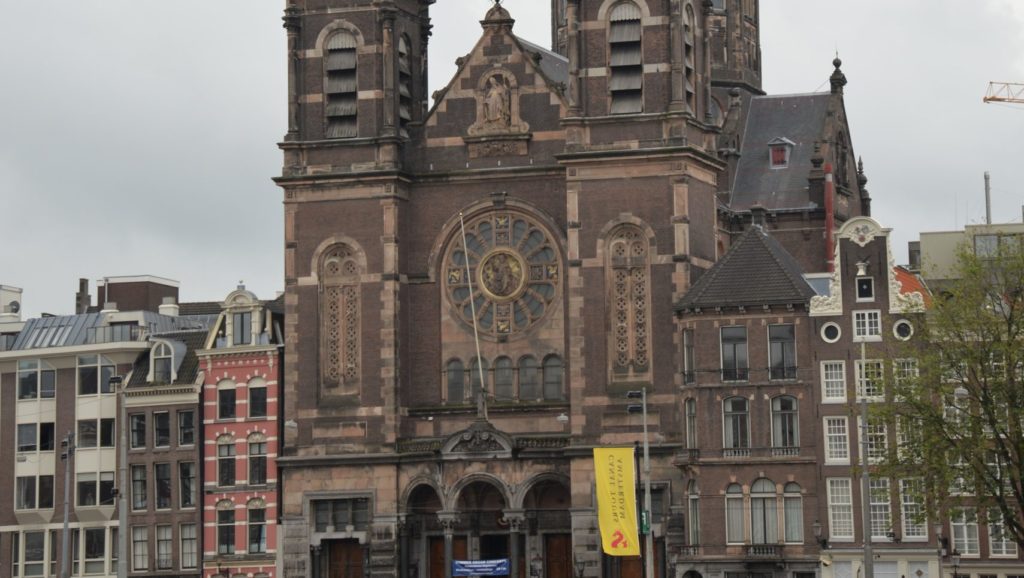
After sleeping on the plane for what couldn’t have been more than two hours, I was still way too wired to stay in. I like to orient myself straight off with a tabernacle, so I slogged two miles in the frigid cold to the Basilica of St. Nicholas (where I figured out it was directly across the street from the Centraal train station through which I’d passed a short while before).
Anyway, the church is the center of Catholicism apparently in Amsterdam — St. Nicholas is the city’s patron saint — and was quite beautiful in an old Netherlandish way with dim corners, a soaring cupola, lots of painted angels and saints, and stained-glass windows clouded over with decades of silt.
My kind of place except that it had no bathrooms — and no heat. It was 38 degrees outside, wet and penetratingly cold: the pew and kneeler were like blocks of ice. I’d made it just in time for Mass (in Dutch) and could see my breath as I murmured the Lamb of God.
But no matter. I’d made it, I’d gone straight to the Eucharist and, grinding the long cold two miles back to my bed, I knew I could now rest.
I soon discovered that everyone in this part of the world speaks in guttural consonants; wears big, stout, leather boots; and eats tons of pork products. The next day, for example, I had lunch at the Van Gogh Museum: a bowl of hearty Winter Soup strewn with chunks of sausage and served with a slice of buttered rye bread topped by a delicious slab of smoked raw bacon. So not Southern California!
Most everyone speaks English, probably because the city is overrun with English-speaking tourists (like me) and expats. They have even thoughtfully made their own language easy to understand for us non-Dutch speakers!
“Eten en drinken,” read one sign, which even I caught the drift of. Apple — Appel, Beer — Beir, Card — Kaart, Clock — Klok: was it because the Dutch and British had gotten so chummy during that 1667 trade of Manhattan that all these years later our languages are so similar?
I had gone walkabout in large part to pay homage to two of my artist heroes: van Gogh and Rembrandt. I would walk the streets they had walked, was my thought; feel the winter chill they had felt as they painted in their studios; trudge along their canals. I would exchange a little of my own body and blood for the blood, sweat, and tears they had poured into their work.
In addition to the Van Gogh Museum, I visited the Rijksmuseum (twice); took a day trip to Mauritshuis, a small museum in The Hague perhaps best known for Vermeer’s “Girl With a Pearl Earring”; and, back in Amsterdam, toured the house where Rembrandt lived for 19 years, driven out by bankruptcy.
Museum-going is hard work, not only because you’re on your feet, and called to be especially attentive and alert, but because built into the effort is the knowledge that you will only truly be able to take in a small number of paintings. To really appreciate these masterpieces you’d have to own them. So you do the next best thing: stand before them and give thanks — for the art, for the artist.
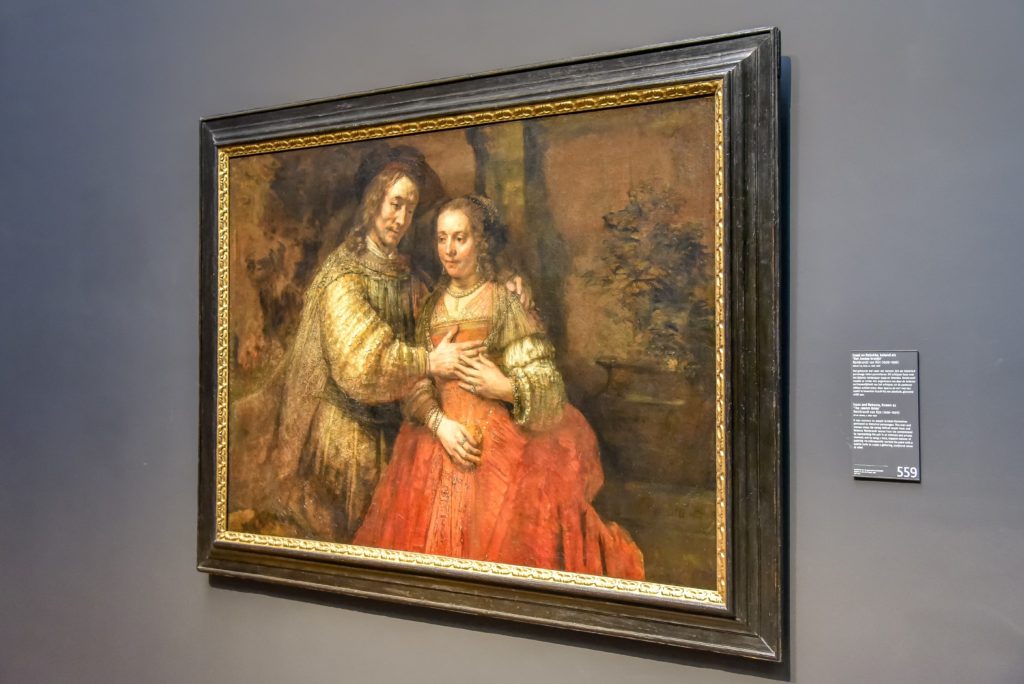
I’d researched and pored over certain works at home — Rembrandt’s “The Jewish Bride,” Vermeer’s “The Little Street,” van Gogh’s “Head of a Peasant Woman.” Seeing them, however necessarily restricted the experience, satisfied a restless urge; brought my gratitude in some obscure way to completion.
After the Rijksmuseum one afternoon, I found my way along another canal, shoulders hunched against the cold, to adoration at the Church of Our Lady.
A young woman knelt on a prie-dieu, an old guy hacked into his handkerchief, and a few respectable matrons huddled together near the back. I sat before the monstrance in blissful silence for about five minutes when suddenly the locals began loudly praying what I gathered was the rosary.
I breathed a sigh of relief when they were done, but you can never tell where we Catholics will leave off. We might feel moved to follow up with a memorare, a prayer for the pope, a special prayer for the unborn, the Anima Christi, an Agnus Dei, and maybe a Litany to the Blessed Virgin Mary, the Sacred Heart, or the saints.
So it was here. After a while I settled in and pretended my dear brothers and sisters in Christ were singing a lullaby.
“It is very likely that I have a good deal of suffering still ahead of me,” van Gogh wrote to his sister, shortly before entering the asylum.