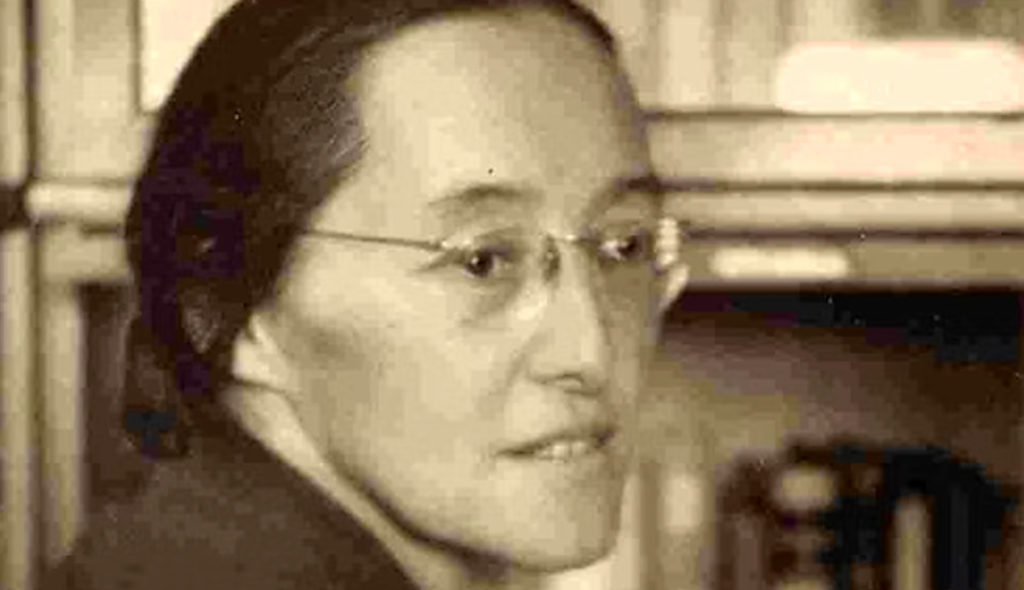
Ida Friederike Görres (1901-1971), German Catholic intellectual and author, wrote presciently of the perils of an increasingly secularized society, the Church’s ongoing struggle against calls for reform, and the centrality of sainthood.
Perhaps her best-known title is “The Hidden Face” (Ignatius Press, $16.89), a psychological-spiritual study of St. Thérèse of Lisieux.
Other works include “The Nature of Sanctity: A Dialogue” (1932), “Broken Lights: Diaries and Letters, 1951-1959” (1964), and “The Church in the Flesh” (Cluny Media, $22.95).
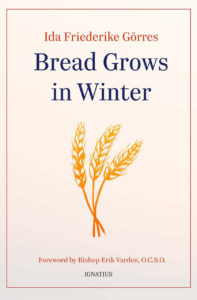
“Bread Grows in Winter” (Ignatius Press, $18.95), originally published in 1970 and out last year from Ignatius Press, is a collection of essays written in the wake of Vatican II.
Beautifully translated by Jennifer S. Bryson, and with an introduction by Bishop Erik Varden of Norway, so relevant are its themes that it could have been written yesterday instead of more than 55 years ago.
Görres’ articulated huge emotions and thoughts, half-formed in my case, that as a convert have brought me mutely to my knees, if not to tears, for almost 30 years.
If asked to explain my inexplicable and enduring attraction to the tabernacle, for example, my childlike, block-letter thoughts would be: The Church is the one place that would have me. The Church is my Mother.
Görres says that, too, but a lot more intelligently, eloquently, and stirringly.
The Church, she insisted, can neither be truly understood or loved by those who regard her in strictly institutional terms.
Instead, she wrote, the Church is “the strangest creation of God, so unique in kind, so large, so contradictory, so colorful that no single person can stock of her and figure her out, and certainly no outsider can ever take her all in, let alone understand and judge her.”
She plunged headlong into the pressing questions and tasks of today’s believer. “Look how they hate each other!” she began the essay “Demolition Troops in the Church,” mimicking those inside and outside who rub their hands with glee at the seemingly perpetual dissension in our ranks.
“The Council was a great, auspicious sowing; now we see many dismaying things sprouting up, poisonous things that threaten to choke the first fruit.”
She decries the jettisoning of habits, rituals, structures, and traditions that have held the Church in place for 2,000 years, while at the same time wholeheartedly acknowledging the stuffy deadness, self-righteousness, and empty faith of those who observe the traditions without love, thought, or a spirit of repentance.
The reality of the Church in the flesh must be experienced as a living, ever-evolving whole, grounded in the mystery of the Incarnation, that places demands on its members.
To that end, she asks, “Why are we so ashamed of the fact that we are offered more of the message and understanding of Christ through and in the Church than those ‘outside’?”
The impulse, she explains, is “part of a powerful psychological wave sweeping the world today: the turmoil … the shame of the haves before the have-nots … the noble urge ‘not to have it better than others.’ ”
But proclaiming Christ doesn’t mean we “own” Christ. It means we love him and as with all people, places, and things we love, we long to share him. To withhold that impulse only impoverishes us and all those who might come to love Christ as well.
“This magnanimous urge to put oneself on an equal footing with the poor, with the lowly… makes sense only if my divestment really benefits others. What cripple would benefit if healthy people got crutches and seemed to be limping? Which blind person would be helped by others’ gluing their eyes shut?”
In times of crisis, we need patience, nerves, humor, and a “particularly alert attention to actual movements of the Spirit of God.”
We perhaps rely less on professional theologians, who are subject to “the seduction of innovation at any price, by ambition and vanity, sensationalism, and competition for celebrity status” — those trying to be relevant, to comply with the spirit of the times, and who are “occasionally seduced even by an excessive, pitiful identification with error.”
Our hope lies, as it always has she suggests, in the conscience of the “little ones,” the rank-and-file members of the faithful, wholly unremarkable and almost wholly invisible, with their “readiness to make ultimate sacrifices for the unity of the Church.”
By 1950, Görres had experienced a physical breakdown that rendered her virtually housebound for the remainder of her life. She continued to write prolifically.
She died the year after “Bread Grows in Winter” was published.
Cardinal Joseph Ratzinger, the future Pope Benedict XVI, delivered a eulogy. Görres, he observed, had maintained that the Church is “not a system, an idea, an ideology, a structure, a society, but the tremendous living establishment, which has existed since the apostles until today, fulfilling her history from century to century, growing, unfolding, struggling, ailing, recovering, living out her destiny and maturing toward the return of the Lord.”
We are a Church of sinners, not elites, Görres insisted to the end. “I trust the suffering in the Church.” “I believe in the praying Church made up of laity and priests, the forbearing, the atoning Church.” “I believe in the hidden saints.”