
This New Year, many of us will resolve to take up a variety of new habits: improving our diets, increasing physical activity and exercise, and even the feat of breaking a phone addiction or reducing screen time.
Those habits largely affect the individual working on them. But what if you could develop a habit that not only benefited you but also those around you?
Michael Pakaluk, a political economy professor at The Catholic University of America, believes the fate of humanity may depend on it.
In his new book “The Company We Keep: True Friendship and Why It Matters” (Scepter, $17.95), Pakaluk argues that becoming a better friend and selecting and sustaining quality friendships can transform contemporary society — and ourselves.
In fact, it’s hard to imagine anything more pressing for us to work on, given the loneliness epidemic plaguing most developed nations.
According to a 2024 Gallup poll, 20% of U.S. adults reported feeling lonely “a lot of the day yesterday.” The “Journal of the American Medical Association” published findings revealing that “a substantial number of U.S. adults ages 50-80 experience a “lack of companionship.” Fifteen percent of American men say that they have no close friends, and a 2025 Harvard study revealed that a mere 17% of Americans under 30 “feel deeply connected to at least one community.”
In Pakaluk’s view, the primary problem with forming and sustaining friendships today is that so few understand what it actually is. True friendship is far from the transactional relationship conceived of by Adam Smith and his “social contract.” Nor is it anything like the current digital interaction between social media posters and their voyeurs.
As a corrective, Pakaluk presents the reader with a classical understanding of friendship, based on the thought of Aristotle and embraced by thinkers like St. Thomas Aquinas, C.S. Lewis, and St. John Henry Newman.
Friendship, he writes, is “a kind of bond that is the effect of love.” It is a relationship in which two individuals desire the good of the other. While friendships can exist for purposes of utility or pleasure, they are not some sort of negotiated power struggle. They involve a reciprocal equality between two individuals who provide one another with certain benefits.
Pakaluk stresses that friendship does not require an individual to be purely altruistic; not only is it OK to receive goods from a friend, but that mutual exchange is essential to the relationship. Friendships that nurture mutual growth in virtue are the kinds we want to foster. They require an investment of time and are tested through experience.
Friendships, he also notes, are public bonds. They lay the foundation for civic and political life, economic policy and business practices, and marriage and family life. A good and just society is built on a wide network and web of them.
You don’t need to be religious to enjoy this kind of friendship. But still, the author notes, this definition would only take us so far in obtaining happiness. That is because with the incarnation, Christ elevated human relationships and oriented them toward a supernatural end.
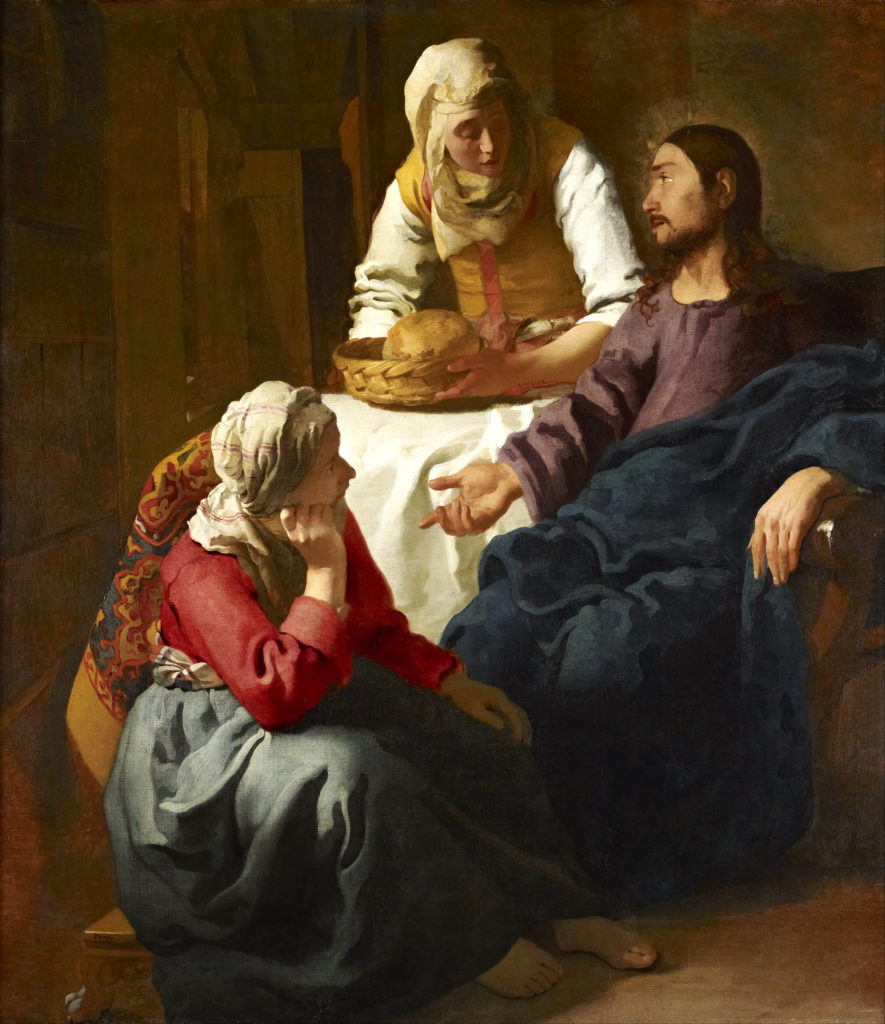
If Christ himself had friends, he argues, then shouldn’t a Christian? Jesus’ relationships with Martha, Mary, Lazarus, and the disciple John were a crucial part of his mission. No one gains heaven alone.
So how should a Christian consider friendship?
First, Pakaluk suggests, he should choose his company wisely, considering whether someone is spurring them on toward holiness or away from it. Hanging out is fine, but going deeper in conversation, activity, and mutual exchange is better.
If possible, friends should be proximate to one another — we are more likely to invest in those we live near. Face-to-face time is essential.
Pakaluk also believes it’s important to become the type of person that attracts true friends. “To become more befriendable, you must come to know yourself better and take rational steps to remain cheerful,” he writes.
In his estimation, this includes everything from dressing smartly to cultivating hobbies like outdoor activities, competitive sports, or activism for noble causes in which you can find people of similar character. These practical steps take more time and effort than scrolling on a screen or posting on social media to attract engagement, but they give us a chance to find true companionship.
One of the book’s most compelling topics is marriage, which has been classically understood as a particular type of friendship.
In 2016, Pope Francis made headlines when he remarked that “a portion of sacramental marriages are null,” due to the fact that many individuals and couples do not understand the permanence and commitment that it requires.
“It’s provisional, and because of this the great majority of our sacramental marriages are null. Because they say ‘yes, for the rest of my life!’ but they don't know what they are saying. Because they have a different culture. They say it, they have goodwill, but they don’t know,” Francis said.
Pakaluk has distinct but related concerns. Many people today consider marriage in light of the concept of “soulmates.”
“There are no soulmates, ever: There is this man, and this woman, and a natural institution, which is a preordinated mode of union,” he writes. “They are bound by this institution, not by a putative, mythical ordination of the soul for each.”
Marriage is neither a formalizing of an existing sexual relationship or an agreement to support one another in individual goals and projects. It is a friendship that becomes less about shared activity and outings and more a “drama through which each person … consent to make a donation of one’s whole life to the other.”
To illustrate his thesis, Pakaluk invokes the marriage scenario of a man taking out the garbage, and a woman preparing breakfast for her husband. It is a friendship in which every task, no matter how banal, requires a mutual exchange in virtue. And it is the only institution which can provide stability for children in their own path of friendship-making.
Resolving to be a better friend and nurture quality friendship might feel like a lofty plan for the year ahead. But “The Company We Keep” reminds us that friendships are built brick by brick, one decision and exchange at a time.
Getting up each day and asking ourselves, “How can I be a better friend today?” is a doable resolution. That one question, when answered by multitudes, could heal many of our world’s wounds and set relationships of all kinds right.