The ancients used to talk about a “great chain of Being” and a “book of nature.” They used a word, teleology, to describe how all of creation, and all things in creation, have a purpose and are part of the divine plan.
In our secularized, scientific world, we don’t talk that way anymore, and we are out of the habit of even thinking that way. We think nowadays in terms of material causes and effects, we speak about how things function and the way things work.
But God has not changed and his vision presses on. The whole world — creation and history, your life and mine — is still part of a divine order. All things, visible and invisible, are moving toward his higher purpose.
Christmas is the revelation of that purpose. In becoming man, God lifts the veil and shows us what it all means, and where it is all headed.
In the liturgy for Christmas day, there is a beautiful prayer:
“O God, who wonderfully created the dignity of human nature and still more wonderfully restored it, grant, we pray, that we may share in the divinity of Christ, who humbled himself to share in our humanity.”
Love is the great “why” of reality. Love is the answer to the mystery of who God is, and why the world exists, and why each of us is created.
God is Love and love is the reason that he calls this world into being. God is the “key of love” who opened his hand and brought everything into existence, St. Thomas Aquinas said.
His love is how all things still hold together. God is “the Love that moves the sun and the other stars,” as the poet Dante said.
In becoming a Child in the womb of Mary, in humbling himself to be born of a woman, God reveals that in our human nature we are created with the capacity for God. Our humanity is destined to share in his divinity. In his divine plan, we are made to be like him, to partake in his divine nature, to be taken up in the great mystery of his love.
This is what that beautiful prayer in the Christmas liturgy tells us. This is the promise of Christmas.
Never forget this: You are precious to God. He made you because he loves you and because he wanted you to be a part of his creation.
The first followers of Jesus were amazed by God’s love, and we should be, too. “We have come to know and to believe in the love God has for us,” they would say. And again: “We love because he first loved us.”
In the solemn proclamation at the start of Christmas Mass during the night, we remember that Christmas was an event, a moment in history, that God became man at a specific time and place:
“When ages beyond number had run their course from the creation of the world … when century upon century had passed … in the year 752 since the foundation of the City of Rome … the whole world being at peace, Jesus Christ … desiring to consecrate the world by his most loving presence … was born of the Virgin Mary in Bethlehem of Judah.”
History is “his story” and you and I are a part of his magnificent plan of love, the history of salvation that began at the dawn of creation and was revealed on Christmas.
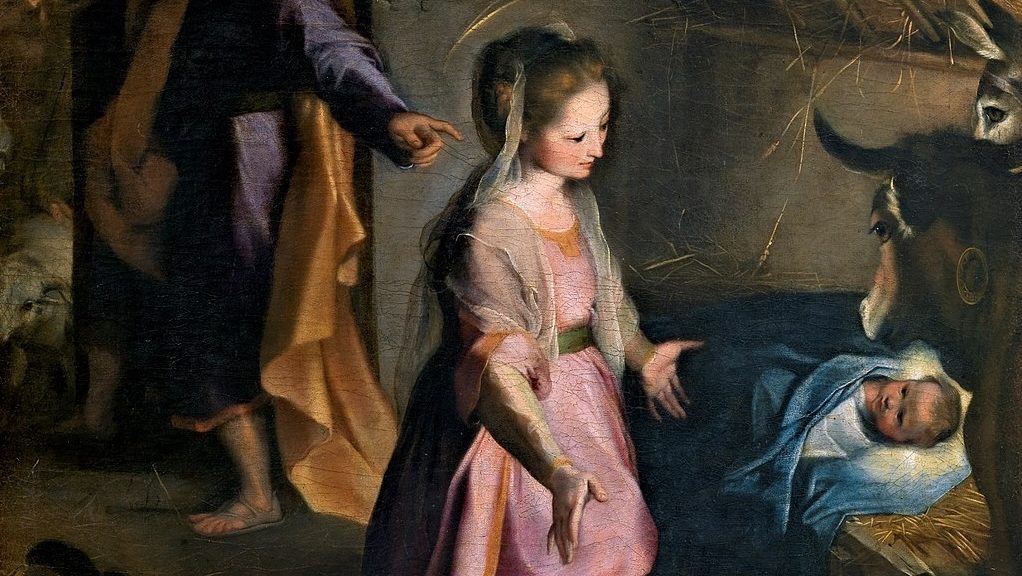
When you see the Child Jesus in the manger, we should reflect on this. The living God, in his love, has come down from heaven to share your life and be your friend. He has come to walk with you every day and to stay with you in every moment of your life.
It is all for love, and it is for you and me.
This Christmas let us once again open our hearts to remember that we are wonderfully created and still more wonderfully restored. We have a great worth and dignity in God’s eyes. Each one of us.
Let us allow Christmas to give our lives a new sense of our purpose. Everything we do now, let us do for love, and out of thanksgiving for this beautiful gift of his love.
We can love God and love one another because he loved us first. And by our love, our lives can be transformed in the image of his love, our humanity reflecting the image of his divinity. Until that day when we arrive at love, our destiny for all eternity, what the saints call “the love that never ends.”
Merry Christmas! Keep praying for me and I will keep praying for you.
And let us always stay close to the Blessed Virgin Mary, in whose womb Love was born on Christmas.