“Mary kept all these things, pondering them in her heart” (Luke 2:19).
With those words, Luke the Evangelist ends his narrative of Jesus’ conception, birth, and infancy. A few paragraphs later, he concludes his account of Jesus’ later childhood with a variation on the same theme, noting, “his mother kept all these things in her heart” (2:51).
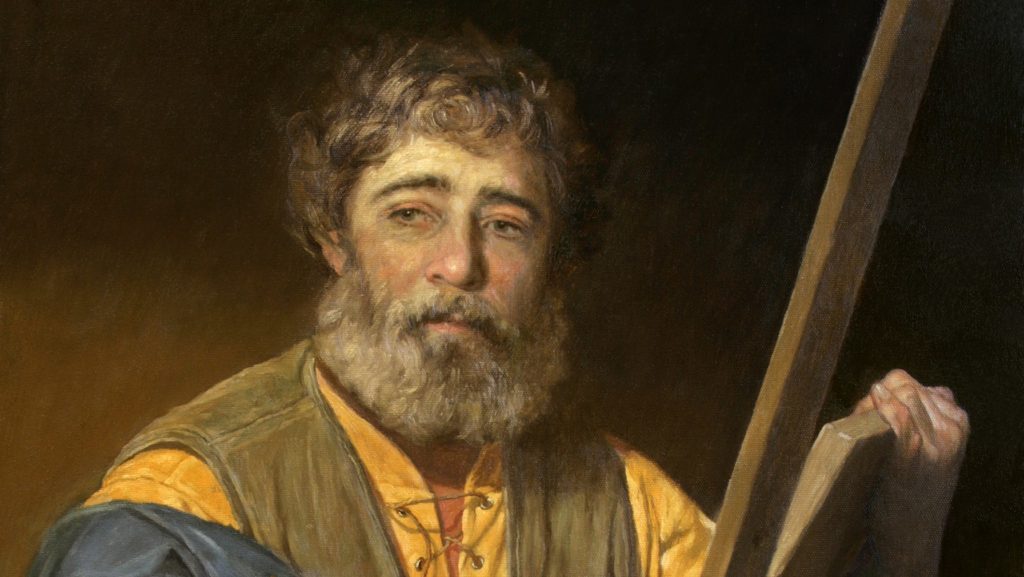
Luke was a scrupulous historian, attentive to detail and much concerned about getting facts straight. Alone among the evangelists, he uses precise anatomical terms when he describes Jesus’ miraculous cures. And he is careful to place events accurately in terms of time and place. He tells us that the census that drew the Holy Family to Bethlehem was “the first enrollment, when Quirinius was governor of Syria” (Luke 2:2). He would not have it confused with any other, similar event. Times and places matter to him because he is passing on what he has received in eyewitness testimony.
Commentators, since ancient times, have concluded that both “heart” lines were simply the evangelist’s way of citing his firsthand source.
The Blessed Virgin was the only person who could have given eyewitness accounts of the unusual events surrounding the first Noel — the angelic visitations; the journeys from Nazareth to “the hill country,” to Bethlehem, and to Jerusalem; the private conversations at the Temple; not to mention a birth hidden away in a stable. Mary was, moreover, the only person who could have given an account of her own interior response to these marvels.
Mary is the only possible witness to Jesus’ conception and birth. And Luke is a credible witness to Mary’s “pondering.” Reliable tradition places the Blessed Virgin in Ephesus with the Apostle John (see John 19:26–27) in the decades after Jesus’ ascension into heaven. Luke also traveled there, and chapter 19 of his Acts of the Apostles shows his familiarity with the region. He uses, for example, the peculiar local terms for offices and assemblies of city life; and these are confirmed by other contemporary and local sources. It’s inconceivable that such a careful historian — and so devout a Christian — would have traveled so close to the Mother of the Lord and never sought an interview.
He recorded what she had for many years “pondered … in her heart,” and he reported them in passages that seem understated, given the extraordinary events they describe.
Such simplicity and understatement are hallmarks of the earliest Christian testimonies and traditions. These qualities set the canonical gospels apart from later, noncanonical claimants. There are other “gospels” — other documents that purport to tell the story of Jesus’ infancy — but these narratives concern themselves mostly with spectacle and power. They worry too much about what skeptics might say. Their style is overexcited and bombastic. They transgress good taste and strain credulity beyond the breaking point.
Luke, on the other hand, manages to convey marvels in a matter-of-fact tone. His account is the fruit of long years of pondering, in the loving hearts of eyewitnesses.