I spent the first “girls’ weekend” of my life recently on an island surrounded by impossibly blue-green water and dotted with coconut palms. We were a sedate bunch, mostly talking incessantly, as women do, about the things that occupy the space in our heads and then spill out of our mouths.
All of us were either rapidly approaching “the change” or in the midst of it; all of us grappling with this disconcerting period of transition from female adulthood to old age. It happens suddenly, like menarche — the move at the other end of life from girlhood to womanhood. These two inner bookends — menarche and menopause — hold a whole library between them. Books of love, adventure, mystery, tragedy, and triumph fill a long shelf, and they tell the stories of our adult lives. Standing on the bare side of the second bookend, we feel an urgent need to get scribbling, so that the next stretch of shelf, the last stretch, may be as rich and fruitful as the last.
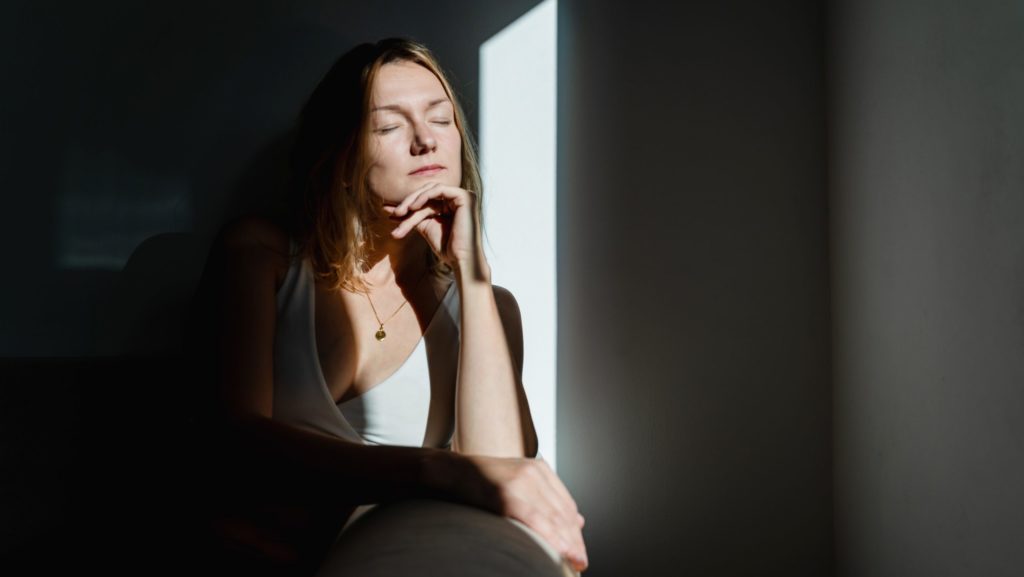
Shouldn’t we be scribbling new stories? Getting older doesn’t make us feel any less like main characters, although the young age of most women protagonists in literature would suggest otherwise. But now we are handicapped by the physical and emotional challenges caused by the precipitous drop in the female hormone estrogen that triggers menopause. Hot flashes that feel like being placed in an invisible hot oven, crushing insomnia, emotional lability of teenage proportions, a jabbing little current of anxiety underlying everything. We feel more neurotic, ill-tempered, and sensitive. We are a handful.
This has already made life difficult before adding the changes in appearance that are so hard to accept in this culture that values only the glow of youth. Our skin dries, crinkles, and sags with amazing rapidity. Our hair becomes brittle like the straw of an old broom. Our bodily equator enlarges steadily, our bones weaken, and our muscles shrink as though in shame.
And, the worst thing, according to the informal poll I took of my fellow sufferers, was the libido which just suddenly vanishes. Worst because all of us have husbands who are experiencing menopause along with us, and they have not correspondingly altered.
We are very fortunate to live in the year 2026, when the fugitive hormone estrogen can be replaced and many of the symptoms of “the change” can be ameliorated.
Through patches, creams and even pellets, exogenous estrogen when started delivers remarkable benefits. The hot flashes, night sweats and insomnia are reduced miraculously for most at the start of therapy. The genitourinary symptoms, like painful intimacy, dryness, and urine leakage are greatly relieved. Irritability and mood stability go back (almost) to pre-menopausal levels. In the long term, bone loss is reduced, along with the incidence of fractures; muscle strength increases, and some cohorts show lower risk of cardiovascular disease and Type 2 diabetes.
This sounds like a wonder-drug, does it not? Some in our group are wearing patches or pellets. Or they’re applying creams, and then recommending them to those who aren’t yet. Some of them had not been offered hormone therapy although they had complained strenuously to their gynecologist. We suggest changing physicians and finding one who specializes in menopause care.
Of course, every woman’s case must be assessed for individual suitability. There are benefits but there are also risks. Estrogen administration can be dangerous in those with a history of breast cancer, heart disease, stroke, liver disease or blood clots. If unopposed by progesterone estrogen can cause endometrial cancer in women who still have their uteruses. Interestingly, these are the similar risks to those posed by the birth control pill taken by hundreds of millions of women.
Some of these dangers disappear with timing the drug to within the first 10 years of menopause and starting before age 60. Some of these risks also drop when the estrogen is delivered through the skin, instead of orally. Whether to embark on hormone replacement is a complex decision, and one which must be made via personalized discussion with a knowledgeable clinician. Family history, personal circumstances, preferences and lifestyle must all be taken into account. Regular follow up is obligatory, and periodic reassessment.
One or two of the women in our group were inclined to go through menopause naturally. Their argument was that it was what our ancestresses had always managed. Perhaps, they said, it is an uncomfortable but essential transition, the shape of life. When I see images of aging starlets artificially plumped up and hormonally enhanced, gracelessly denying the inevitable and veering hard into vulgarity, I get their point.
But the consensus in our group came down in favor of hormone replacement therapy. We agreed that it may be a blessing in the style of modern dentistry and air conditioning. We can do without it, but human ingenuity, itself a gift from God, has been busy improving the quality of our daily lives for ages. Something to consider when an invisible hand picks you up and drops you in a fiery oven.