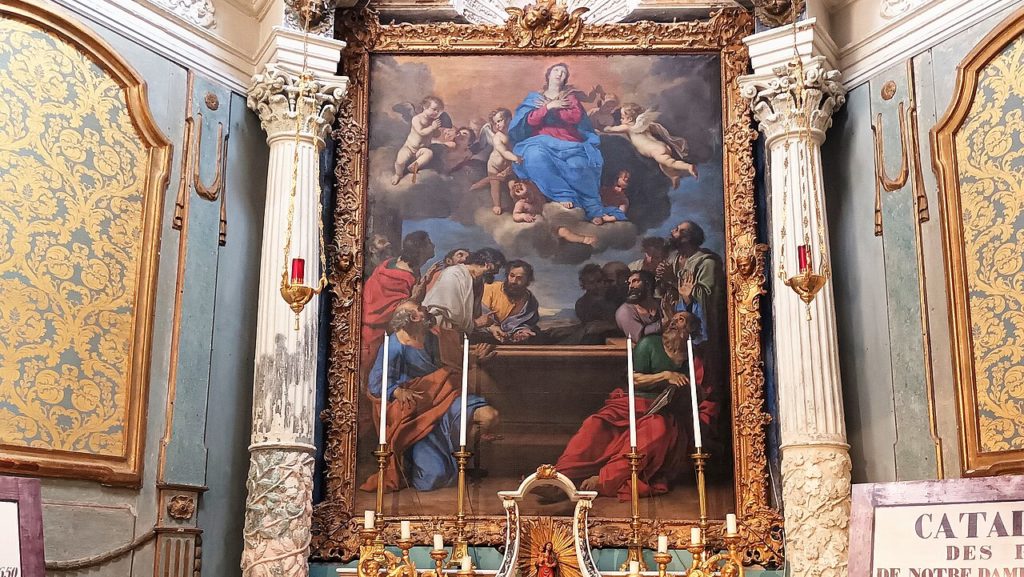
Every Aug. 15, the Church celebrates the Assumption of the Virgin Mary — the proclamation that, at the end of her earthly life, God brought her body and soul into heavenly glory. Though Scripture does not narrate the event directly, the feast is deeply biblical. It stands as the culmination of themes that run through the whole of salvation history.
The Old Testament prepares us for extraordinary departures from earthly life. Genesis tells us that “Enoch walked with God; and he was not, for God took him” (Genesis 5:24). The prophet Elijah did not die in the ordinary way. Before the astonished eyes of Elisha, he was carried into heaven in a fiery chariot (2 Kings 2:11). Jewish tradition also preserved the mysterious memory of Moses’ death. Though Deuteronomy records his burial, it also emphasizes that no one knew his grave (Deuteronomy 34:6). Later Scriptures associated Moses with heavenly glory (see Luke 9:28–36), and the Letter of Jude even alludes to a dispute over his body (Jude 9).
These remarkable figures prepared Israel to recognize that God is not bound by ordinary patterns when dealing with those who have served him faithfully. Yet Mary’s Assumption surpasses them all. Enoch pleased God. Elijah defended God’s covenant. Moses led Israel out of slavery. Mary did something greater still: she gave her own flesh to the eternal Son of God.
The Book of Revelation offers the biblical vision that has long illuminated the Church's understanding of Mary’s heavenly glory. At the end of chapter 11, John sees “the ark of his covenant” revealed in heaven. Without interruption, the next verses describe “a woman clothed with the sun, with the moon under her feet, and on her head a crown of twelve stars” (Revelation 11:19–12:1). The chapter divisions came centuries later. John intended us to read these scenes together.
Why does the Ark appear immediately before the Woman? Because Mary is the true Ark of the New Covenant. The ancient Ark contained the stone tablets of the Law, the manna from the wilderness, and Aaron's priestly rod. Mary bore within her Jesus Christ — the living Word of God, the true Bread from Heaven, and the eternal High Priest.
Nor is the Woman’s crown an incidental detail. In the kingdom of David, it was not the king’s wife who served as queen, but his mother. The gebirah, or Queen Mother, occupied a place of honor at the king's right hand and interceded for the people. Jesus is the everlasting Son of David, and so his mother appears in heaven as Queen, crowned with stars, sharing in her Son’s victory over the serpent.
The Assumption, then, is not an isolated privilege. It is the flowering of God’s plan from Genesis to Revelation. In Mary we see what God intended for humanity from the beginning: not merely the salvation of the soul, but the redemption of the whole person. Her Assumption is a promise that Christ’s victory over death is already complete in one member of his Body — and one day, by his grace, it will be complete in us as well.