We have gone back to the moon.
To be more exact, we went back and circled the moon. But in the process, the crew of the Artemis II spacecraft became the first humans to ever travel this far away from Earth. This dry run for future lunar missions had a glitch or two — a broken toilet and a mysterious smell like burning wires — but all was well. With its successful splashdown off the coast of San Diego, we entered a new phase of lunar exploration.
I was a little disappointed that this achievement did not inspire as much enthusiasm among the general public as it did in me. There was news coverage, but not so much that it interfered with whatever TMZ was presenting. I am just a product of my era, when we used to get up in the morning, gather around our big black-and-white TV, and watch rockets blast off in the Mercury and Gemini programs.
By the time the Apollo program came around, we had a color TV, but the thrill and sense of being part of something momentous were the same. Those launches were events and kids like me, who were hooked on the romance of the thing and ignorant of the inherent risk, could rattle off the names of the astronaut crews of every mission in numerical order. They were like sports stars to us.
But there was then, and apparently continues to be, more to space travel than just firing up the imaginations of children and instilling a sense of nostalgia in those who have grown up and become more jaded about everything above and below the stratosphere.
During the Apollo 8 mission, which was the first time human beings had flown over the moon, astronaut Frank Borman read from the Book of Genesis. I remember it ruffled some feathers and people were outraged that a government employee on government time had “inserted” religion into what some considered a strictly secular activity.
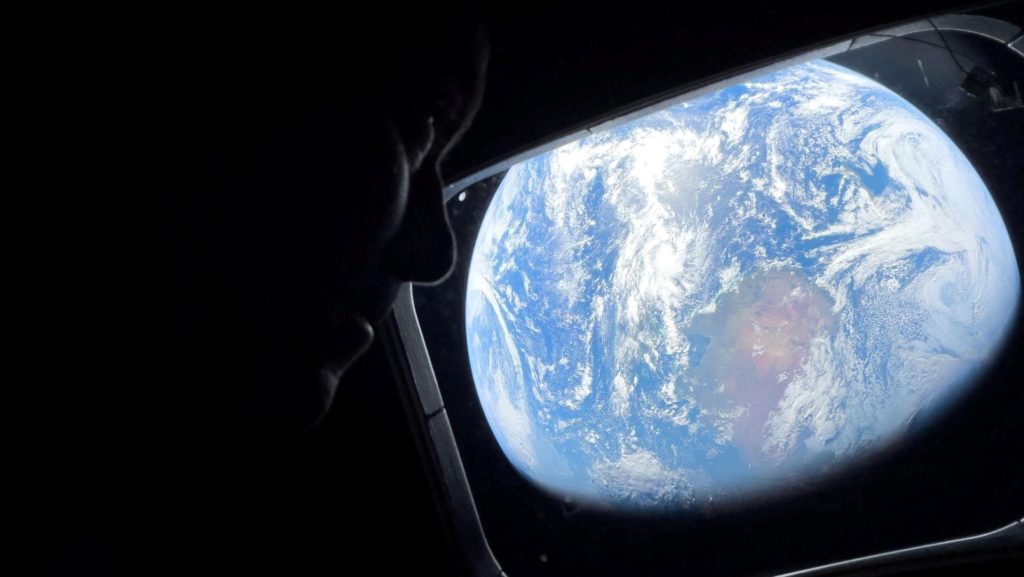
But what the Apollo program suggested, and what the Artemis program seems to confirm, is that there is a deep spiritual component to space travel. It ignites something deep down in the soul, looking through a tiny space capsule window at their home planet more than 200,000 miles away.
The commander of the Artemis II mission, Reid Wiseman, is a self-identified “non-religious” man. But upon returning to Earth, he requested to see a Navy chaplain. By Wiseman’s own account, when the chaplain entered his room where he was undergoing post-flight medical checkups, he saw the cross and broke down in tears.
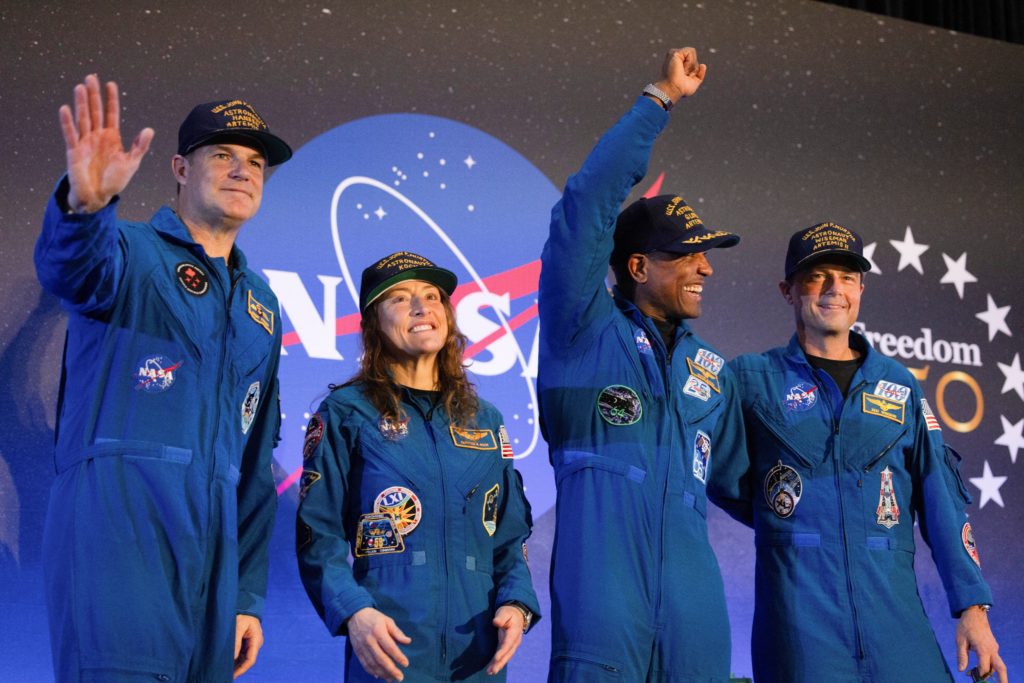
The pilot of the Artemis II spacecraft was Victor Glover, a self-identified religious person who afterward said he, too, was deeply touched by being in the emptiness of space but not feeling alone or desolate.
“When I read the Bible and I look at all of the amazing things that were done for us who were created, we’re in a spaceship really far from Earth, but you’re on a spaceship called Earth that was created to give us a place to live in the universe, in the cosmos,” said Glover in a post-flight interview.
The three men and one woman crew of Artemis II were not sent up into low moon orbit to be missionaries. Yet, just like their predecessors in the Apollo program, hurtling through the emptiness of space that is punctuated by the sun’s light shining on their home planet and shining on that planet’s satellite that keeps its tides in order and modulates the rotation of the Earth in a manner that makes life possible, they are touched in ways no science textbook could ever prepare them for.
This new era of exploration, just like the eras of exploration that preceded it, reinforces our faith through science rather than despite it. And the awe and wonder of the astronauts is not like pagan predecessors who, seeing the sun and the moon in the sky, ascribed superstitious and non-scientific powers to these celestial bodies. The spiritual depths modern space travel seems to plumb from these same marvels is a blend of scientific knowledge and inquiry coupled with man’s longing for meaning and finding.
The Artemis II flight will be followed by Artemis III next year, which will “test drive” the lunar lander that will make it possible for the first human feet on the moon since the early 1970s. Then, if all goes as planned, Artemis IV will make that landing.
And no doubt, when those humans standing on the lunar surface look up and see the Earth over 200,000 miles away, they will not be thinking of orbit trajectories and fuel consumption calculations — they will be thinking what a glorious universe God has created.