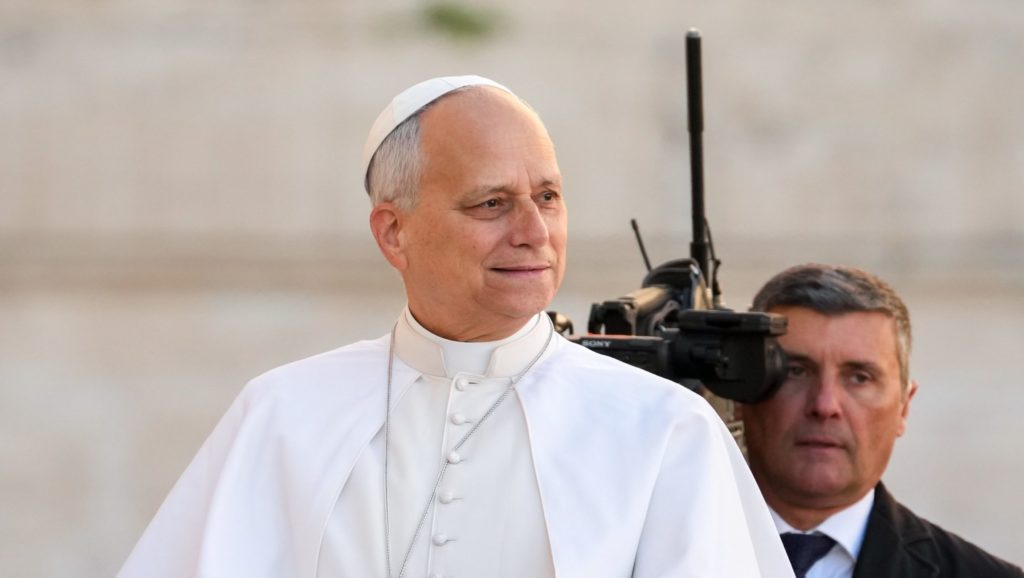
As they do essential work for the safety of Italy and its citizens -- and often help the Vatican as well -- the officers and agents of Italy's intelligence agencies must remain "firmly anchored in those legal and ethical principles that place the dignity of the human person above all else," Pope Leo XIV said.
Dozens of members of the Italian government intelligence apparatus met the pope Dec. 12 in the Hall of Blessings over the atrium of St. Peter's Basilica.
The official photos and a video clip released by Vatican Media show the faces only of a few top directors; the other images are mostly of the pope's hands shaking the hands of agents whose identities are kept secret.
The agents were celebrating the Jubilee and the 100th anniversary of the service's beginnings in 1925 as the Military Intelligence Service. The services now are divided between foreign and domestic intelligence, but they all answer to the Italian prime minister with parliamentary oversight.
Pope Leo told the agents he recognized they have "the grave responsibility of constantly monitoring the dangers that may arise for the life of the nation, in order to contribute above all to the safeguarding of peace."
As they carry out their work, he said, they must do so with a strong ethical foundation that protects the dignity of each person and safeguards a healthy use of communications.
"Ensure that your actions are always proportionate to the common good to be pursued," Pope Leo told them, and guarantee that what is done to protect national security "in every case guarantees people's rights, their private and family life, freedom of conscience and information, and the right to a fair trial."
Regarding communications and the way the intelligence services monitor, interpret and protect it, the pope said he recognized how swiftly digital technology has changed communication.
"The massive and continuous exchange of information requires critical vigilance with regard to certain issues of vital importance: the distinction between truth and fake news, the improper exposure of private life, the manipulation of the most vulnerable, the use of blackmail (and) incitement to hatred and violence."
Pope Leo asked the agents "to be rigorous in ensuring that confidential information is not used to intimidate, manipulate, blackmail or discredit the service of politicians, journalists or other actors in civil society."
And, he said, the same applies to the church and its personnel. "In fact, in various countries the church is the victim of intelligence services acting for improper ends and suppressing its freedom. These risks must always be evaluated and demand great moral stature from those preparing to undertake work like yours and from those who have long carried it out," Pope Leo told them.
The pope also offered prayers for agents "who lost their lives in delicate missions carried out in difficult contexts."
While their names never made the newspapers, he said, their dedication "lives on in the people they helped and in the crises they helped resolve."