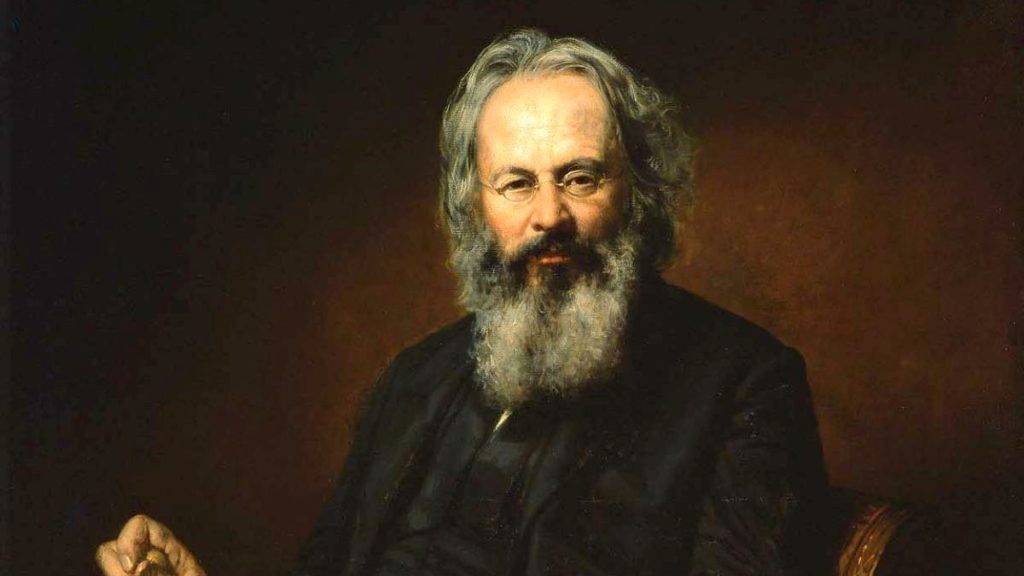
In the mid-19th century, Orestes Brownson was as well known to the educated American as Jeff Bezos or Tucker Carlson might be today. But upon his death, his reputation was inexplicably eviscerated.
And yet Brownson was perhaps the most profound and regrettably disregarded thinker, Catholic or otherwise, ever to write about the meaning of America. To understand him, it’s necessary to understand how seriously he took the phrase from the Declaration of Independence, “all men are created equal.”
As a New England Protestant pastor in the 1830s, Brownson had a certain obsession with the concept of truth. His quest brought him to knit together concepts from non-Catholic sources that brought him to conclude that the human person cannot live alone and cannot pursue happiness in a vacuum: he must be in communion with his creator, with himself, with others, and even with nature.
This philosophical realization brought Brownson to convert to Catholicism in 1844. It also made him see the Declaration of Independence in a new light.
Brownson often referred to the American founding as Providential, a deliberate intervention by God in the affairs of a particular people to bring about a totally new form of government as a beacon to the rest of the world.
The American people, Brownson wrote, “have very generally the conviction that Divine Providence has given us an important mission, and has chosen us to work out for the world a higher order of civilization than has hitherto obtained.”
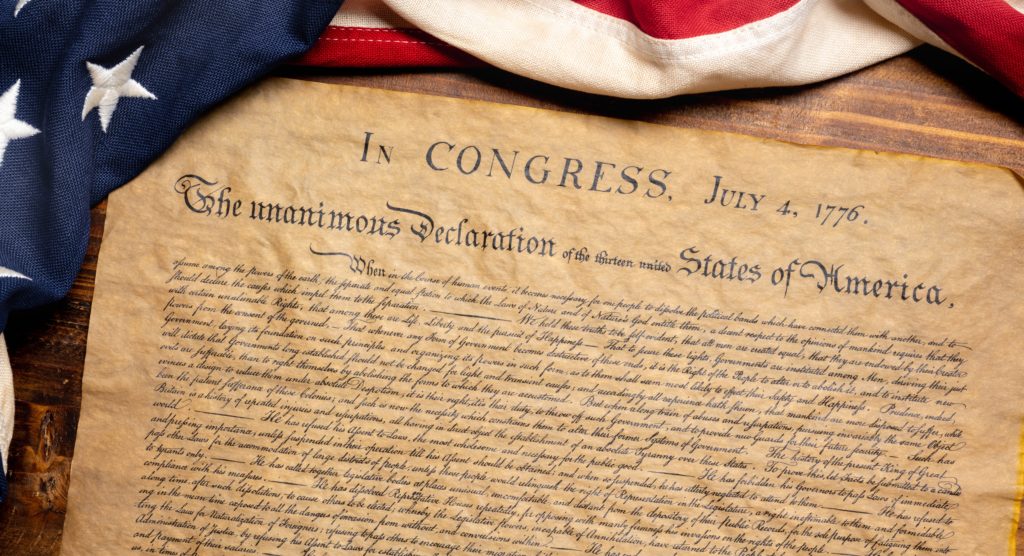
Addressing himself to American Catholics, many of whom were immigrants, Brownson insisted in 1856 “that Providence has great designs in our regard, that he has given us the most glorious mission ever given to any people, should attach us to our country, kindle in our hearts the fire of a true and holy patriotism, and make us proud to be Americans.”
That was the year of the 80th anniversary of the Declaration, and Brownson was alarmed that political theorists had already hijacked some important aspects of it, attributing them to Enlightenment principles:
“Our Protestant ancestors founded the American order, not on their Protestantism, but on the natural law, natural justice and equity as explained by the Church, long prior to the Protestant movement of Luther and his associates, and they only followed out those great principles of natural right, justice, and equality, which Catholic councils, doctors, and jurisconsults during fifteen hundred years had labored to render popular.”
Brownson willingly acknowledged that God had made use of anti-Catholic Enlightenment authors and Protestants of all sorts, steeped in British common law, to express the Providential constitution, our Declaration of Independence. But he was adamant that these were natural law principles previously worked out by Aristotle, Augustine, and Aquinas.
The spirit of the Declaration was not an exaltation of the individual, as proponents of John Locke were insisting. Any nation founded on individualism was destined to descend either into anarchy or tyranny as each one pursued his own happiness. The authentic American spirit was a dedication to the same idea of communion that had convinced Brownson to embrace Catholicism.
Brownson pondered in his heart the lessons of the Gospel, integrating these with his allegiance to the American spirit.
Interestingly, his writings cover almost the entirety of the Social Teaching of the Church that Pope Leo XIV would summarize more than a century later in Magnifica Humanitas (“Magnificent Humanity”): the importance of the rule of law to protect the dignity of the human person and a commitment to “the common good, the universal destination of goods, subsidiarity, solidarity, and social justice” (#48).
Brownson also wrote extensively on the relation between democracy and personal responsibility, the harmonious roles of Church and State, and the importance of a well-formed laity to implant the message of the Gospel into the guts of society.
In the days of the Know-Nothings (an anti-Catholic, anti-immigration political movement popular in the 1850s), violent anti-Catholic demonstrations, and the prejudice that Catholicism is a religion foreign to the American spirit, Brownson bolstered the confidence of Catholics by explaining that their relation to the American republic and government cannot be just one of allegiance, but direction and guidance.
He was convinced that Catholics could never have written the Declaration of Independence or negotiated the Constitution, but also believed that an educated Catholic laity is absolutely necessary to sustain our form of government, due to its susceptibility to monied interests and their sway over public opinion.
Brownson was a century ahead of his time in pointing to the task facing the Catholic laity. In 1856, he wrote, God “has given man dominion over the whole lower creation, and in the chase after this lawful dominion Catholics are as free as non-Catholics to engage, and they may engage, if they choose, without detriment to their faith or their piety” (“Mission of America”).
It was only in 1964, during the Second Vatican Council, that the Catholic Church in Lumen Gentium (“Light of the Nations”) made this its official teaching: “the laity, by their very vocation, seek the kingdom of God by engaging in temporal affairs and by ordering them according to the plan of God” (#31).
In his first address to the cardinals who had just elected him a day earlier, the first American pope warned of “practical atheism,” the tendency to separate Christianity from ordinary life or give little significance to the redemption accomplished by Jesus on the cross as we go about our day-to-day activities.
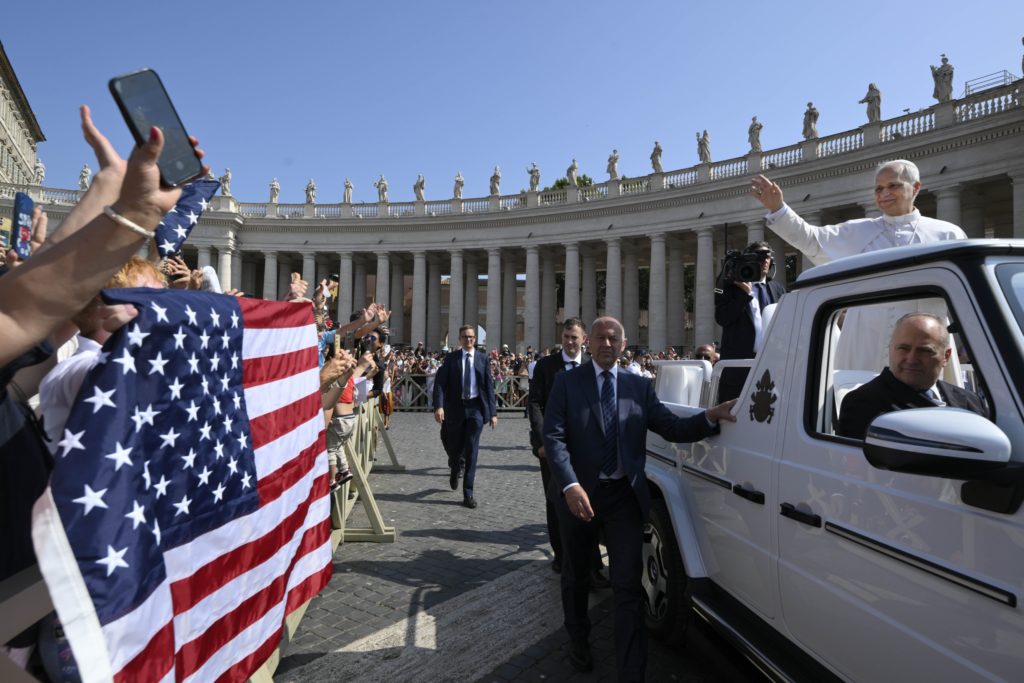
Brownson was teaching the same thing. He called on the Catholic population to take up its particular mission to sustain the “higher order of civilization” initiated in the Declaration of Independence:
“Whether Catholicity shall do for us the work needed in this country, and therefore whether we fulfil our mission or not, depends on the fidelity or non-fidelity of Catholics themselves.
We owe the country a higher and nobler service than we have as yet rendered it, or shall render it, till we prepare ourselves for the position God has given us, and feel the high and terrible responsibility that rests upon us (“Mission of America,” 1856).
American Catholics should appreciate Brownson, who praised our founding principles, which were not just ideas of men of their times, but a harmony with the eternal Divine Idea of creation, a “Providential gift of God” based on universal principles (i.e., natural law) and worthy of patriotic devotion.
Of course, Brownson never speaks with the authority of the popes, but he does bring light to us as we grapple with where we, the Catholic laity, will bring America in the next 250 years. That makes him worth reading a century-and-a-half later and bolstering his reputation among our fellow Americans.