In "A Man for All Seasons," St. Thomas More insists on something that seems almost unreasonable under pressure: that truth is not a tool to be adjusted to circumstance. It is an anchor. Others may dislike it, misunderstand it or find it inconvenient, but once it is bent, nothing else stands.
That conviction shaped the life and work of John L. Allen Jr., who died in Rome on Jan. 22. He is survived by his wife, Elise Allen, and their two pugs. One of the most influential Vatican journalists of his generation, Allen spent decades covering the Catholic Church in and out of Rome, earning a reputation for rigor, restraint and uncommon credibility.
John never believed journalism was about winning arguments or pleasing audiences. He believed it was about fidelity -- to facts, to sources, to context and ultimately to readers. For decades, he resisted the temptation to turn analysis into advocacy, insisting instead on explaining what each side believed and why, giving every reasonable position its day in court. Many resented him for that restraint. But no one ever doubted that what he reported was true, or exhaustively and honestly sourced.
That fidelity was practiced not only in newsrooms, but around tables.
In Rome, John’s office often extended to his favorite restaurants, places he had frequented since moving to the Eternal City in 1997.
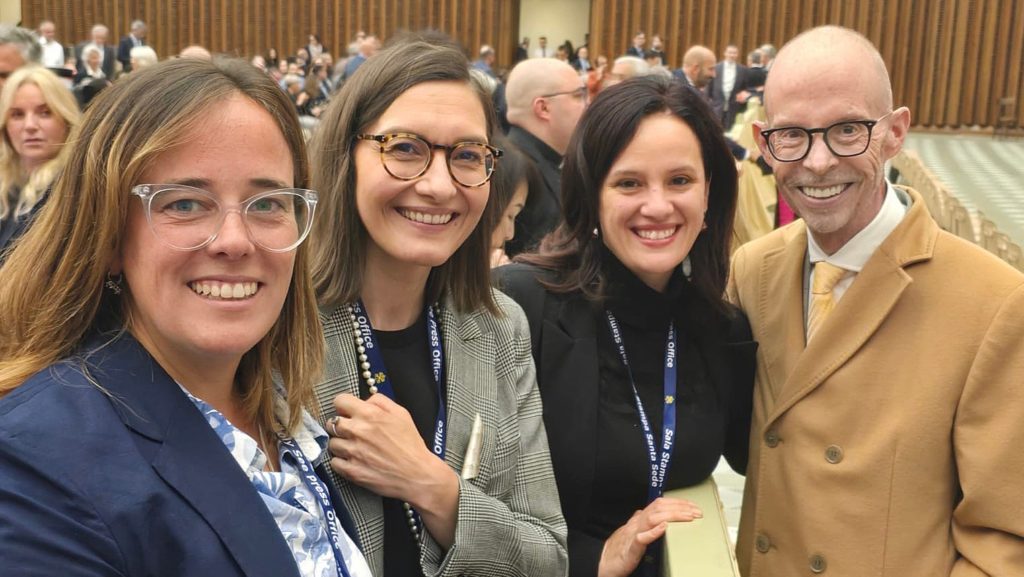
During the eight years we shared hundreds of meals between 2014 and 2022, he never once looked at a menu. At Taverna Giulia, just across the Tiber from the Vatican, penne alla vodka would appear as reliably as the conversations that followed -- meetings with veterans of Vatican journalism and with sources whose names I cannot, and should not, reveal.
I was privileged to witness many of those conversations, and from the beginning, despite my inexperience, he expected me not only to value sources, but to question them.
At Il Passetto del Borgo, a few steps from St. Peter’s Square, the ritual was rigatoni alla norcina and a sparkling white wine, beneath a photograph of then-Cardinal Joseph Ratzinger on the wall -- a reminder that this modest restaurant had once been a favorite of the German theologian when he led the Congregation for the Doctrine of the Faith, before becoming Pope Benedict XVI. For John, these were not quaint details. They were part of the living memory of the Church he covered with seriousness and without illusion.
The food wasn’t necessarily remarkable. The conversations always were.
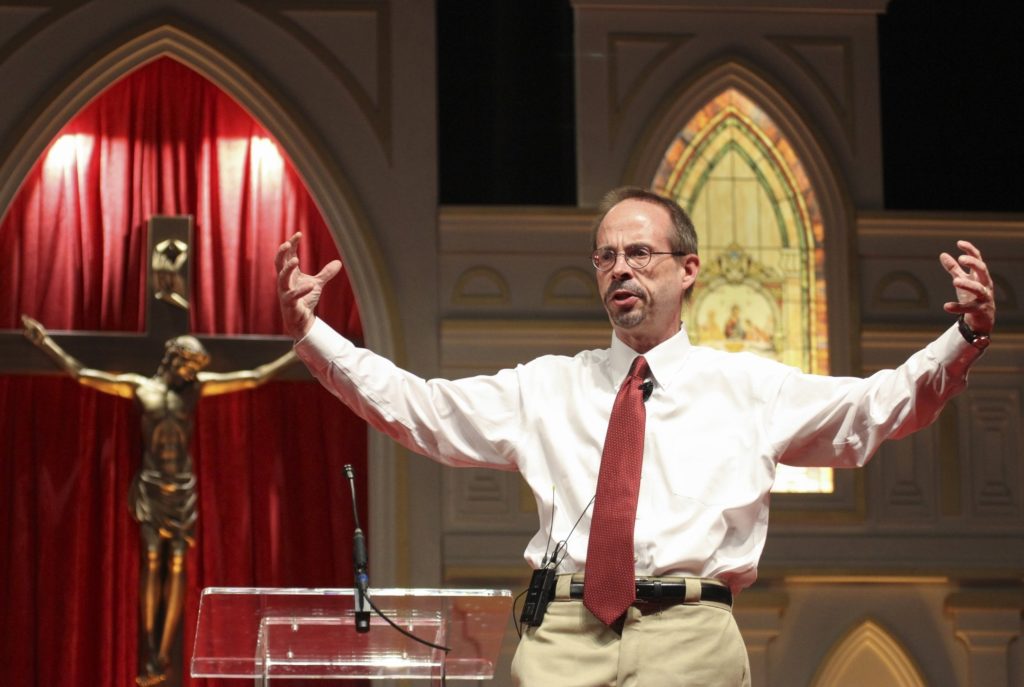
John’s early life -- growing up in rural Kansas and earning a master’s degree in religious studies -- set the stage for a vocation that was both intellectual and deeply humane. When he arrived in Rome as a correspondent for the National Catholic Reporter, he did so carrying a professional wound that never fully healed. A harsh review of a book he had written on Cardinal Ratzinger accused him of reporting from a distance, from the comfort of his desk.
John accepted that the criticism, in part, was fair -- and he spent the rest of his career determined never again to earn it.
From that moment on, journalism became for him a discipline of presence. He researched relentlessly. He traveled constantly. Rome was not a perch; it was a base camp. He went wherever the story demanded, determined never to explain the Church from afar. For him, covering the Vatican carried a responsibility akin to covering the White House: an honor bestowed on very few, with consequences that could not be taken lightly.
That resolve shaped his most consequential work. For his book on Opus Dei, he traveled extensively, listened carefully and resisted caricature until complexity emerged. In "The Global War on Christians," he identified and documented patterns of anti-Christian persecution years before the wider world learned names like Islamic State group or Boko Haram, insisting on naming a reality many preferred to ignore.
Even "The Francis Miracle," written at breakneck speed in the first months of a pontificate that stunned the world, was grounded in history, theology, and firsthand reporting -- fast, yes, but never careless.
I met John in Argentina in 2013, in the chaotic days following the election of Pope Francis. I was his fixer then, helping arrange interviews and open doors. It marked the beginning of a relationship that was never incidental and never hierarchical. He taught me journalism not through lectures, but through example: call one more source, ask one more question, hesitate when others rush. And if you get something wrong, make the correction bigger than the mistake.
Soon after, he invited me to join a new venture launched by The Boston Globe -- a niche publication dedicated to covering the Catholic Church. I moved to Rome. John never withheld a contact or information, but he pushed me to make my own way. He modeled excellence and, without demanding it, expected it from those who worked with him. Though he famously disliked editing, from the beginning he edited my work carefully, never publishing anything under my byline without my approval.
When the Globe decided in 2015 to shut down Crux, John and I made the improbable decision to keep it alive. We did so because we loved the story and the adrenaline of news breaking in real time, and because we believed Catholic journalism could be fast, intelligible and serious all at once -- written not only for insiders, but for anyone willing to care. Above all, we prided ourselves on always trying to get the story right.
Quietly and generously, John was also a mentor. Through Crux, he helped form a generation of Vatican journalists, including Claire Giangravé and Chris White. He never wanted replicas of himself. He wanted better journalists -- and better writers.
His authority was on full display during the 2026 conclave, when despite a rapidly deteriorating health, he knocked it out of the park with his profile of then-Cardinal Robert Prevost, arguably one of the most widely cited assessments of the future Pope Leo XIV in the minutes following the papal election. The citations exploded when Crux scooped the first papal interview, with John's wife since 2020 -- Elise -- interviewing the pope for her biography of Pope Leo.
Like all of us, John was a flawed man. He could be stubborn. He could linger over a story long after others thought it finished. He could order the same inconsequential meal again and again, convinced the company would redeem it. But in an age of noise and haste, he reminded the world what it means to cover the Catholic Church with integrity: to open horizons for readers seeking the facts, without skewing them to fit one’s own view.
I will miss many things. But most of all, I will miss the 2 a.m. conversations -- about Ratzinger and theology, about whether history judges more kindly than headlines, about Hans Urs von Balthasar and mystery and meaning -- always over an amaro, always when the city was finally quiet.
Stories, like meals, are meant to be shared. And in every story he taught us to tell, John shared not just facts, but a faithfulness to truth that will endure far beyond his place at the table.
That, perhaps, is the truest measure of a life spent in service of the truth.