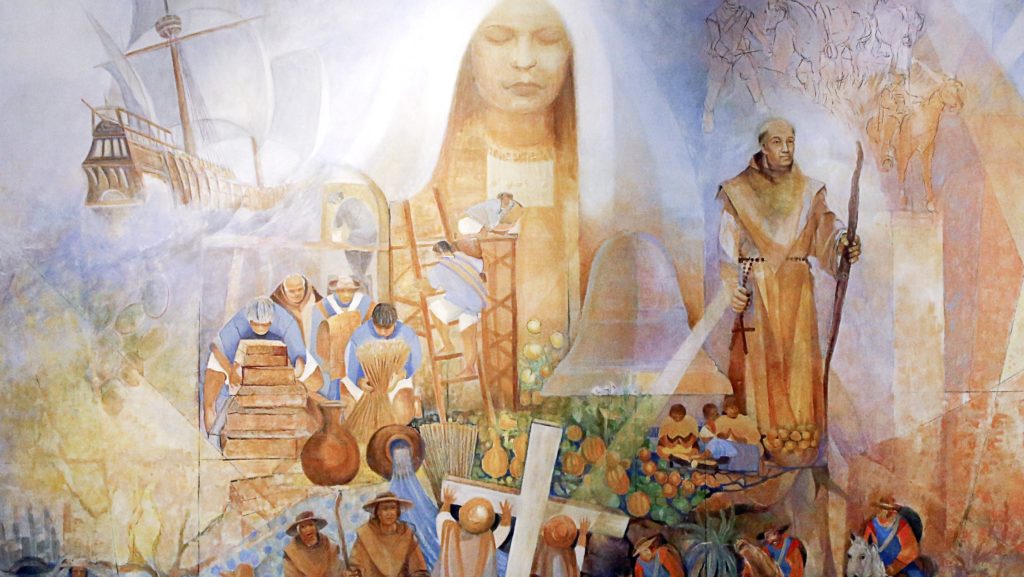
On July 4, 1776, as 56 men risked their lives by signing the Declaration of Independence in Philadelphia, 19 missionary friars from Spain were facing danger daily in what was then known as New California. They had already founded five missions; two more would be founded a few months later, Mission San Francisco de Asís and Mission San Juan Capistrano.
Though neither party knew of the other, some correlations mystify.
The East Coast had the famous pilgrims of Plymouth Colony in 1620. But the Spanish presence in North America pre-dated the English. Martín de Argüelles Jr. (1566-1630) was the first Spanish child known to have been born in what is now the United States. His birthplace, St. Augustine, Florida (San Agustín, La Florida) is the oldest continuously occupied, European-founded city in the United States. Martin’s birth was some 20 years before Virginia Dare, the first child born in North America to English parents.
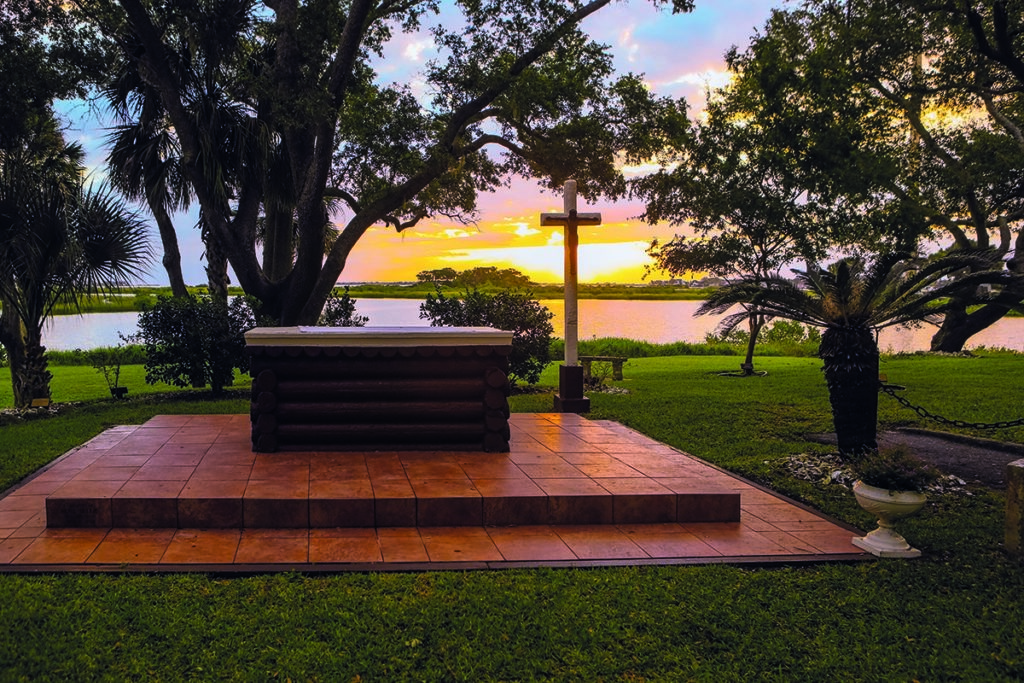
The pilgrims fled their homes due to religious persecution. On the West Coast, the first Spaniard civilians to come to California also came seeking a better life. On Feb. 12, 1776, after crossing the Sonora and Mojave deserts, 30 families (240 men, women, and children) of the second Anza Expedition arrived at Mission San Gabriel. Their goal was to colonize San Francisco. There was one death on the expedition, a mother who died after childbirth. Yet, four children were born and survived.
While Boston was under siege and battles ensued, on May 7, 1776, Father Francisco Garcés became the first European to explore California’s Central Valley. Historian Jeremy Beer wrote of Garcés, “[he] sought the good of the Other across the chasm of cultural differences.” Just over two years before, on April 6, 1774, Father Junípero Serra and Father Francisco Garcés began walking together from Mission San Gabriel to Mission San Diego.
Five years after the Boston Massacre, blood would also be shed on California soil, delaying the founding of Mission San Juan Capistrano by a year. On Nov. 5, 1775, the Kumeyaay revolted at Mission San Diego de Alcalá, bludgeoning Father Luis Jayme beyond recognition and killing two other Spaniards. (The episode prompted a famous plea by St. Junípero Serra asking Spaniards not to take revenge.)
While work was being done to finish Fort Constitution along the Hudson River in New York, on Dec. 17, 1776, El Presidio Real de San Francisco was founded. It would eventually be responsible for the defense of the missions at Santa Cruz, San José, Santa Clara, San Francisco, San Rafael, and Sonoma.
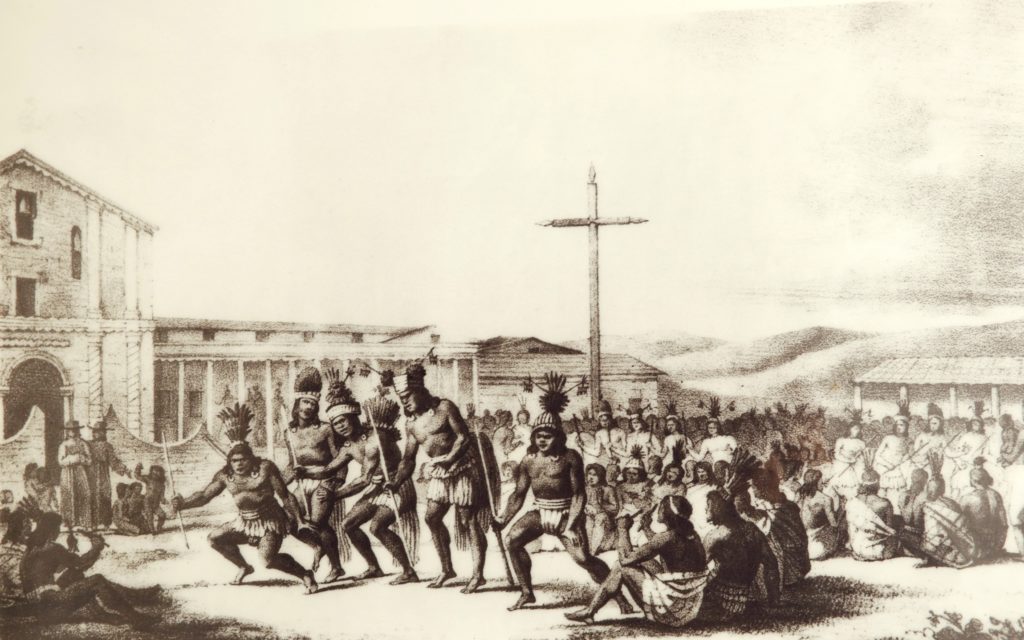
On Oct. 9, 1776, Father Francisco Palóu consecrated Mission San Francisco de Asís, the sixth of the 21 California missions. The current building was completed in 1791, making it the oldest intact mission and the oldest structure in the City and County of San Francisco. Ohlone Native American designs decorate the ceiling.
America’s 250th anniversary coincides with the Catholic Church’s Jubilee Year marking the 800th anniversary of the death of St. Francis of Assisi, the city’s namesake, and whose Franciscans first planted the cross in the furthest permanent northern reach of the Spanish Empire in the Americas.
Less than a month after Mission San Francisco de Asís was founded, on Nov. 1, 1776, Serra founded Mission San Juan Capistrano, the seventh of the 21 California missions. The Serra Chapel, built in 1782, is the only original California mission church still standing where Serra definitively celebrated the sacraments. Today, the Serra Chapel serves as a chapel for the Mission Basilica San Juan Capistrano parish.
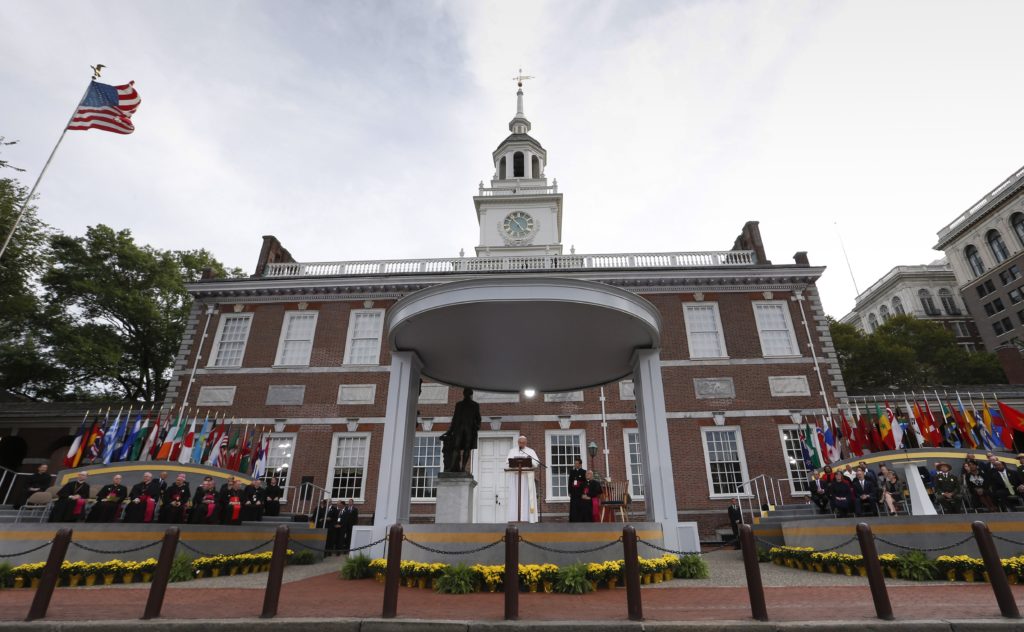
During his September 2015 visit to the U.S., Pope Francis made a pair of gestures recognizing both sets of “Founding Fathers.” In Philadelphia, he visited Independence Hall, the place where the Declaration of Independence was signed. A few days earlier, Francis was in Washington, D.C., presiding at Serra’s canonization.
As America celebrates its 250th, let us not forget the Catholic contributions to its story. As the Redcoats and Patriots fought back east, grey-robed Franciscan padres toiled to save souls. It is no wonder that Cardinal Timothy Manning of Los Angeles referred to Serra as the gray ox in his 1985 pamphlet of the same name.
Francis shot a salvo across the bow when he reminded Americans that there is much more to the familiar foundational narrative produced by White Anglo-Saxon Protestant (WASP) historians and elites. He said in his May 2, 2015, homily in Rome: “Let us contemplate the witness of holiness given by Friar Junípero. He was one of the founding fathers of the United States, a saintly example of the Church’s universality and special patron of the Hispanic people of the country. In this way may all Americans rediscover their own dignity, and unite themselves ever more closely to Christ and his Church.”