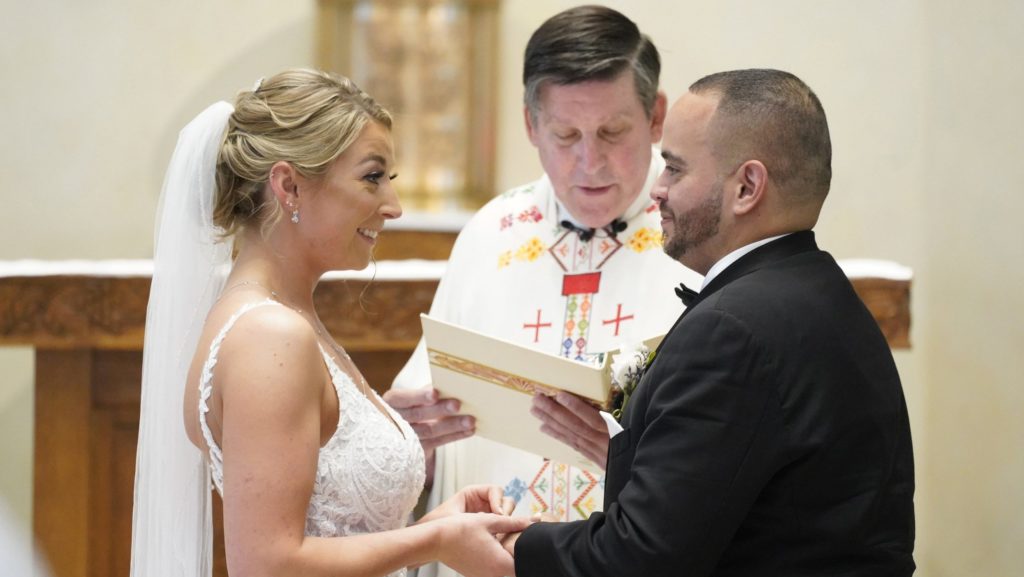
God willing, in a few weeks time, I will be giving birth to my fourth child, our first daughter. The targeted ads I’ve been served are filled with darling clothes and hairbows to purchase.
But my news feed is a different story. Those algorithms show me a myriad of depressing statistics about how young women view marriage and motherhood today.
The starkest so far has been the recent Pew Research Center poll revealing that 12th-grade girls are now less likely than boys to want to get married someday, with the share of girls who want to marry dropping 22 percentage points from 1993 to 2023. While 61% of girls now want to marry, 74% of boys still do. It’s the first time a gender gap like this has been documented.
Why the shift? The Pew analysis offered three conclusions:
First, girls are more aware of the potential for unequal burdens in marriage, such as unpaid care work. Second, they report an increased emphasis on career and personal success before family life. Third, there is greater social acceptance of diverse family structures, making marriage one option among many.
Where are girls getting these ideas? Maria Baer, journalist and co-host of the “Breakpoint This Week” podcast, and Brad Wilcox, professor of sociology at the University of Virginia and senior fellow at the Institute for Family Studies, have one answer: Big Tech.
“We live our lives online, and we decide how to live, in part, by watching what everyone else is doing (online),” they recently wrote in Deseret News. “The result is pushing both men and women away from marriage, by making it harder for men to rise to the occasion of becoming marriageable and by making it harder for women, especially the liberal women who spend the most time online, to see the point of marriage in the first place.”
My own Instagram feed gave me a window into what the authors mean. There I saw a viral clip of Stevie Nicks, the famous singer-songwriter of Fleetwood Mac, speaking to CBS about an abortion she had when the band was three years into its successful run.
“It would have destroyed Fleetwood Mac if I’d had a baby,” she said. “It would have been a nightmare scenario for me to live through.” The news program went on to note how Nicks was the first woman to be inducted into the Rock and Roll Hall of Fame twice. The message: Ambition and babies are incompatible.
Emma Watson, the British actress of “Harry Potter” fame, also recently commented that societal pressure on women to get married is a type of “violence.” If that’s true, why do married women consistently report greater happiness than their unmarried or childless peers?
Sorting through the high-schoolers’ objections has been an exercise in thoughtfully mapping out what I hope to convey to my daughter about marriage, ambition, and a meaningful life.
First, the question of unequal burdens. The cost of living, housing, and persistence of the “two-income trap,” (alongside goods like post-pandemic flexible work schedules) all mean that in half of U.S. marriages, the man and the woman are working outside of the home in some capacity.
That also means they now increasingly share responsibility for domestic duties. NBC News calculates that men spend around 100 minutes a day doing things like cooking and laundry, both characterized as “core housework.”
The message young girls are receiving, however, is that the work of the home should be an equal 50/50 split. As the BBC put it, “organising a playdate, booking the kids’ medical check-ups … working out how to hide vegetables in their evening meals, or ensuring there’s enough on the shopping list … on their own, these may all seem like small tasks — but they mount up. And if you ask heterosexual couples with children which partner is most likely to handle them, it is probable that most would offer up the same answer: the mother.”
This natural propensity for home economics is now called “emotional labor,” and wives are expressing frustration that their husbands are not sharing the load.
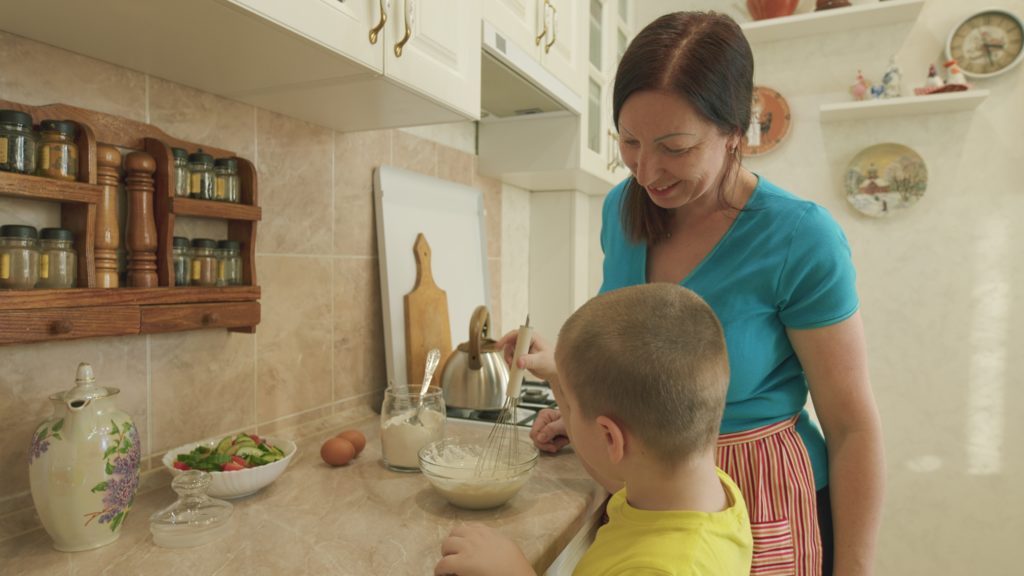
I get it. There are moments in any given day in which I’m simultaneously cooking an early dinner, answering a work message, and packing up for swim lessons. I send our birthday and Christmas cards. I know which uniform my children wear for regular school days and Mass days at their parochial school.
This is not because my husband doesn’t want to help in these areas. It’s because these things do not naturally come to his mind. His gifts are elsewhere, in areas in which I’m deficient — like cleaning the gutters, taking out the garbage, and repairing appliances — all of which should be counted as “core housework,” in my opinion, because the house would be falling down without them. This is to say nothing of our lawn, which would be brown if I were in charge.
What I want my daughter to see is that my husband and I have different strengths and weaknesses, and that when we need help, we ask for it. I’ll tell her to look for a man who is capable of sacrifice and to become a woman capable of the same. And to leave the math at the door.
Second, I want her to know that women’s work in and out of the home is valuable. They both require time management, communication, and managing other people’s growth.
She will know that ambition is good and is compatible with family life. That is, if it’s the kind described by the authors of “Holy Ambition: Thinking as a Catholic Woman at Work and at Home” (Ave Maria Press, $18.95): “Our career ambitions should include how we can breathe life into others through our work. Our financial ambitions should include how we can give back to the Church and support people less fortunate than themselves. Our personal ambitions should include goals for our relationships. Our health ambitions should help us to care for ourselves and the people we love.”
But I also hope she understands that she can’t have it all at the same time. This is what many women now characterize as living according to “seasons.” They step in and out of the workplace to varying degrees while raising their children.
“Many of the women who view their lives in this way say they think of themselves as existing in between the extremes of tradwives (who treat caring for their homes and families as a more permanent, full-time job) and girlbosses (who center their lives around work),” the author of a recent profile in The Wall Street Journal writes.
This is what I saw my mentors doing: making calculated choices about work, marriage, and motherhood based on what reality presents to them. That includes biology and fertility windows as well as the needs of one’s family. It involves the careful evaluation of job opportunities as once in a lifetime or one among many that will come down the road.
I hope my daughter will also see that a good husband and father might have to take some career hits, too. He’ll have to say no to some opportunities if he’s going to be present to his wife and kids and invested in their well-being. His growth might be slower and steadier than his childless or uninvolved peers.
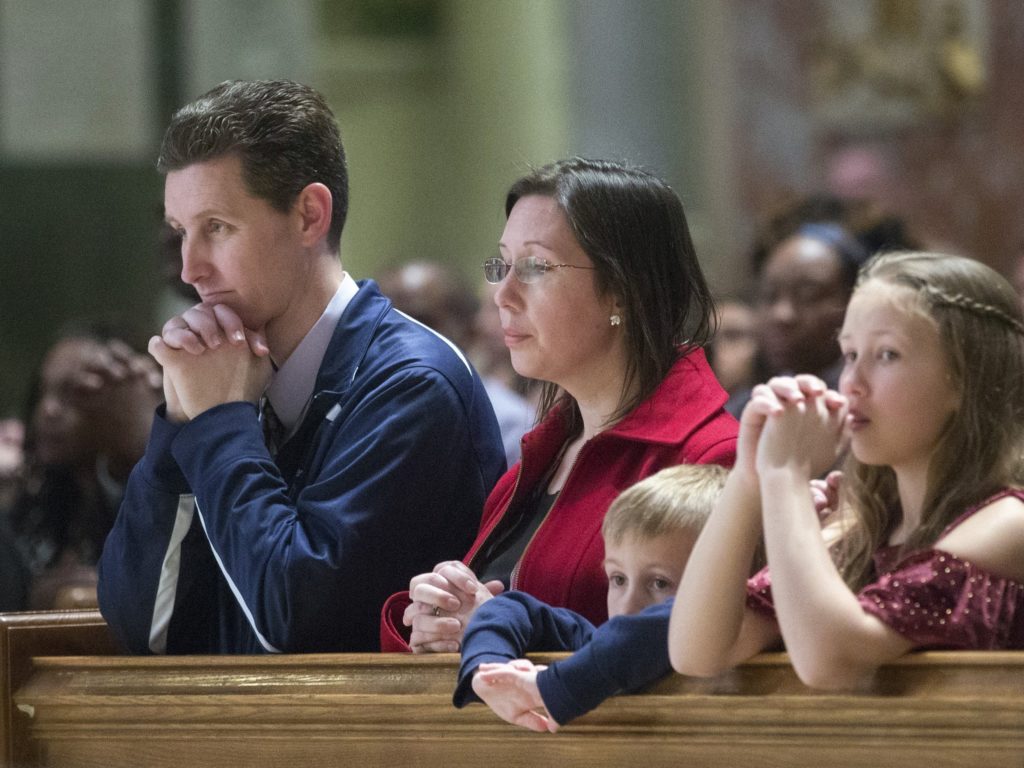
Last, I want my daughter to think in terms of vocation, not lifestyle: Marriage is one option among several, even for Catholics who think in terms of supernatural callings.
We know that “choice paralysis,” in which one’s future is wide open with endless possibilities, is a path to unhappiness. What helped me — and will help my daughter — is meeting women who find joy in giving themselves away to others, whether in marriage, consecrated life, or single.
Maybe that’s the answer. Young girls need real-life messengers more than messages. They need to see for themselves how marriage and motherhood make for a meaningful life.
“Modern man listens more willingly to witnesses than to teachers, and if he does listen to teachers, it is because they are witnesses,” wrote St. Pope Paul VI. With my daughter’s birth approaching, I’ve got some work to do on my witness. You can say I’m motivated.