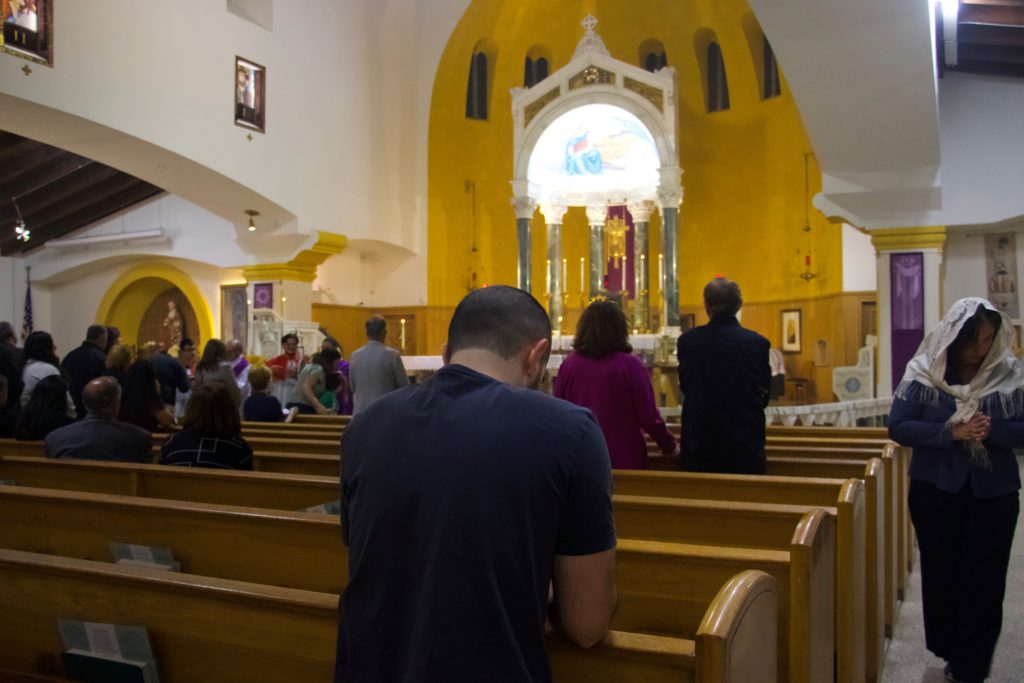
As parishioners with the Arab American Catholic Community gathered for a Saturday evening Mass at St. Joseph Church in Pomona, the U.S. and Israel’s strikes against Iran — and additional violence threatening the entire Middle East region — brought an all-too-familiar feeling: Here we go again.
Even with the fresh pain and anxieties of the U.S.’s war with Iran, many attendees at the Mass said that, unfortunately, violence and conflict have been a part of their stories for too long.
“It’s a never-ending war,” said Angela, a Catholic who grew up in Palestine. “When it comes to Palestine, it’s been affected by conflict for almost 80 years.”
The community — comprised largely of families with backgrounds from the countries of Palestine, Jordan, Syria, Lebanon, Iraq, and Egypt, which recently celebrated the first Arabic Mass at the Archdiocese of Los Angeles’ 2026 Religious Education Congress — was feeling the weight of the U.S.-Iran conflict, though they have grown accustomed to living with war.
“What’s happening in the Middle East affects us because we still have family over there,” said Bernadette, a Catholic who has family in Jordan. “You never know what’s going to happen next.”
Angela said that decades of war have taken a toll on communities across the region.
“It’s so sad to see that the population is just diminishing slowly because of wars,” said Angela, whose family emigrated to the United States more than a decade ago. “They’re having to move out to Western countries to seek freedom, to seek work opportunities, to seek [a better] life.
“They’re the most vulnerable in the area when it comes to war.”
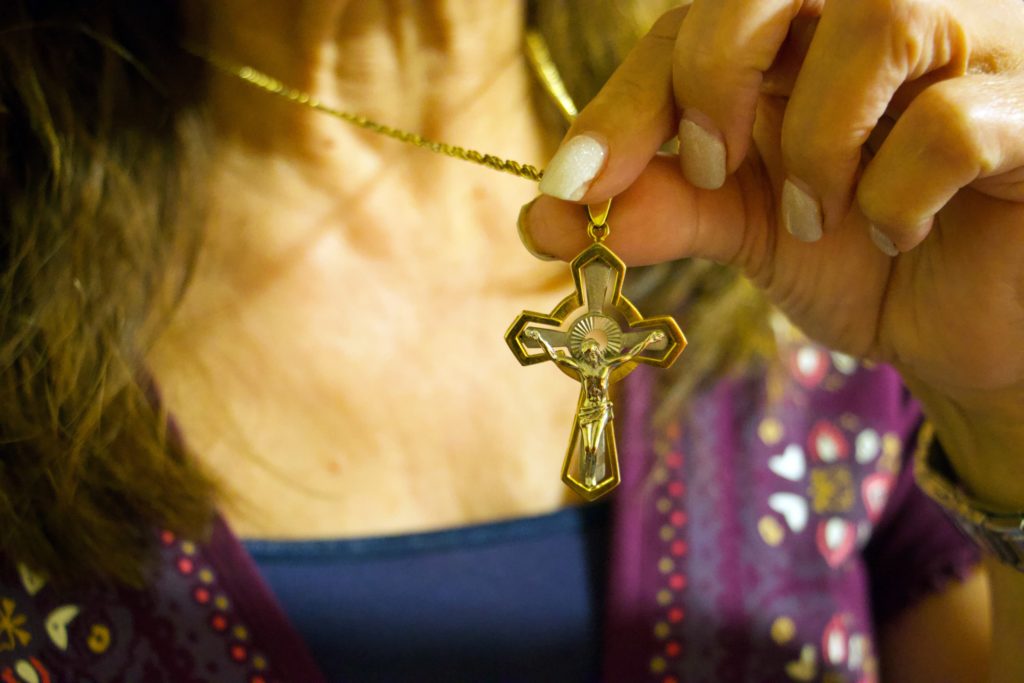
Fatima, a Catholic college student with a Jordanian background, said the current tensions in the Middle East hit close to home: many of her family and friends live across several countries in the region, including Lebanon, Palestine, Jordan, and Qatar.
“They hear the bombings and see the damage with their own eyes,” she said.
“It’s unfortunate because the people who are suffering are innocent. It’s all at the expense of politicians in power, basically treating the Middle East like their puppet.”
Despite the violence, Fatima said many people in the region have developed a sense of resilience after living with conflict for so long.
“One pattern I’ve noticed is that people say, ‘We’re used to it. This is normal. This won’t stop us,” she said. “You see the resilience and the willpower of people saying this won’t stop us or affect our daily lives, even though it technically does.
“We’re a culture that’s very community-based. We are the land where the three religions (Judaism, Christianity, and Islam) were born.”
She added that the global perception of the region has also changed over time.
“Now the whole world has normalized this notion of the Middle East being considered a war zone,” she said. “Any sort of destruction is normalized because it’s a very political region.”
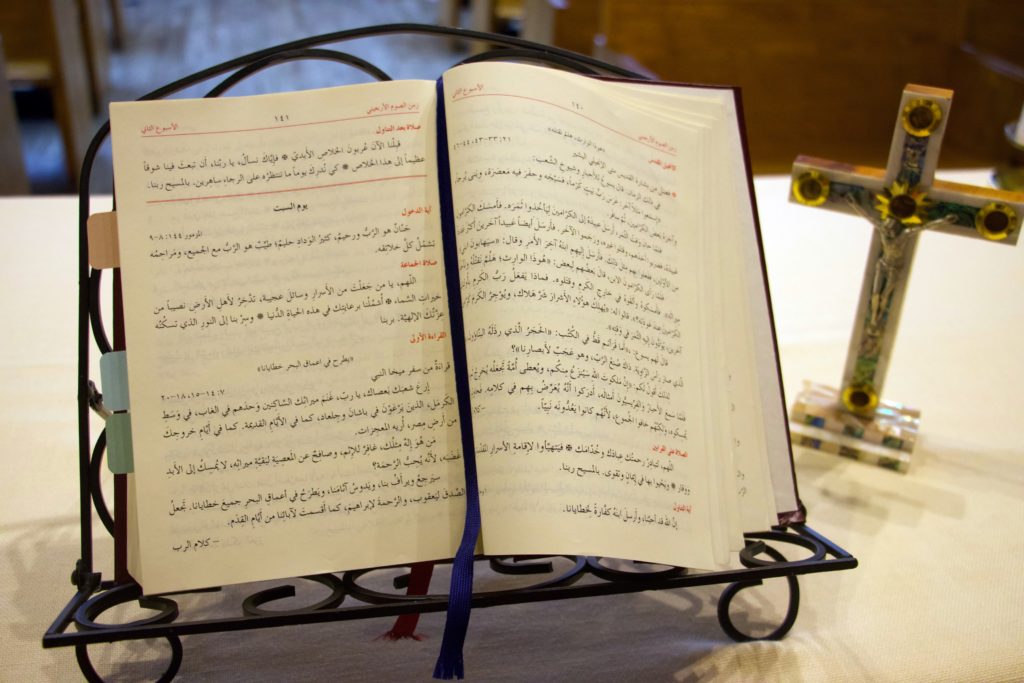
For Sam, a 14-year-old altar server whose family is from Iraq, the war is something he mostly hears about through relatives and social media. Some of his family members have heard the sound of bombs, but he said his faith helps him stay hopeful.
“Just trusting God and hopefully everything will turn out well,” Sam said.
He added that hearing about these experiences has also made him realize how different life can be in the United States.
“We’re privileged to have such a safe area,” he said.
Bernadette, who is also the leader of a Legion of Mary prayer group, said her Catholic faith guides her response to uncertainty and conflict.
“I believe as a Catholic,” she learned not to be afraid, but have faith, she said.
She explained that faith becomes especially important during moments of hardship.
“No matter what is happening — whether in the world, in your home, or in your family — there will always be challenges,” she said. “But if I claim to have faith and practice it, I shouldn’t respond to chaos with fear. Then where is my faith?”
Bernadette said she often reminds herself of a message repeated many times in the Bible.
“When I face fear, I remember what Jesus said 365 times in the Bible: Do not be afraid,” she said.