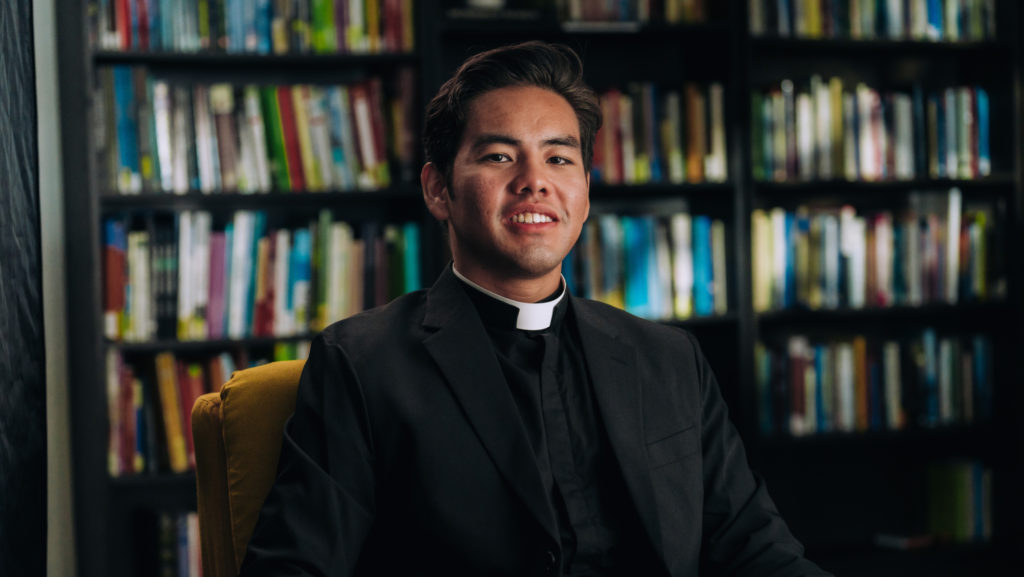
On May 30, Archbishop José H. Gomez will ordain three new priests for the Archdiocese of Los Angeles at the Cathedral of Our Lady of the Angels.
In the days leading up to their ordination, we’ll be introducing them all. Los Angeles, meet your new priests!
Age: 29
Hometown: Cebu City, Philippines
Home parish: St. Clare of Assisi Church, Santa Clarita
Parish assignment: St. Cornelius Church, Long Beach
You could say that Jerick Alenton was meant to be a priest, even as an infant.
When Alenton was a baby, his family participated in the tradition where they laid out objects, and whatever he crawled over to and selected, that would be his likely profession.
Alenton chose a rosary.
Later on in school, when other students were drawing pictures of dogs, trees, and ice cream, Alenton was drawing crosses and Jesus.
If anyone asked what he wanted to be when he grew up, he always said a priest.
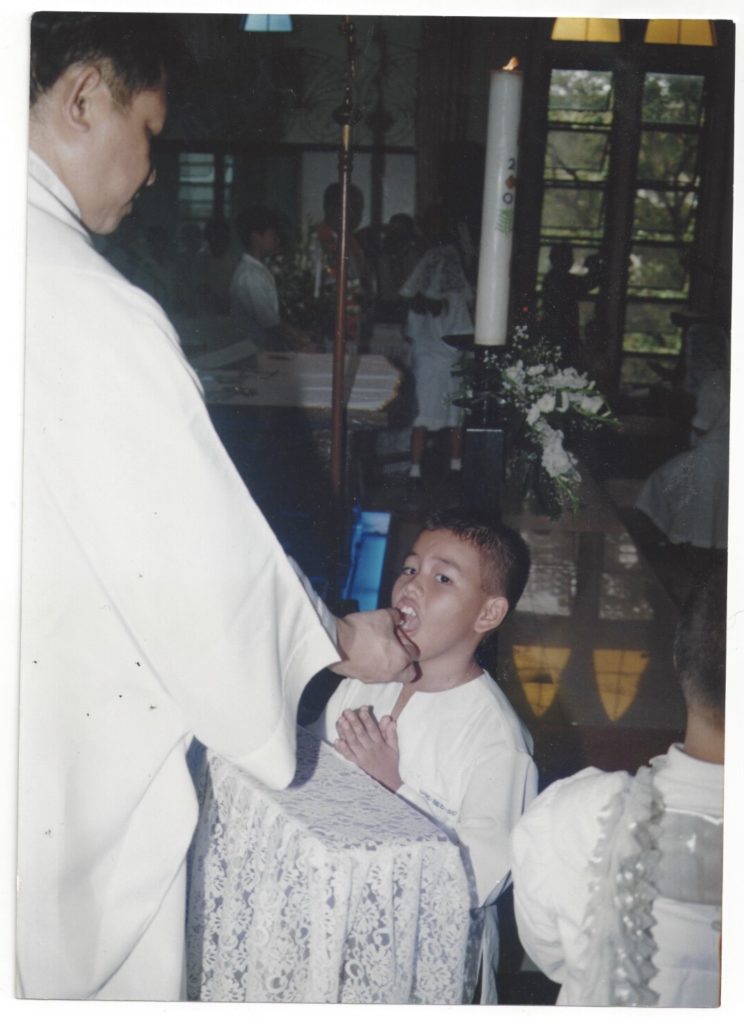
“I remember playing Masses with the kids in my neighborhood,” said Alenton, 29, who was born and raised in the Philippines. “We would make orange juice as our wine and we had little red crackers that looked like a host. And we would use that for Communion. I was able to memorize the prayers for Mass and even remember trying to make a homily.”
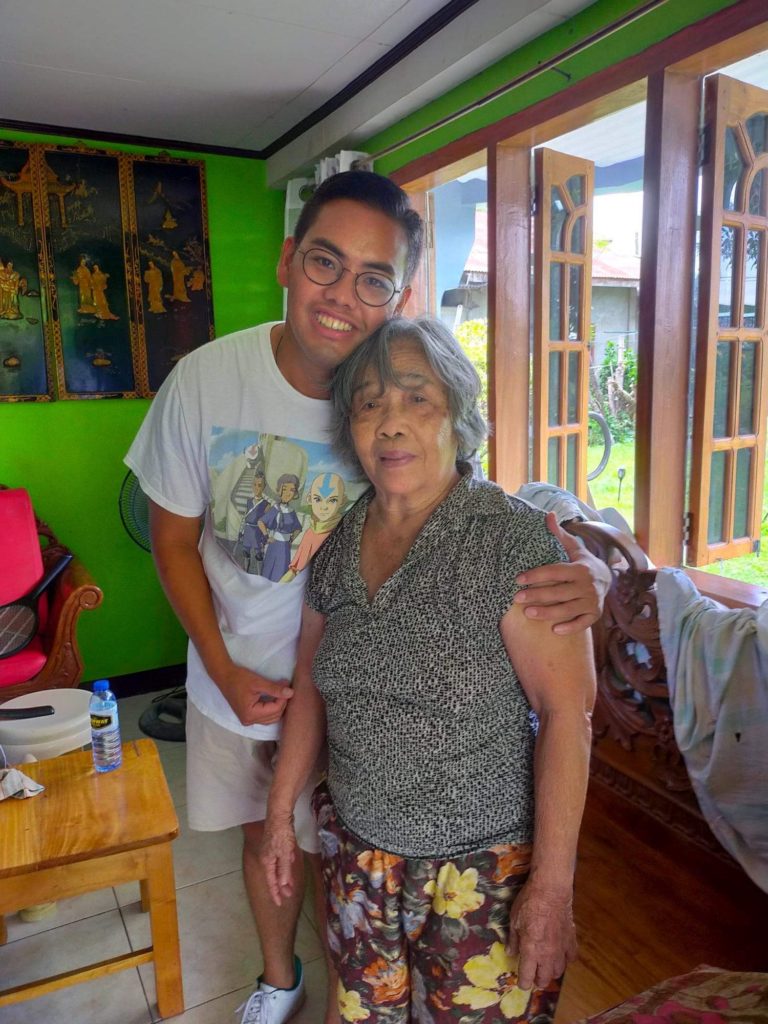
Because his parents both worked abroad (his mother in the United States, his father in Dubai), Alenton was raised largely by his grandmother and uncle. That often left him sad and lonely, jealous of other kids who had their parents around. But ultimately, he appreciated their sacrifice.
“My mom would always say you’re lucky that you didn’t have to go to the rice fields to pick up weeds or to get your feet wet in the paddies and bend over and plant the rice itself,” Alenton said. “She would always remind me we did it because we didn't want you to experience what we experienced growing up, and we just wanted you to grow up basically as a kid and to only worry about school and nothing else.”
But in his grandmother, he found a kind of devotion that would go on to shape his faith. She taught him prayers in both Spanish and Latin, often reading from a book that Alenton would memorize. Before he left for the U.S., he asked for a copy of the prayer book, and his grandmother hand-copied a version for him, something he still has to this day.
“She really introduced me to the faith and helped me develop the faith,” Alenton said about his grandmother, who died in 2022. “She would take me to church, to attend Mass, join processions, and then join novenas.”
When he was around 9 years old, his mother petitioned him to come to the U.S. and California, where she was living in Santa Clarita. The culture shock and expectations were evident immediately.
“My whole view of the U.S. was tall buildings like downtown LA or New York,” Alenton said. “But once we got out of LAX, I was like, ‘Oh, this is it. It’s all mountains and there’s nothing.’ ”
In middle school, Father Raymond Marquez asked his classroom who wanted to be a priest and everyone in the class pointed at Alenton. He was invited to a “Come and See” discernment and vocations retreat.
In high school, Alenton met Father Bao Nguyen, who helped him apply to the seminary. On the day of his prom, he found out that he had been accepted.
“I really felt happy that this is it,” Alenton said. “I’m actually studying to become what I always wanted when I was a little kid.”
At some point in his formation, Alenton decided that he wanted to return to the Philippines, especially to be with his grandmother again. But then the COVID-19 pandemic hit and he was stuck in the U.S. He decided that was a sign of God to help minister to those immigrants who might come to the U.S. and experience a culture shock like he did.
“I can minister to them, help them navigate with their new experience because I experienced that,” Alenton said. “God brought me here to the U.S., finished everything here, my high school and college. This is where he wanted me to be.”
As he prepares for his priesthood, he has worries and anxieties like anyone else, but he tries to impart to others that you can dialogue with Jesus and that he’s always near.
“Usually I carry a little image of Santo Niño, the child Jesus,” Alenton said. “And if I get nervous, I would just hold that in my pocket and touch it and say, ‘You're here next to me, so help me out now.’ It’s that idea that he’s always there, in difficult situations, kind of reminds me that it’s not just me doing ministry, it’s him, basically, and he’s just using me.”