Immigrants have worshipped at Our Lady of Guadalupe Church since it opened its doors more than 100 years ago in San Diego, starting with exiles fleeing the Mexican Revolution.
Through the decades, the church became the traditional hub for generations of mostly Mexican immigrants who settled in the neighborhood, known as Barrio Logan. It's a mixed-use neighborhood just east of downtown with modest homes next to small and large businesses, including industrial plants.
Today, some 2,000 to 2,500 faithful attend Mass there on Sundays -- young couples, families with children, older adults and seniors.
A massive federal crackdown on immigrants in the country without documents has left many community members deeply fearful and isolated, said Jesuit Father Scott Santarosa, who leads the parish.
"Many parishioners feel very vulnerable," he said on a recent Sunday after Mass. "They need help. It was a little cruel to tell them, 'Go find it.'
"That's how the idea was born to serve community members, to meet their needs, all under the church's roof," he added.
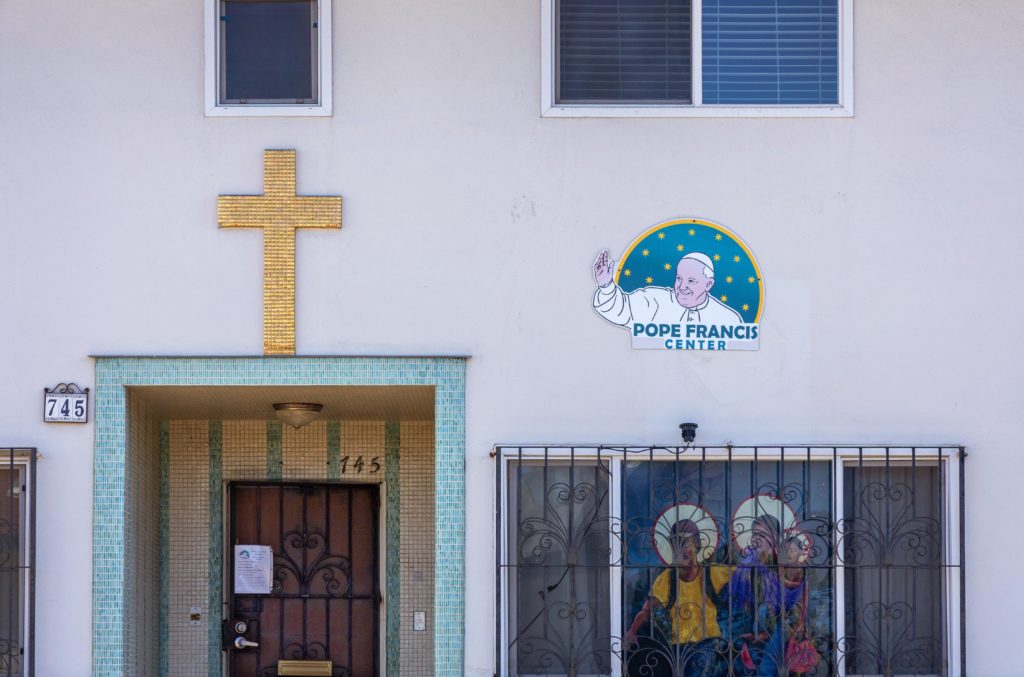
The parish inaugurated the Pope Francis Center Feb. 1 to assist migrants struggling amid the deportation campaign, particularly with legal and mental health issues.
The center will be open to all, Catholic or not. And the services will be free, except those requiring application fees and court representation.
The center is entirely funded by donations, the pastor told The Southern Cross, the news outlet of the Diocese of San Diego.
It occupies an old brick building that once housed a convent, a dormitory for priests and most recently was home to Casa Misericordia, which provided assistance to migrants.
Volunteers helped remodel the building to prepare it for its newest mission.
The facility is named after the first Jesuit pope and the first from Latin America, the late Pope Francis, who made defense of immigrants one of the hallmarks of his pontificate.
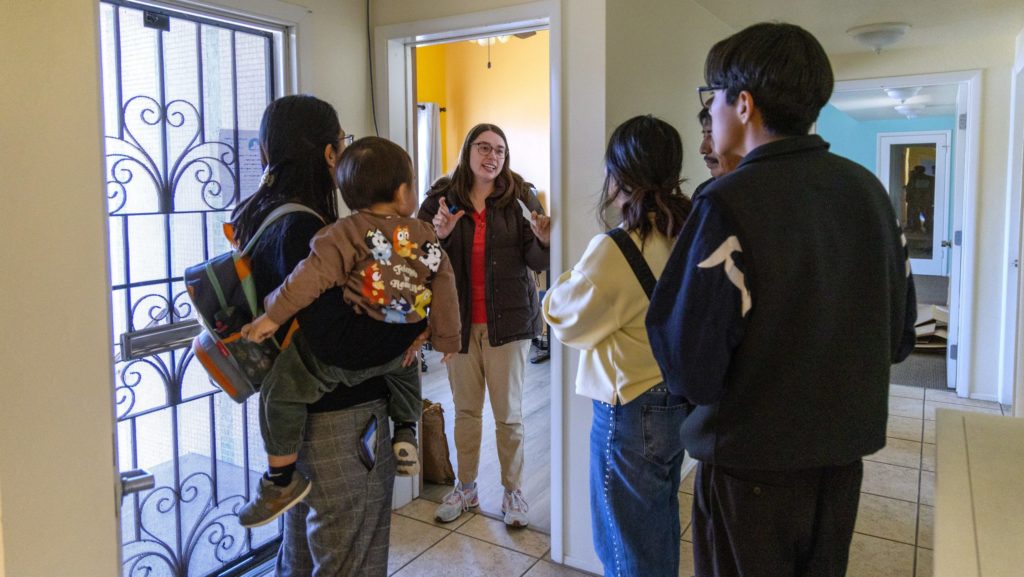
"Do you know the Pope Francis Center?" Father Santarosa asked parishioners after Mass, inviting them to walk down the street and take a look.
Brinkley Johnson, the center's founding manager, welcomed visitors and showed them the two-story facility, which includes waiting areas, small consultation rooms, a classroom, a space for workshops, a room for child care and a chapel.
The center has been informally open for about three months. In an interview in late January, Johnson said that the center had helped about 30 men and women, more than half of them parents.
She was struck by their fear. One family sought help to move because they believed that U.S. Immigration Customs and Enforcement had identified their address, and feared what was to come.
Another client, a woman, told her that she had been abused by her boss and also by her partner. She didn't want to leave the partner, fearing that she would risk her immigration status.
"My heart hurts knowing that this is the reality of immigration today, the reality vulnerable people face," she said, adding that the woman was referred to a legal organization that specialized in those types of cases.
Father Santarosa said that, when Jesus multiplied the loaves and fish to feed the hungry, he taught his Church to help those who are suffering.
"We should meet the current, real needs of the people," he said, recalling how Pope Francis used to say that the Church should operate like a field hospital after battle, healing wounds, warming hearts and offering mercy to those hurting.
"We always need to remember that God is with us. We should not forget that in tough times," Father Santarosa said.
The pastor said he does not know how many of his parishioners have been affected directly by deportation. However, he does know of two cases: a father who could not attend his son's wedding because he was deported and a woman who self-deported after her husband was expelled to Mexico.
Two center staff members associated with the American Bar Association's Immigration Justice Project will be assisting with legal matters. The center also is collaborating with Catholic Charities, the Casa Cornelia Law Center and other nonprofit organizations.
Johnson said she hopes the Pope Francis Center inspires parishes "to respond to this moment that we're facing."
"This center is a direct expression of our Catholic faith," she said. "It is living out the teachings of Pope Francis and Catholic Social Teaching, which call for works of mercy. We hope that others will be similarly inspired to put their faith into action."
The pastor acknowledged that his church and the center face a danger of drawing ICE agents to their doors.
"We're not going to stop serving the people of God," he said. "I hope the agents do not come around. I hope they see the center as part of our church. But who knows?"